If you move often, you already know that furniture you have now can be weirdly out of place in a new house or apartment six months from now.
That giant sectional looked perfect in your last apartment. Then you moved somewhere with a narrow staircase. That dining table worked beautifully when you had a dedicated dining room. Now it's taking up half your living room. And that “forever” piece of furniture? Well, your new place says, um no way this is going to work! And here’s the real subtext about this, buying new furniture every time you move will hit you squarely in the pocketbook, full stop!
Now, here’s were going modular makes way more sense.
Instead of buying pieces that only work one way in one particular room, modular furniture can be rearranged, separated, expanded, folded, stacked, or repurposed as your home base changes. For renters, frequent movers, and anyone living in smaller spaces, that flexibility can be a life saver for your bank account.
And as we head through the 2026 trend cycle, flexible, high-utility furniture is hands down the practical answer to smaller homes, tricky or awkward rooms, and changing lifestyles. High utility is just a fancy way of saying modular.
Take this picture, for example. The table can be a dining table, a workspace. Take away the stools and push it against the wall, and it’s a console table or entryway table. It’s truly multi-functional and modular.
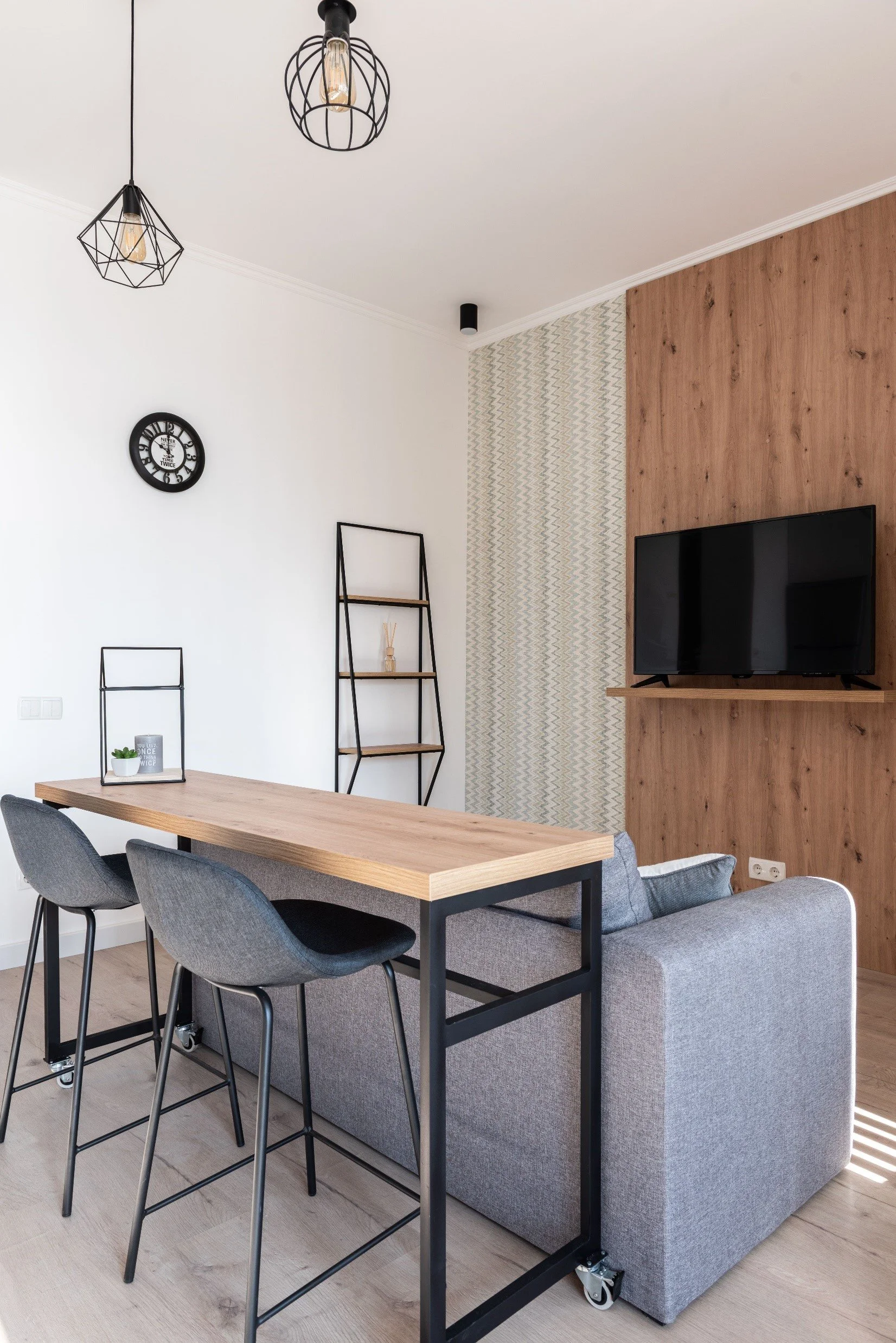
Max Vakhtbovych - modular table on wheels
So rather than giving you five specific products to buy, let's talk about five types of modular furniture worth looking into.
1. Modular Seating That Can Break Apart
Let's start with the obvious one: the sofa.
A traditional full-frame sofa that fits perfectly in your current living room may be too long or too deep for your next one. But, a modular sofa, that breaks apart in two or three pieces, just might save you frustration and cash in a new place with less square footage.
So, look for a sofa that comes in individual sections so it can be rearranged in different configurations. Maybe today you want a traditional three-seat sofa. In your next apartment, you might separate the pieces into a loveseat and chair. If you move somewhere larger, you can add another section.
Here’s an example of a modular sofa, where each piece is separate and can be broken apart or can be reconfigured into different seating: a two piece sofa, a stand alone chair, a sectional. It’s ability to function differently depending on the room size and shape is what makes it a beautiful example of modularity.
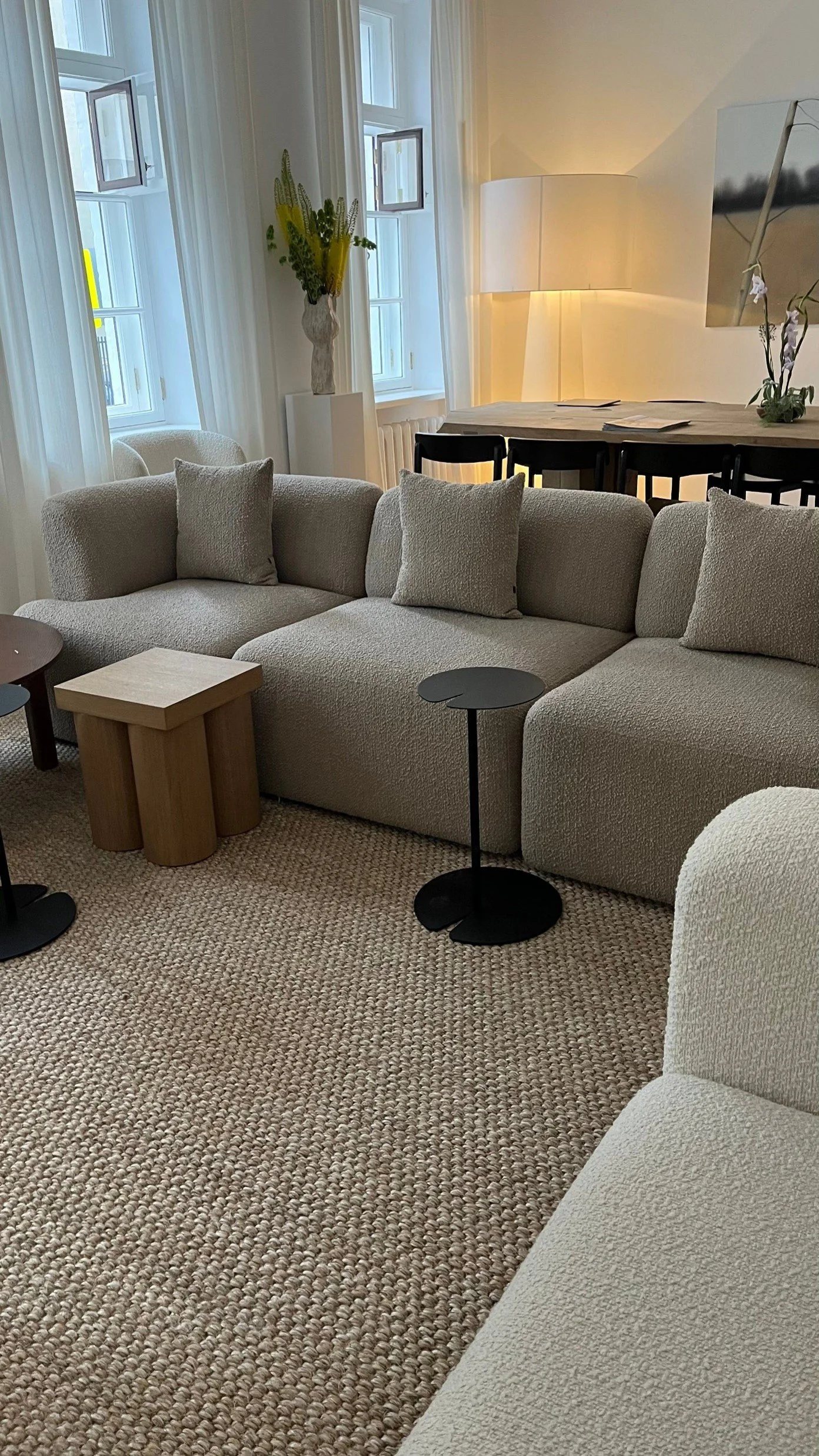
Ruby Ruby - a modular sofa
The really important thing for people who move often isn't just whether the sofa can be rearranged. It's whether you can actually move the individual pieces.
Before buying, check:
The dimensions and weight of each section
Whether pieces can fit through narrow doors and staircases
How the sections connect
Whether the connectors are easy to remove and reinstall
Whether individual pieces still look okay when separated
Whether replacement or more sections can be added later
And don't assume “modular” automatically means “easy to move.” A modular sofa with enormous, heavy sections isn't doing you much good if your next apartment has a fourth-floor walk-up. Yikes, right?
If you want to learn about more specific types of sofas, both large and small, I wrote a very helpful guide covering 14 timeless sofas to fit your room makeover a while back. I cover everything from Chesterfields to MCM options to suit any decorating style. I also talk even more about modular sofas too!
2. Tables That Change Jobs
A good table doesn't necessarily need to be a dining table, desk, or coffee table forever.
For smaller homes, look for tables that can change height, size, or function.
An expandable dining table is an obvious example. It can stay compact when you're eating dinner on a Tuesday and expand when friends come over on the weekend.
Nesting tables can work like coffee tables, side tables, extra surfaces for guests, or bedside tables.
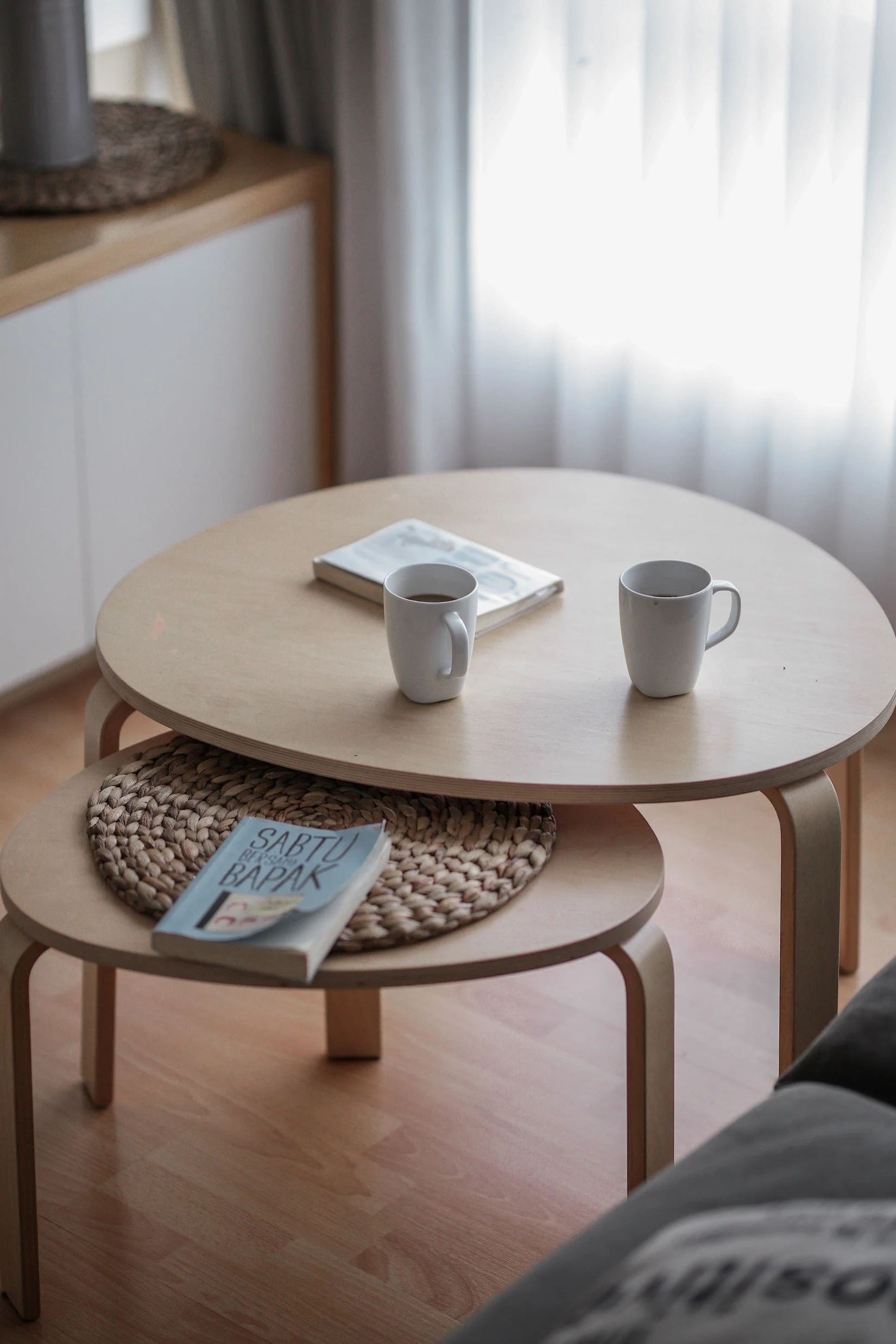
Deni Chandra - Nesting tables
Drop-leaf tables are another old-school idea that's still great in small, tight, or awkward spaces. Against a wall, one can function as a small desk or console. Pull it out and open the leaves, and suddenly you've got a dining table.
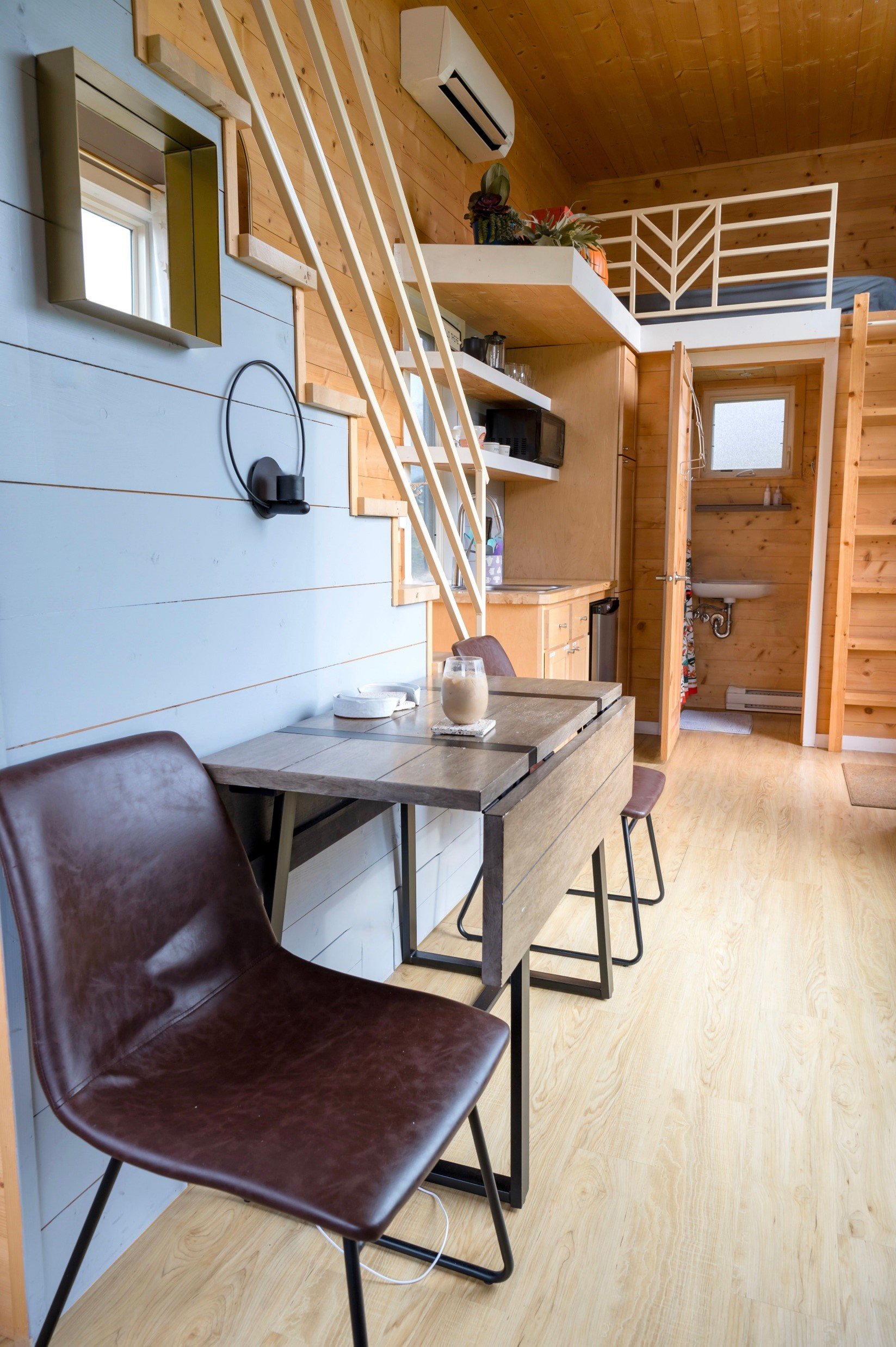
Andrea Davis - Drop-leaf table
The trick is to ask yourself a slightly different question when you're shopping:
“How many jobs can this piece do?”
If the answer is only one, make sure it's a job you really need.
If it can work as a desk, dining table, craft surface, or console, you're getting much more value from the same square footage.
3. Storage You Can Reconfigure
Storage is one of the biggest reasons modular furniture makes sense, especially for renters.
Your storage needs aren't necessarily going to stay the same. You might move from a one-bedroom apartment with a giant closet into a studio with almost no storage. Or you might gain a home office, a roommate, a baby, or an entirely different collection of stuff.
Modular shelving and storage systems can grow with you.
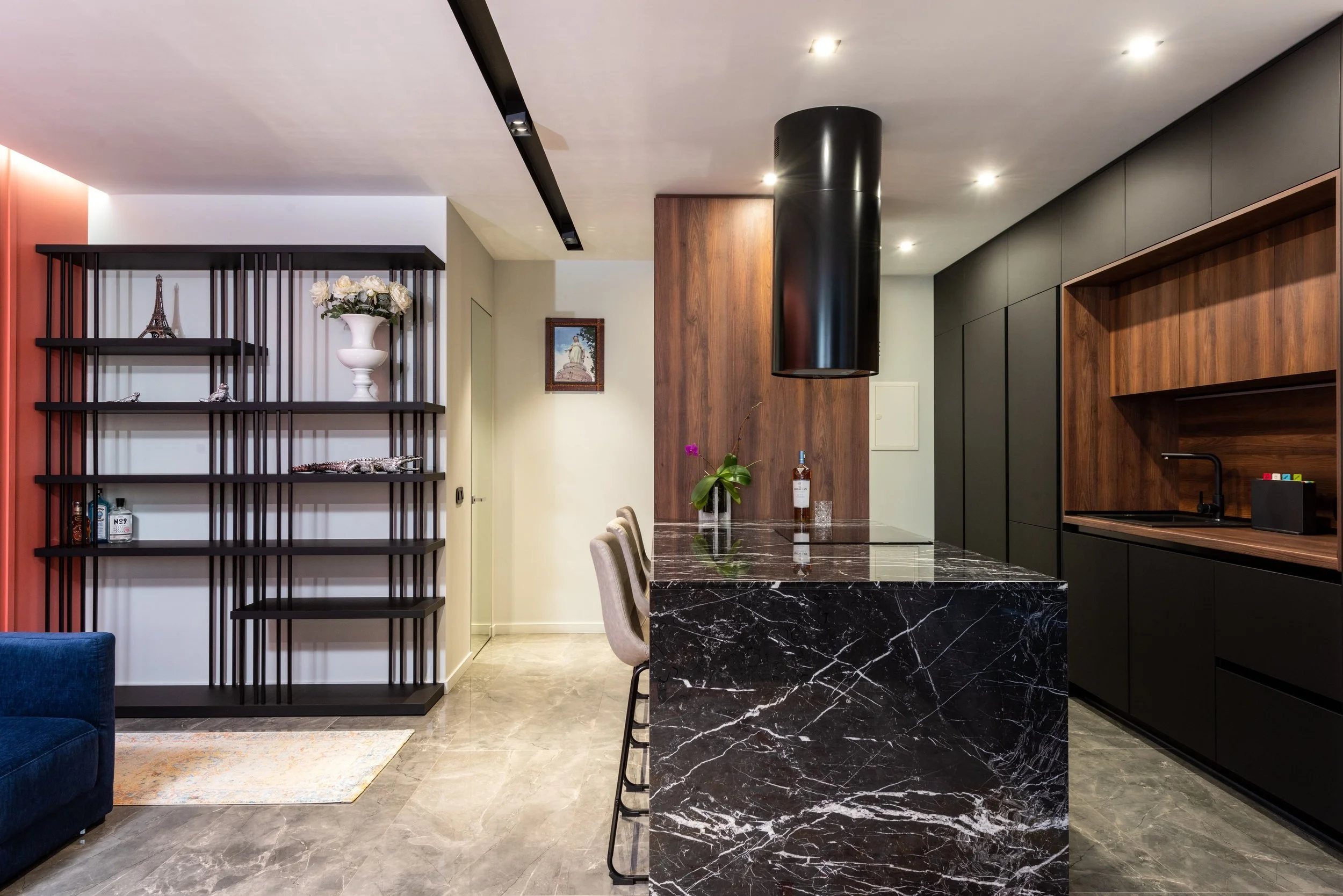
Max Vakhtbovych - shelving system
Look for options with adjustable shelves, interchangeable pieces, stackable sections, or configurations that can stand by itself. A shelving system might act as a bookcase in one home, a room divider in another, and an entryway storage solution somewhere else.
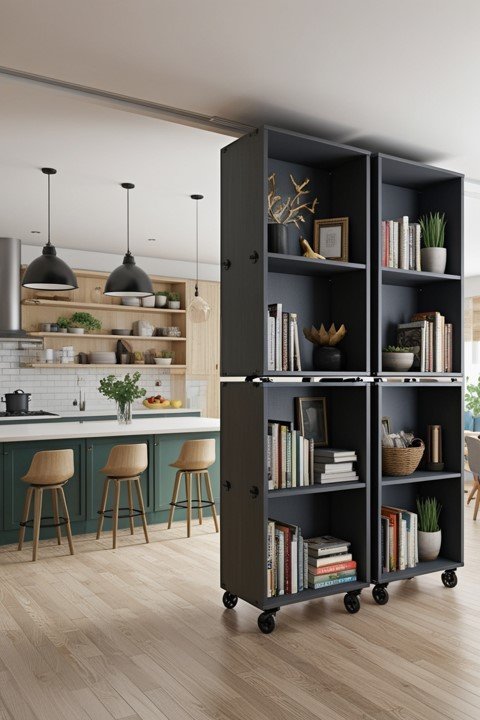
A room divider
This is a great example of a room divider. It’s super functional storage that literally divides the two spaces and it’s on wheels which adds mobility to the mix for quick room reconfigurations when needed.
This is also where aesthetics matter.
If you're going to keep rearranging something, choose a system that looks good in more than one configuration. You don't want the furniture to scream, “I was designed to go exactly here.”
A truly great modular piece should be flexible so it can work in different spaces with different layouts.
4. Furniture That Has a Second Job
Some of the smartest flexible furniture isn't technically a modular “system” at all. It's furniture that does more than one thing.
Think:
An ottoman with hidden storage
A bench that works as seating and an entryway drop zone
A sleeper sofa that becomes a guest bed
A console that doubles as a desk
A Murphy bed that frees up floor space during the day
A storage bench that can move from the entryway to the foot of a bed
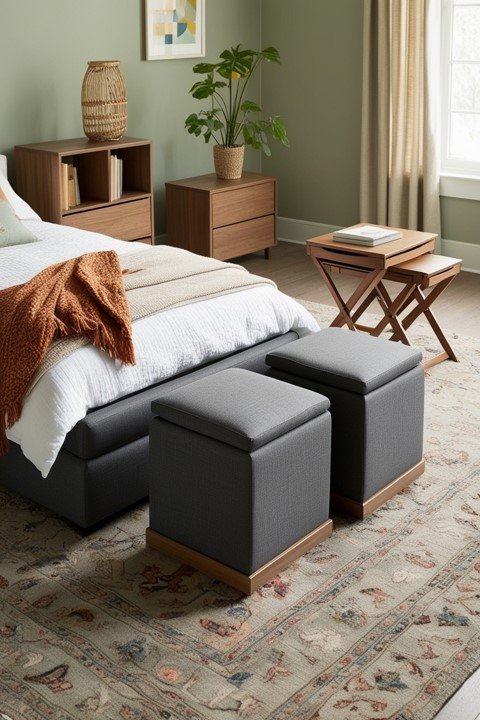
Ottomans with hidden storage
For people who move often, multifunctional furniture is especially useful because you're less likely to accumulate pieces that only work in one specific room.
There's also a psychological benefit: less furniture can make a small home feel less crowded. Also, less unnecessary furniture can help small rooms function a whole lot better too.
Instead of thinking, “I need a couch, a guest bed, and somewhere to store blankets,” you're looking for ideally one piece that can cover all those needs.
That's a very 2026 way of thinking about small-space furniture: make every square foot earn its keep.
5. Pieces That Can Adapt to Your Next Home
This might be the most important category of all.
The best modular furniture for frequent movers isn't necessarily the furniture with the most hinges, wheels, or configurations. It's furniture that gives you options later.
Imagine you're buying a shelving system. Today, it fits perfectly across one wall. Six months from now, you move somewhere smaller… Can you use it in a different way?
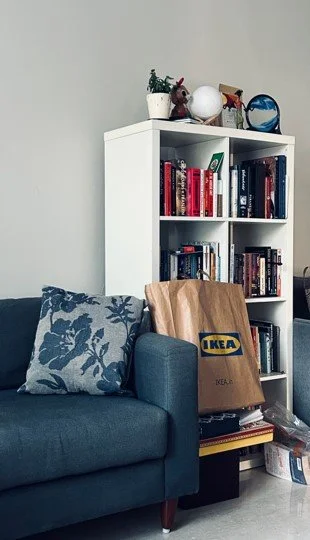
Suraj Sapaliga- Ikea Kallax units
The Ikea Kallax Units have long been a favorite of small space dwellers for many years. I’ve seen this piece being used as a etagere shelf, a room divider that you can see through. Lay it horizontally and it becomes a great bench for shoe storage in an entry space, or as a bench that has storage at the end of a bed or in the mud room.
Or maybe you're buying sectional seating. Can you remove one piece if your new living room is smaller?
Maybe you go for a bar cart and use it as a literal “bar cart” in one apartment and then in the next it becomes a mobile printer and file holder for a small office space.
These are the questions that turn ordinary furniture into a long-term purchase.
Think about your potential next home, not just your current one.
But the most important thing before making ANY furniture decision is to measure your rooms so you know exactly how much space you’re working with. That simple action will help you avoid making the wrong purchasing decisions every time.
What to Look for Before You Buy
If you're shopping specifically because you expect to move, I'd keep this little checklist handy:
Measure the individual pieces, not just the assembled furniture. A five-foot sofa isn't necessarily difficult to move. A five-foot sofa made from one rigid frame might be.
Check the connectors. If the furniture takes a professional to dismantle and rebuild, you're losing some of the advantages of modularity.
Think about weight. Lightweight isn't always better, but you don't want every move to require three people and a hand truck.
Look for replaceable or add-on components. Furniture that can grow or shrink is more useful than pieces with only one possible configuration.
Avoid overly specific proportions. A piece bought to fit perfectly beneath one particular window, or in a specific niche, may become useless when you move.
Consider how it looks apart. Modular furniture should still look finished when you change the arrangement.
Check the return policy. This is especially important when you're buying furniture for a home you've just moved into. Something that looks perfect online may overwhelm a smaller room in person.
The Bottom Line
Moving often doesn't mean you have to live with temporary-looking furniture.
Actually, I'd argue the opposite. If you're a renter or someone who expects your home to change, modular furniture can be a way to buy better once and adapt later.
The goal isn't to find furniture that can do absolutely everything. That's how you end up with a coffee table that somehow turns into a desk, a dining table, and probably a small helicopter.
Instead, look for pieces that can handle two or three realistic versions of your life.
A sofa that can become a chair-and-loveseat combination. A table that can shrink when you're alone and expand when friends visit. Shelving that can move with you. Storage that can change configuration. Furniture that can serve a different purpose when your floor plan inevitably does.
That's the real benefit of modular furniture.
Your furniture doesn't have to know where you're going next. It just needs to be ready when you get there.
Read Next:
Creative Solutions for Awkward Corners Throughout Your Home
Every room has corners, and most of them are dead space. A professional small-space designer breaks down room-by-room corner solutions — from the corner banquette to the L-shelf bookcase — and explains why solving your corners is the highest-return design move in a small home.
Michael is Principal designer and blogger at Michael Helwig Interiors in beautiful Buffalo, New York. Since 2011, he’s a space planning expert, offering online interior e-design services for folks living in small homes, or for those with awkward and tricky layouts. He’s a frequent expert contributor to many National media publications and news outlets on topics related to decorating, interior design, diy projects, and more. Michael happily shares his experience to help folks avoid expensive mistakes and decorating disappointments. You can follow him on Pinterest, Instagram and Facebook @interiorsmh.