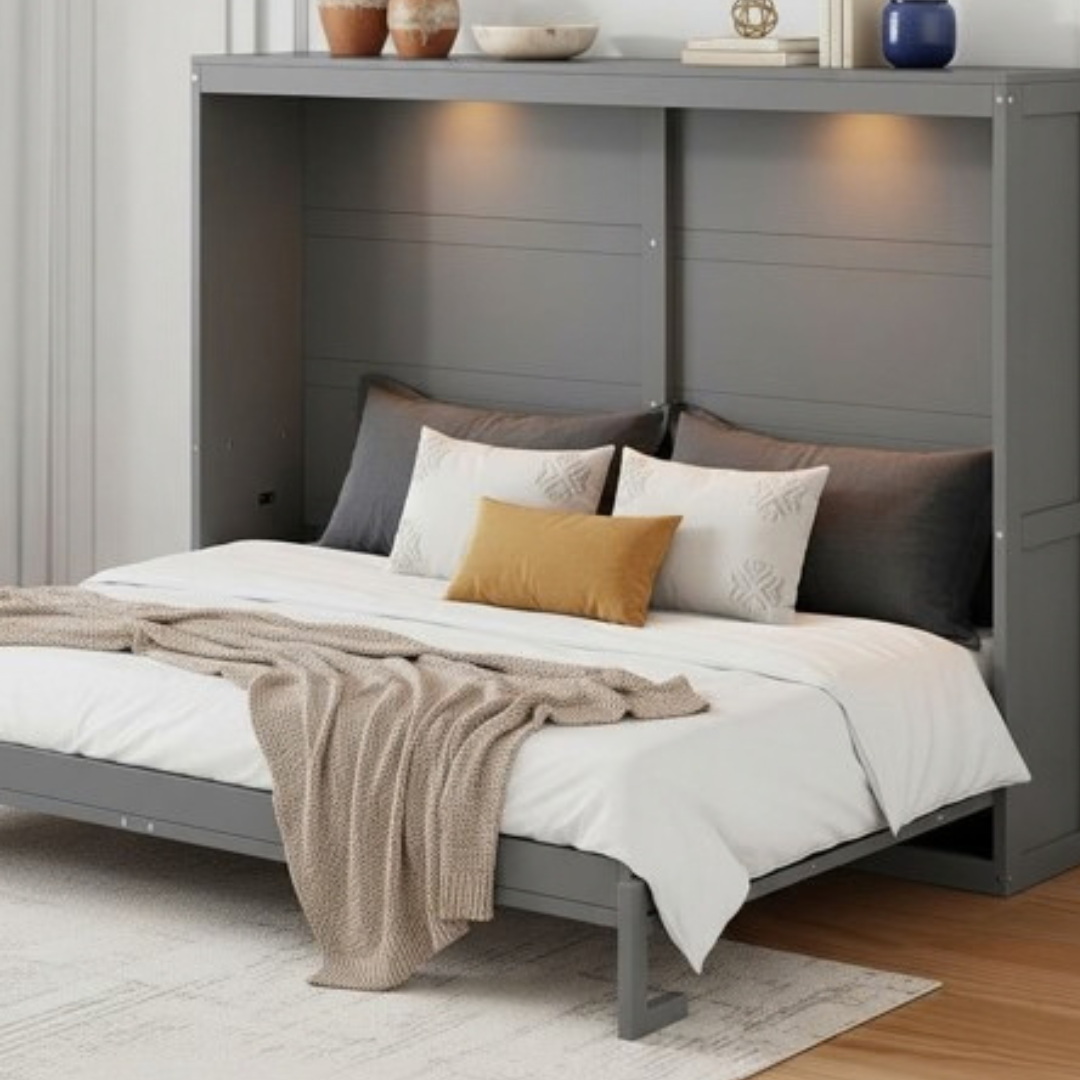
I'm going to save you $3,000 and a year of frustration.
A friend called me last year, excited about the Murphy bed she'd just ordered for her 10x12 home office. 'It's perfect!' she said. 'Now I can have a guest room AND an office!'
Three months later, she called back. The Murphy bed was installed. It looked great. And she hated it.
Why? Because every time a guest stayed over, she had to completely dismantle her desk setup—unplug monitors, clear the desk, move the chair across the room—just to pull the bed down. And when the bed was down, she couldn't get to her file cabinet or shelves.
The Murphy bed wasn't the problem. The room layout was. And nobody had told her that before she spent $2,800.
Murphy beds are not magic. They don't create space—they trade one function for another. And that trade only works if your room layout and size support it.
This isn't the ‘best Murphy beds to buy' roundup. This is the space planning stuff nobody tells you before you drop thousands on one that might not actually solve your problem…
I’m covering: the math that determines if a Murphy bed makes sense, the 4 mistakes that make them unusable, the 3 layout configurations that actually work for most smaller rooms, and yes—the best options to buy if you pass the test…
Make Your Decision Carefully: Does Your Room Actually Need a Murphy Bed?
Before we talk about products, we need to talk about whether a Murphy bed is even right for your space. Most people skip this step and regret it.
Question 1: How Often Will This Room Function as a Guest Room?
Be brutally honest. Not 'how often could guests stay' but 'how often DO guests actually stay.'
If the answer is 'less than 10 nights per year:
A Murphy bed is probably overkill. You're spending $2000-5000 and compromising your daily-used home office for something that gets used a couple times per year. Consider: a high-quality air mattress ($150-400), a sleeper sofa ($800-1500), or just telling guests to go to a hotel. (Brutal huh? LOL.)
If the answer is '10-30 nights per year:
This is the Murphy bed sweet spot. Frequent enough to justify the investment, infrequent enough that the conversion hassle is manageable.
If the answer is 'more than 30 nights per year:
You don't have a home office with occasional guests. You have a guest room that you're trying to use as an office. Either dedicate the room for guests and find another workspace or make a dedicated guest room someplace else in the house.
Reality Check: If your parents visit for a week every month, this room needs to BE a guest room. Stop fighting it.
Question 2: Can You Function with Your Desk Against the Wall?
This is the deal-breaker question most people ignore. When a Murphy bed is DOWN, it occupies the center of your room. Your desk must be against a wall—not floating, not in the middle, not in an alcove that gets blocked.
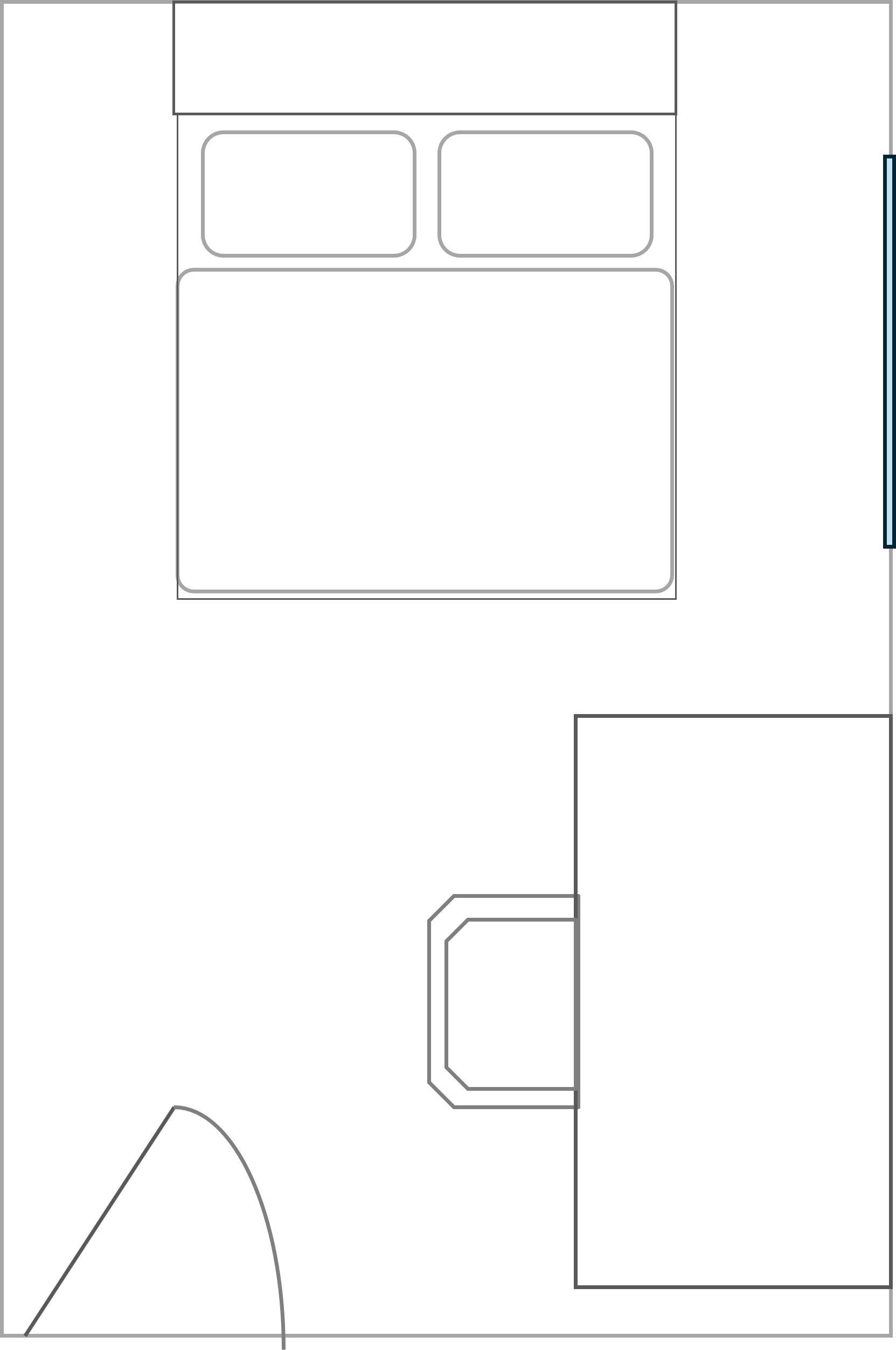
when your bed must be against the wall
Can you work effectively with:
Your desk against one wall (not centered under a window)
No desk depth (standard 24-30 inch desk, nothing deeper)
Limited desk accessories (no sprawling multi-monitor setups you can't easily move)
Clearing your desk when guests arrive (monitors unplugged, keyboard put away)
If the answer to any of these is 'no,' a Murphy bed will frustrate you every single time you have guests. #truthbomb.
Question 3: Do You Have 72 Inches of Clearance When the Bed is Down?
Here's the math most folks forgets: A queen Murphy bed is 80 inches long when opened. Add 12 inches in front for bedding bulk and ease of use. That's 92 inches from the wall.
In a 10x12 room (120 inches deep), that leaves 28 inches between the foot of the bed and your desk/furniture. That's barely walkable, but passable, definitely not usable workspace.
The clearance test:
Measure your room's usable depth (wall to wall, minus window/doors)
Subtract 92 inches (queen bed open)
You need 30 inches MINIMUM remaining for functional space
If you have less than 30 inches left, the room is too small for a queen Murphy bed
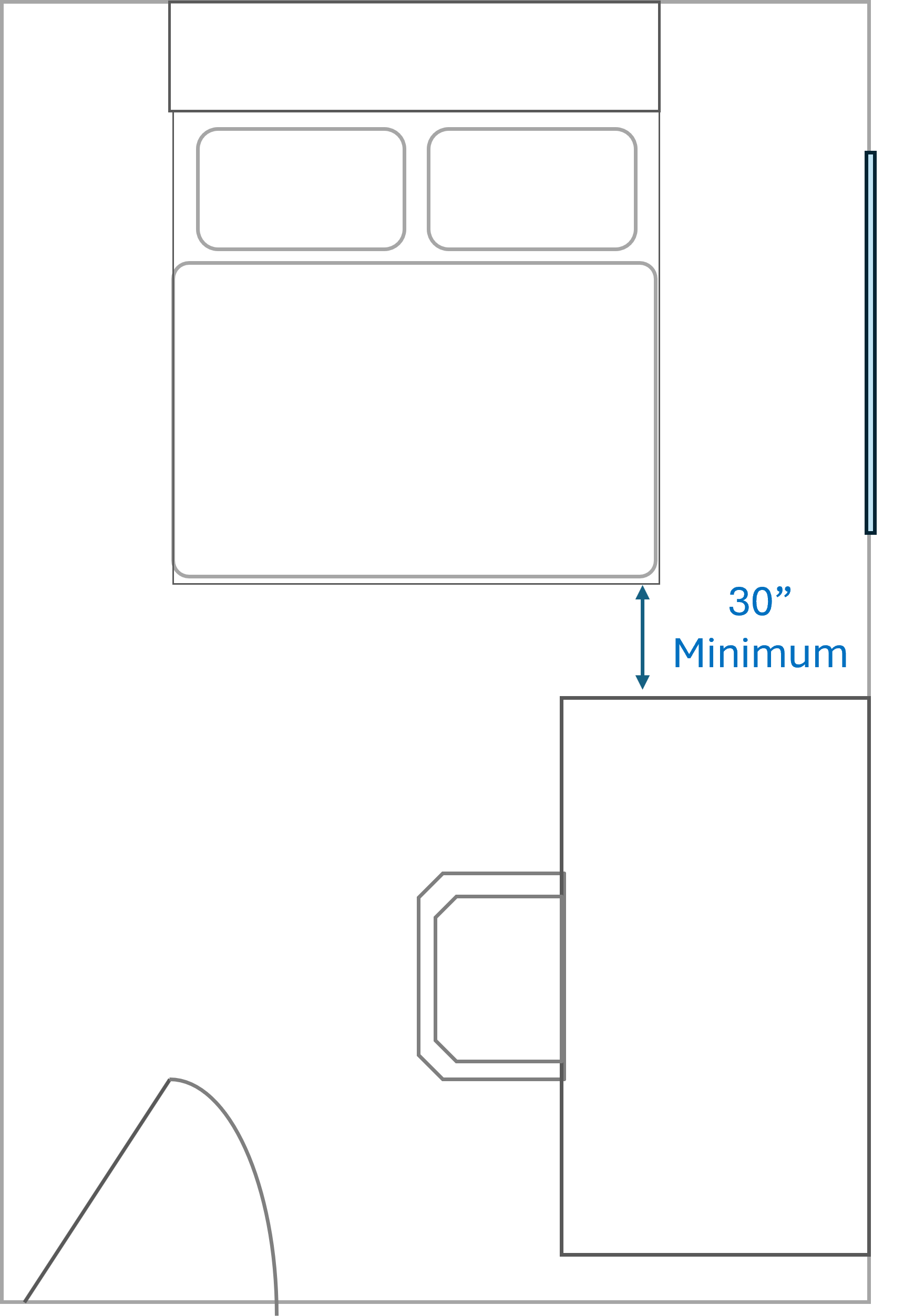
Murphy bed clearance test 30” minimum opened
Your options if you fail this test: (1) Use a twin Murphy bed instead (63 inches long), (2) Mount the Murphy bed on the SHORT wall instead, or (3) Accept that Murphy beds won't work in this room.
Question 4: Are You Willing to Sacrifice One Function When Using the Other?
This is the expectation-setting question. Murphy beds don't let you use the room for both functions simultaneously. When the bed is down, you lose office access. When the bed is up, you have no guest room.
Can you handle:
Not working in your office while guests are staying
Moving your work to another location when the bed is down
Guests not having access to storage/closets blocked by the bed
The 10-minute conversion process each way (down for guests, up when they leave)
If you're hoping to 'work around' the bed when it's down or have guests 'make do' when you need the office—this won't work. Pick one function at a time.
The Verdict: If you answer 'no' or 'maybe' to any of these four questions, a Murphy bed is the wrong fix. Save your money. Seriously.
The 4 Murphy Bed Mistakes That Make Them Unusable
Even if you pass the decision framework, you can still ruin the whole setup with these mistakes. I see them a lot.
Mistake #1: Buying the Wrong Size Bed
Everyone wants queen size because that's what 'normal' guest rooms have. But in a 10x12 dual-function room, a queen Murphy bed often doesn't make sense.
The Size Reality Check
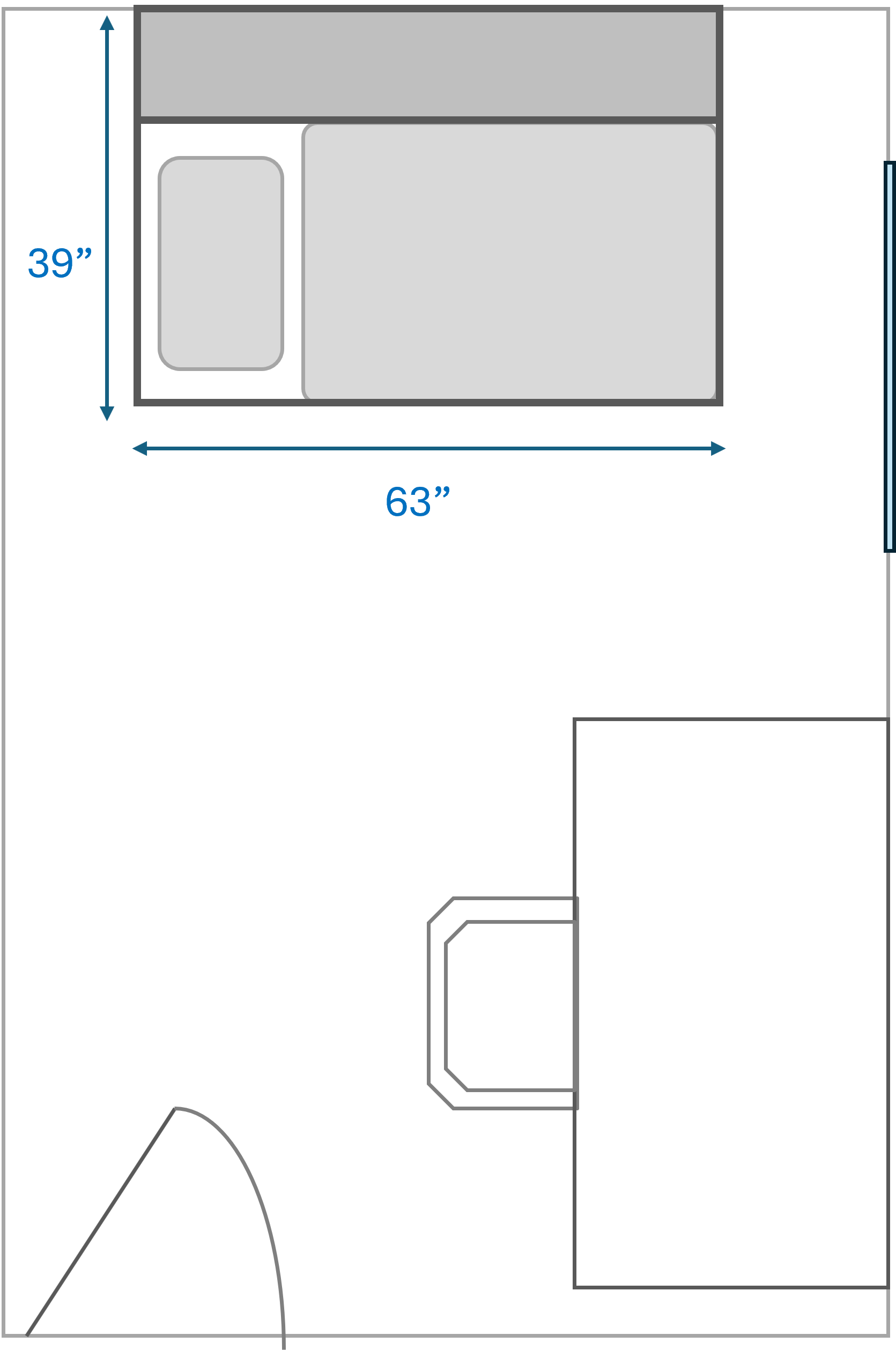
Twin Murphy Bed
Twin Murphy bed: 63 inches long when down, 39 inches wide. Perfect for single guests, kids, or tight spaces. Leaves WAY more usable office space.
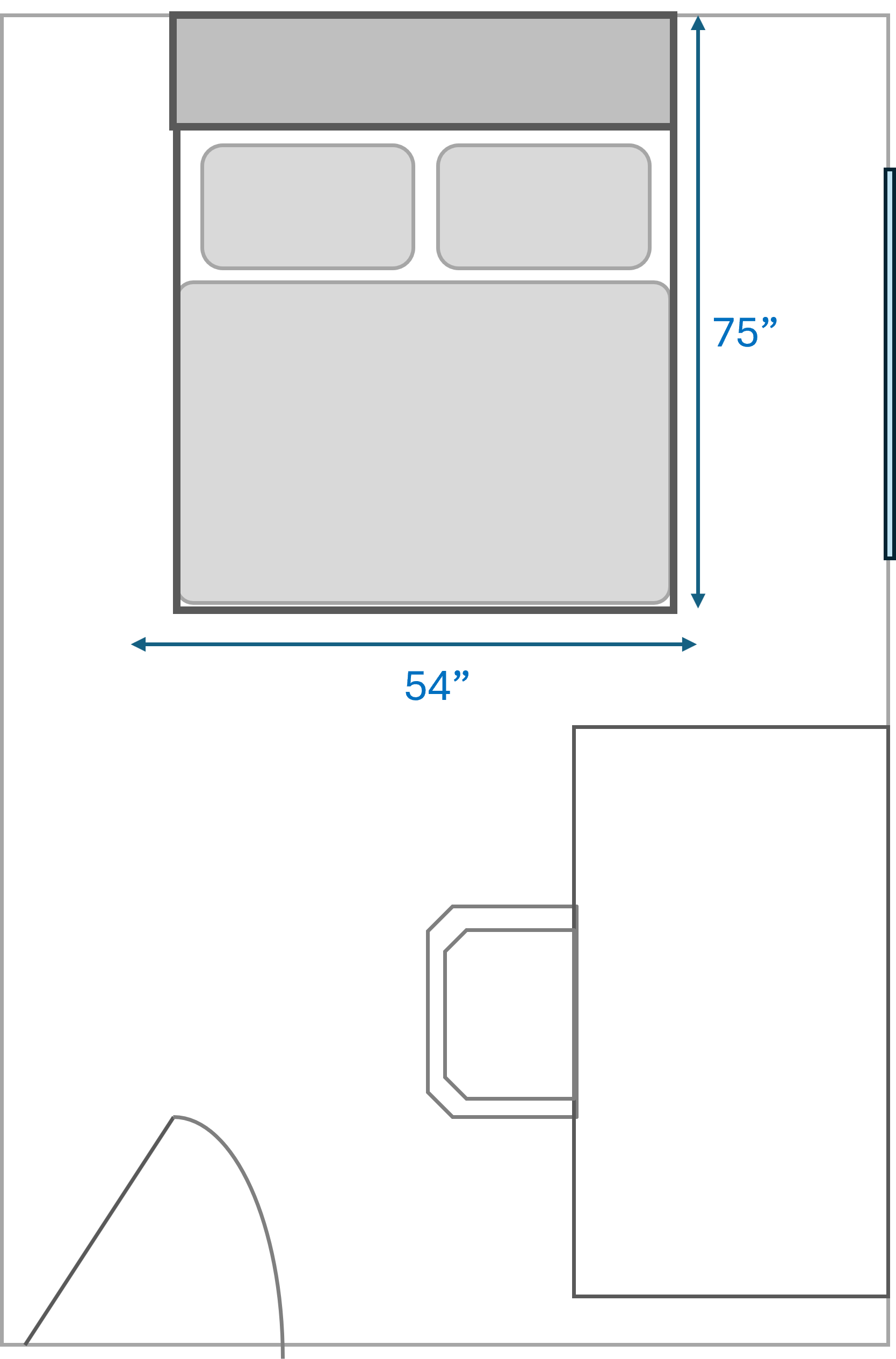
Full Murphy Bed
Full Murphy bed: 75 inches long, 54 inches wide. Comfortable for couples, more forgiving on clearance than queen.
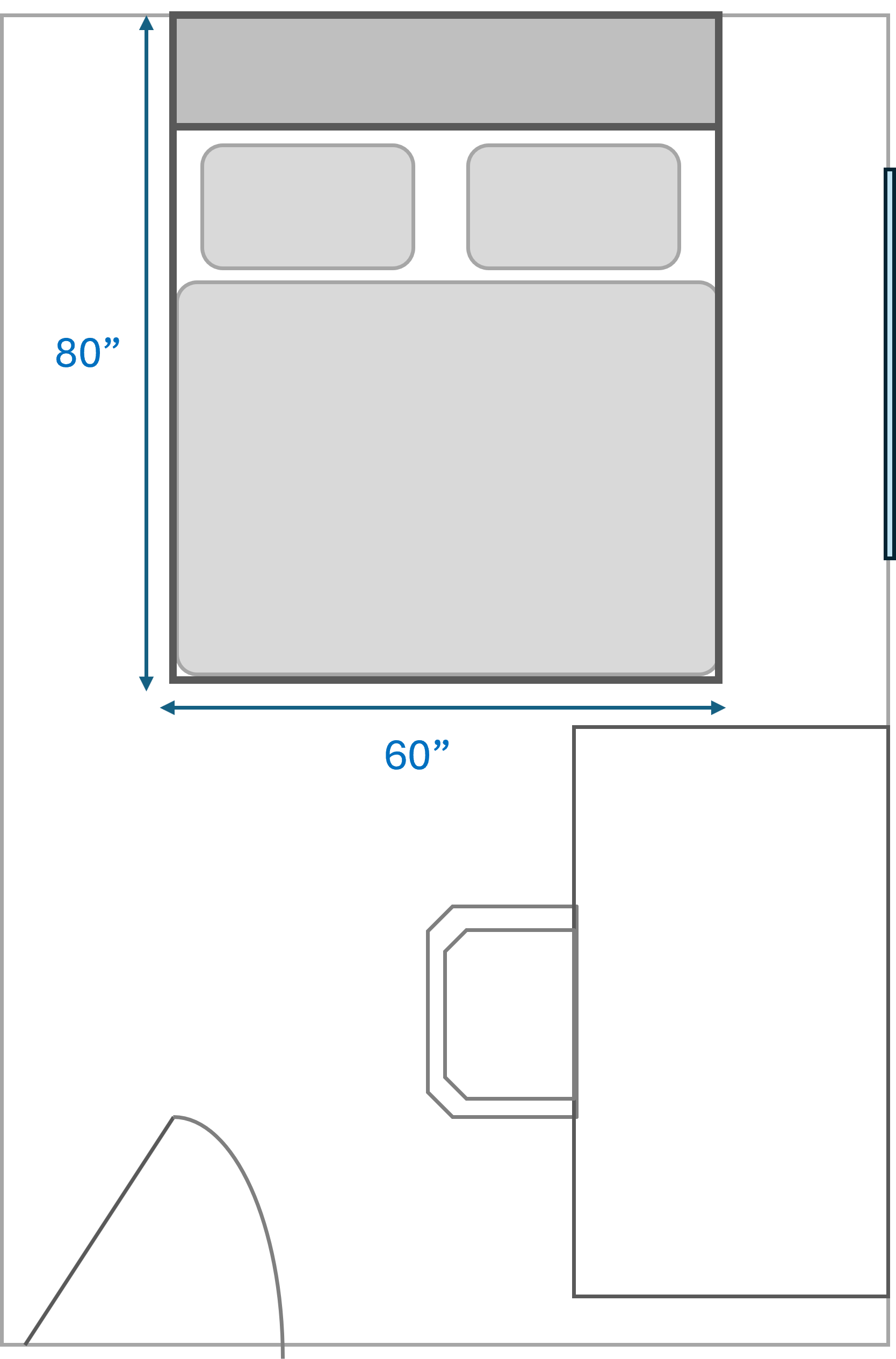
Queen Murphy Bed
Queen Murphy bed: 80 inches long, 60 inches wide. This only works if your room is genuinely 12+ feet deep with minimal furniture.
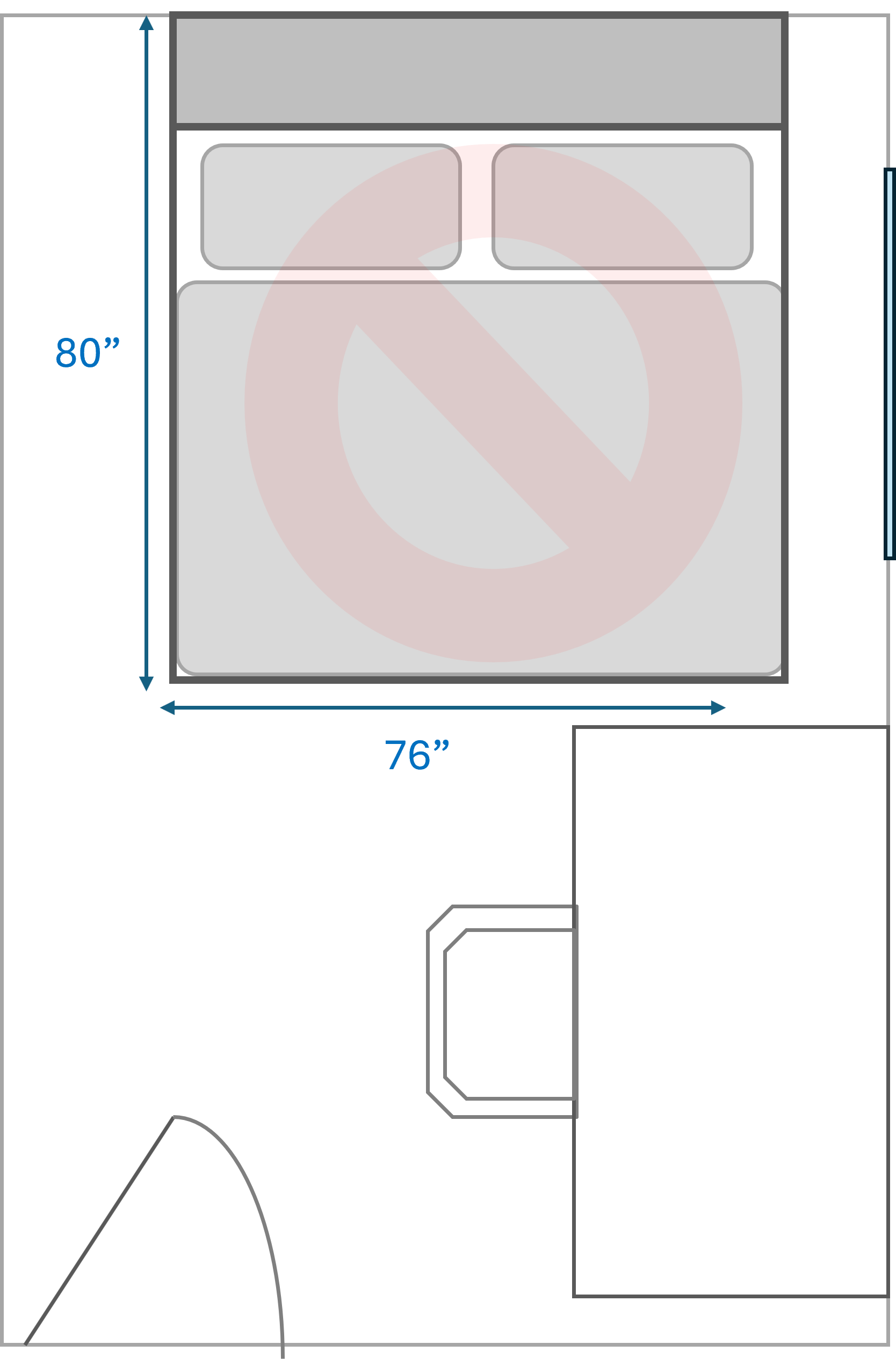
King Murphy Bed
King Murphy bed: Don't. Just don't. At 80x76 inches, this only works in rooms 14+ feet wide. Not relevant for 10x12 spaces.
The honest assessment: If your guests are usually solo travelers or kids, a twin saves you 17 inches of depth (massive in a small room). If couples visit regularly, go full—not queen. The 5-inch difference in length matters more than the 6-inch width.
Real Example: Client insisted on queen Murphy bed for 10x11 room. When the bed was open, it left 24 inches of clearance. Couldn't walk around it. Replaced with full bed, problem solved. It cost her $800 in returns/restocking, which was painful but worth it.
Mistake #2: Not Planning for Clearance When the Bed is Down
People measure the bed dimensions. They forget about the SPACE AROUND the bed that needs to stay clear.
The Clearance Requirements
In front of bed: 30 inches minimum for walkway (36 inches ideal)
Sides of bed: 24 inches minimum to access bed, 30 inches if you want nightstands
Behind/beside the mechanism: Nothing can be within the bed's swing radius when open
Door clearance: The room door must be able to fully open without hitting the bed when down
In a 10x12 room (120x144 inches), a queen bed (80 inches down + 12 inches bedding) takes 92 inches. That leaves 28 inches, which is below the 30-inch minimum. This is why layout planning matters MORE than the bed itself.
The Solution
Before you buy, tape out the bed footprint on your floor (use painter's tape). Live with it for a week. Walk around it. See what furniture gets blocked. If it feels cramped with tape, it'll be worse with an actual bed. Make sense?

Tape out the bed’s footprint on the floor
Mistake #3: Choosing a Style That Blocks Your Office Function
Murphy beds come in three basic styles. Two of them will ruin your dual-function room.
Style 1: Cabinet Murphy Bed (The Problem Style)
These look like an armoire when closed—a cabinet, bookshelf, or wardrobe. Beautiful. But they stick out 20-24 inches from the wall even when the bed is UP. In a 10x12 room, that's 20 inches of your office space permanently eaten by a closed cabinet.

Cabinet Murphy Bed
When to use it: Never in a dual-function room. Only in dedicated guest rooms where you can have a “cabinet” size piece of furniture that doesn’t function as storage.
Style 2: Wall-Mounted Murphy Bed (The Right Choice)
These mount flush or near-flush to the wall when stored. The mechanism sits in the wall cavity or surface-mounts with minimal protrusion (typically 8-12 inches). When the bed is UP, you get your full room back.
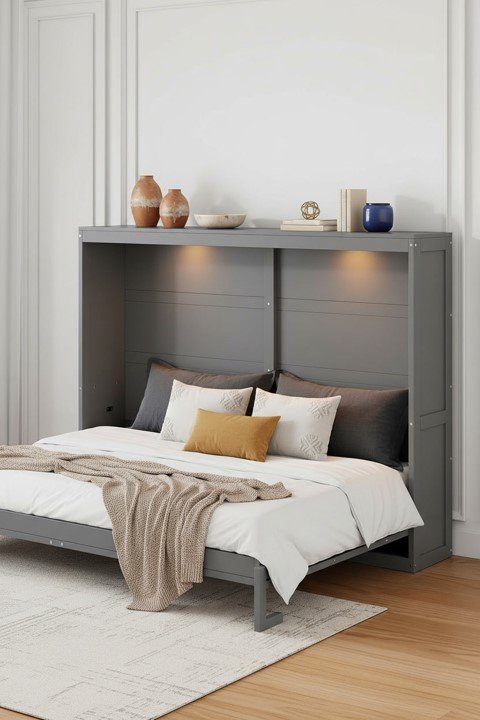
Wall-mounted Murphy Bed
When to use it: Always in dual-function rooms. (This is the only style that doesn't compromise your office when the bed isn't in use.)
Style 3: Desk Murphy Bed Combo (Proceed with Caution)
These have a desk attached that folds down when the bed goes up. Sounds perfect for office/guest room, right? Usually isn't.
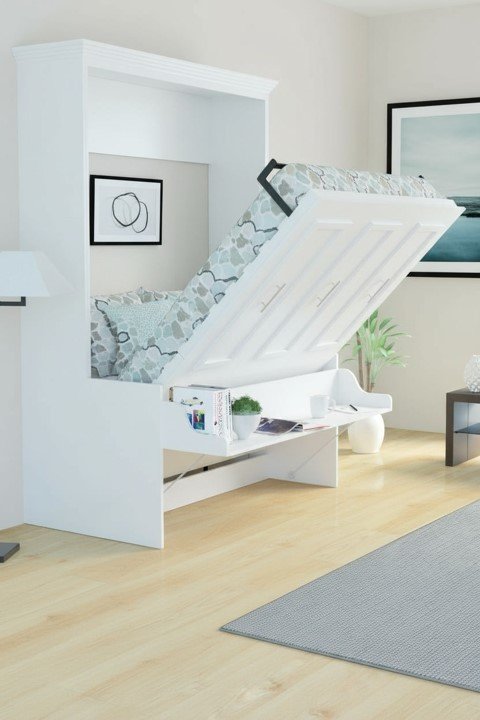
Desk & Murphy Bed Combo
The problems:
Desk is shallow (12-18 inches) and can't hold real work setups
Everything on the desk must be cleared before lowering the bed
Desk height is often wrong (too high or too low for comfortable work)
You're locked in with the desk location (can't rearrange if room layout changes)
When to use it: Only if your 'office' is really just a laptop spot for occasional email checking. Not if you work from home daily.
Bottom Line: Wall-mounted Murphy beds are almost always the right choice for dual-function rooms. Skip the cabinet and combo styles.
Mistake #4: Trying to Use the Room Fully for Both Functions
This is the expectation mistake. People think a Murphy bed means they can have a FULL office and a FULL guest room in the same space. You can't.
What You Actually Get
With bed UP (office mode):
Full office function—desk, chair, storage, bookshelves
Guest room in standby—ready to convert in 10 minutes
Guest storage is minimal or nonexistent (closet probably full of office supplies)
With bed DOWN (guest mode):
Functional sleeping space—bed, minimal nightstand access
Office is blocked—can't use desk, can't access some storage
Guest amenities are basic (no dresser, limited hanging space, probably no privacy)
Setting the Right Expectations
For YOU (the office user):
Accept that you'll lose office access while guests visit. Plan to work elsewhere or schedule guest visits during off-work times. This is a trade-off, not a perfect solution.
For GUESTS:
They're getting a comfortable bed in a makeshift guest room. Not a hotel suite. Don't apologize—just be clear about what they're getting (limited storage, shared bathroom, etc.).
The Truth: Murphy beds are compromise solutions. They work great when you accept the compromises. They fail when you expect perfection.
The 3 Murphy Bed Layouts That Actually Work in a 10x12 Room
If you've passed the decision framework and avoided the four mistakes, here are the three layout configurations that function in a standard 10x12 dual-function room.
Layout #1: Murphy Bed on Long Wall, Desk on Short Wall (The Standard)
The Setup
Murphy bed (full or queen) mounts on the 12-foot wall, centered
Desk (48-60 inches wide) against the 10-foot wall opposite entry
When bed is down, it extends toward desk but leaves 24-30 inches clearance
Desk chair must move to corner or out of room when bed is down
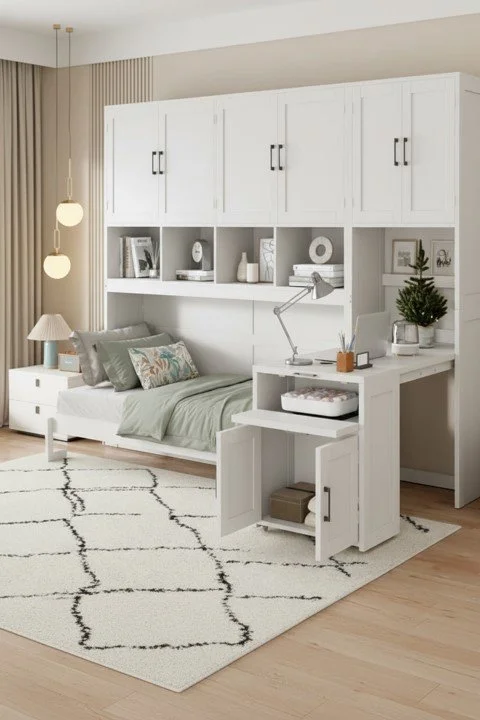
Murphy Bed on Long Wall, Desk on Short Wall
Why This Works
Desk stays functional until the moment you need the bed. When bed is UP, you have full office access. When bed is DOWN, desk is still there—you just can't sit at it.
What You Can Fit
Office mode: Desk + chair, bookshelf beside desk, small filing cabinet
Guest mode: Bed + narrow nightstand (if room), maybe a chair in corner
The Trade-Off
When the bed is down, you lose 60-70% of your office function. Acceptable if you don’t have guests often.
Layout #2: Murphy Bed on Short Wall, L-Shaped Desk Along Long Wall (The Power User)
The Setup
Murphy bed (full only—queen won't fit) mounts on the 10-foot wall
L-shaped or long desk (72+ inches) runs along the 12-foot wall
When bed’s down, it extends into the room but doesn't block desk access
You can still walk around the bed to reach the desk (tight but possible)

Murphy Bed on Short Wall, L-Shaped Desk Along Long Wall
Why This Works
Best for people who work from home full-time and can't afford to lose office access even when guests visit. Bed deploys perpendicular to desk, so desk remains partially usable.
What You Can Fit
Office mode: Large L-desk, chair, extensive storage, full work setup
Guest mode: Bed + you can squeeze past to desk (not comfortable, but possible)
The Trade-Off
Room feels cramped when bed is down. Guests will feel like they're sleeping in an office (because they are). But YOU can still work if needed.
Layout #3: Twin Murphy Bed on Long Wall, Full Office Setup (The Practical)
The Setup
Twin Murphy bed (63 inches down) mounts on 12-foot wall
Full office setup on opposite wall—desk, storage, seating area
When bed’s down, significantly more clearance than queen (17 inches difference)
Office stays mostly functional even when bed is down
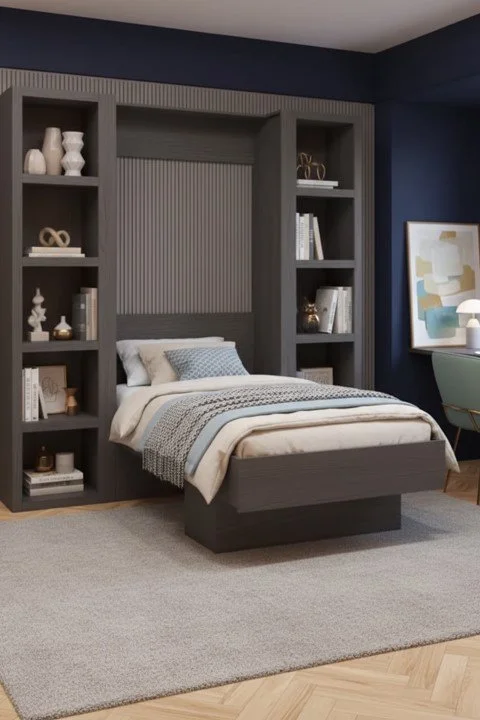
Twin Murphy Bed on Long Wall, Full Office Setup
Why This Works
Twin beds get unfairly dismissed. But in a 10x12 room, the size difference is massive. You gain 17 inches of usable space, which means you can actually walk around the bed AND maintain some office function.
What You Can Fit
Office mode: Everything—desk, chair, bookshelf, filing cabinet, reading chair
Guest mode: Bed + nightstand + chair + you can still access your desk if needed
The Trade-Off
Guests get a twin bed, not a queen. But most solo guests or kids prefer a functional room over a cramped queen that barely fits.
Real Talk: I'd take Layout #3 with a twin 9 times out of 10. The extra space is worth more than the bed size.
The Best Murphy Bed Options to Buy (Now That You Know You Need One)
If you've made it this far and still want a Murphy bed, here are the best options at different price points. I'm focusing on wall-mounted styles only—the kind that work in dual-function rooms.
Budget Level: $1000-1800 (DIY Kits)
Option: Murphy Bed Hardware Kits (Rockler, Woodworker's Hardware, Create-A-Bed)
What you get: The lifting mechanism, hardware, and instructions. You provide the wood frame, mattress, and labor. So, this is the full “diy option.”
Price: $400-900 for hardware + $300-600 for lumber + $300-600 for mattress = $1000-1800 total
Installation: DIY if you're handy (8-12 hours). Hire a handyman if not ($300-600).
Best for: Budget-conscious, handy people who want customization. You choose the wood finish and mattress quality.
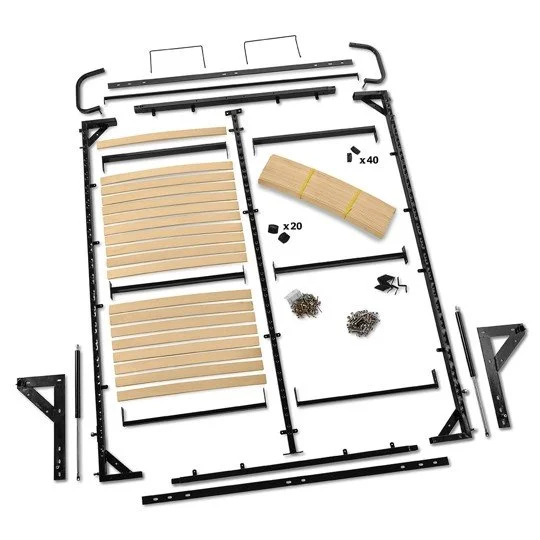
Rockler I-Semble Murphy Bed Hardware Kits with Mattress Platforms
Pros:
Cheapest option by far
Customizable to your room
You control wood quality and finish
Cons: Requires woodworking skills, time investment, risk of mistakes
Mid-Range Level: $2000-3500 (Pre-Built, Simple Install)
Option 1: Lori Wall Bed (Murphy Bed Depot, Wayfair)
What you get: Complete wall-mounted unit, piston lift system, comes in multiple finishes, and either vertical or horizontal orientation. Mattress not included.
Price: $2600-$3900 (depending on size) + $300-600 mattress. $2900-$4500 total (depending on size/orientation.)
Installation: DIY-friendly (2-4 hours, two people). Professional installation available ($200-400).
Best for: Most people. Good quality, reasonable price, manageable installation.
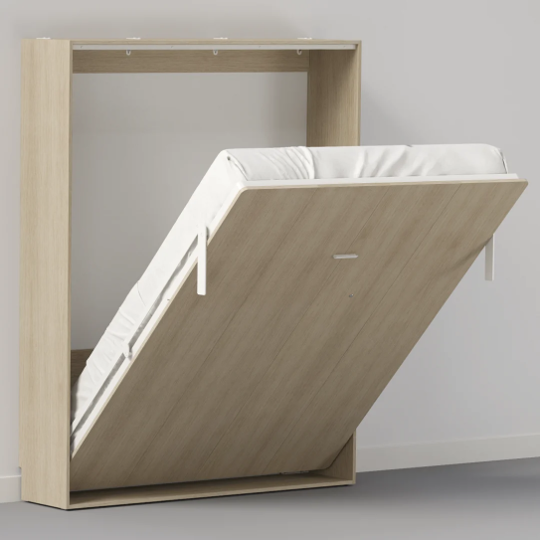
The Lori Bed - Queen / Vertical
Pros:
Pre-finished, professional look
Easier installation than DIY kits
Multiple finish options (white, gray, walnut)
Cons: Still requires wall mounting and assembly
Option 2: Night & Day Furniture Murphy Cube (Amazon, Wayfair)
What you get: Wall-mounted cabinet-style bed that's more flush than traditional cabinets. Includes mattress.
Price: $2200-3000 (mattress included)
Installation: Moderate difficulty (3-5 hours). Professional recommended.
Best for: People who want a more 'furniture' looking option but still need dual function.
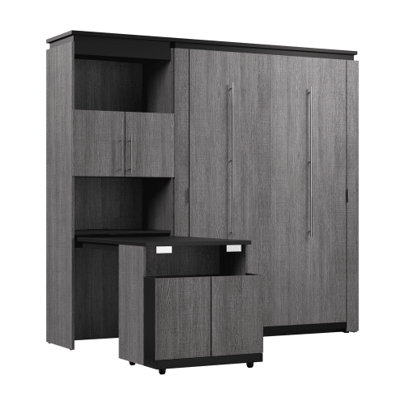
Bestar Murphy Bed with Desk
Pros:
Includes mattress (saves shopping)
Looks more like furniture than mechanism
Cons: Protrudes 12-16 inches when closed (eats office space)
Premium Level: $3500-6000 (Professional Grade)
Option: Bestar by Pur Horizontal Murphy Bed (Wayfair, Costco, Bestar direct)
What you get: High-end wall bed with superior piston system, premium finishes, sometimes includes desk or shelving units.
Price: $3500-5000 + mattress $500-1000 = $4000-6000 total
Installation: Professional recommended (included with some retailers). 4-6 hours.
Best for: People who want it done right, long-term investment, daily use scenarios.
Pros:
Best quality hardware and finish
Smooth operation (easier daily use)
Longer warranty (5-10 years)
Integrated shelving/desk options available
Beautiful, customizable, and can be potentially less expensive buying directly from the company instead of retail partners.
Cons: Expensive. Integrated desk versions still have that shallow desk problem.
My Recommendation: For most people, mid-range is the sweet spot. You get quality without overspending, and installation is manageable.
Your Murphy Bed Decision Checklist
Before you spend $2000-5000, run through this checklist:
☐ Guests will stay 10-30 nights per year (not more, not less)
☐ You can function with your desk against the wall
☐ Your room has 122+ inches of depth for queen (or you'll use twin/full)
☐ You're willing to sacrifice one function when using the other
☐ You've taped out the bed footprint and lived with it for a week
☐ You're buying wall-mounted (not cabinet or combo desk style)
☐ You've chosen twin or full (not defaulting to queen)
☐ Your layout matches one of the three functional configurations
☐ You've set realistic expectations about compromises
If you checked all nine boxes, buy the Murphy bed. You've thought it through.
If you checked fewer than nine, reconsider. A high-quality sleeper sofa or air mattress might serve you better for a fraction of the cost and complexity.
Murphy beds aren't magic. They're mechanical solutions to spatial problems, and they only work when the math works. Do the math first. Buy the bed second.
Your 10x12 room can absolutely function as both office and guest room—if you plan it right.
Have you installed a Murphy bed? What worked (or didn't)? Drop a comment and help others avoid the mistakes.
Read Next

My Tips for Organizing a Small Home Office for Maximum Productivity
A disorganized home office costs you more than time — it costs you focus. Here's where I would start: the desk surface system, the paper triage method, and the cable fix that takes 20 minutes and eliminates daily frustration for good.

Michael is Principal designer and blogger at Michael Helwig Interiors in beautiful Buffalo, New York. Since 2011, he’s a space planning expert, offering online interior e-design services for folks living in small homes, or for those with awkward and tricky layouts. He’s a frequent expert contributor to many National media publications and news outlets on topics related to decorating, interior design, diy projects, and more. Michael happily shares his experience to help folks avoid expensive mistakes and decorating disappointments. You can follow him on Pinterest, Instagram and Facebook @interiorsmh.