Tricky or awkward corners are the most misunderstood spaces in your home.
Every room has at least four of them. Most homes have dozens if you count the hallways, the staircase landings, the spots where furniture doesn't “fit”. And in almost every house I've worked in, most of those corners are doing one of two things: nothing at all, or storing whatever was placed there temporarily six months ago and never moved.
Dead space is what I call these corners. They're not contributing to the room's function or its look. They're just there — a consequence of the architecture that nobody ever got around to solving.
In a small home, dead space is expensive. You're paying rent or mortgage on every square foot, and a corner that holds a sad floor lamp and a forgotten stack of magazines is costing you money and making the room feel smaller than it is. Finding use for them is one of the highest-return design moves you can make.
Here's how I think about corners, room by room — and the specific solutions I've found work best for the different types of awkward corner situations you'll find in a real home.
First: Why Corners Are Hard
Before we get to solutions, it's worth understanding why corners are such a consistent problem. It comes down to geometry and furniture design.
Most furniture is designed for walls, not corners…
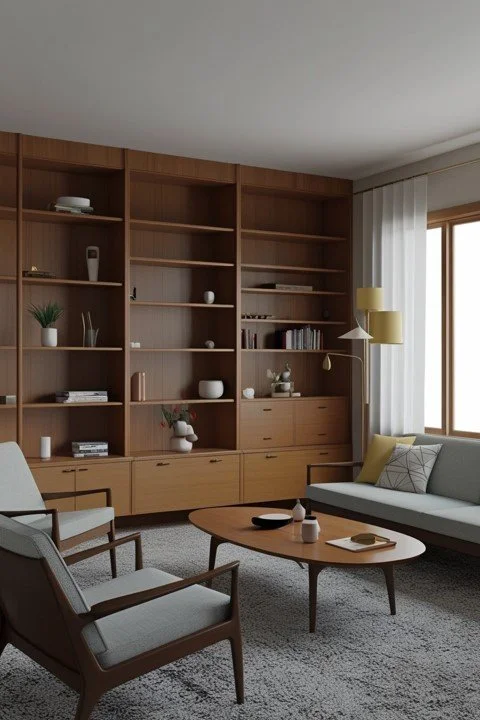
A sofa goes against a wall.
A bookshelf goes against a wall.
A console table goes against a wall.
Furniture designers think in straight lines because most rooms are presented in straight-line floor plans. The corners are where two lines meet — and most furniture is too big or bulky to fit.
The second problem is clearance. (Really this is an extension of the first problem.) In a corner, two walls meet.
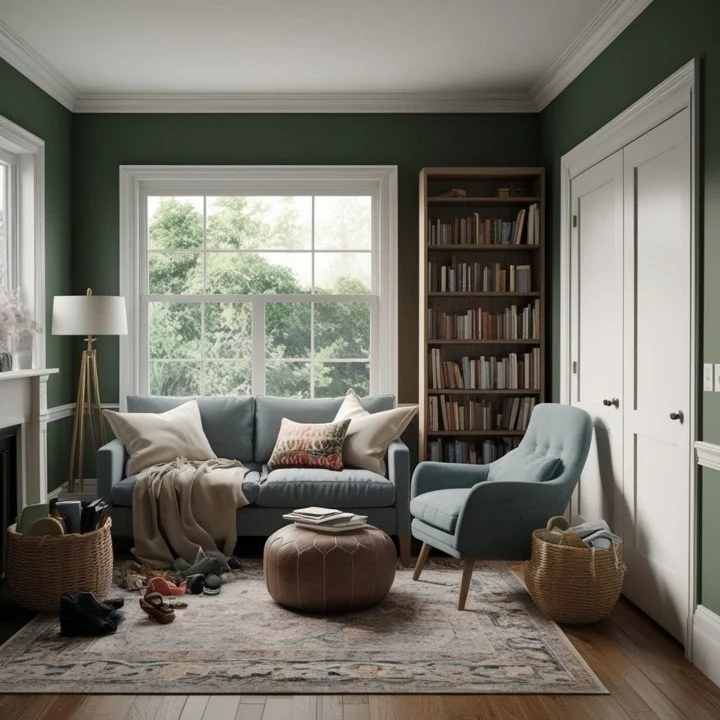
Whatever you put in that corner needs to either fit precisely into the angle, or it creates an awkward gap on one or both sides. Those gaps collect dust, because they’re hard to clean, and generally look unfinished.
The third problem is access. Corners are often the hardest places in a room to reach. Whatever storage you put in a corner is also your least accessible storage — which means things go in and never come out.
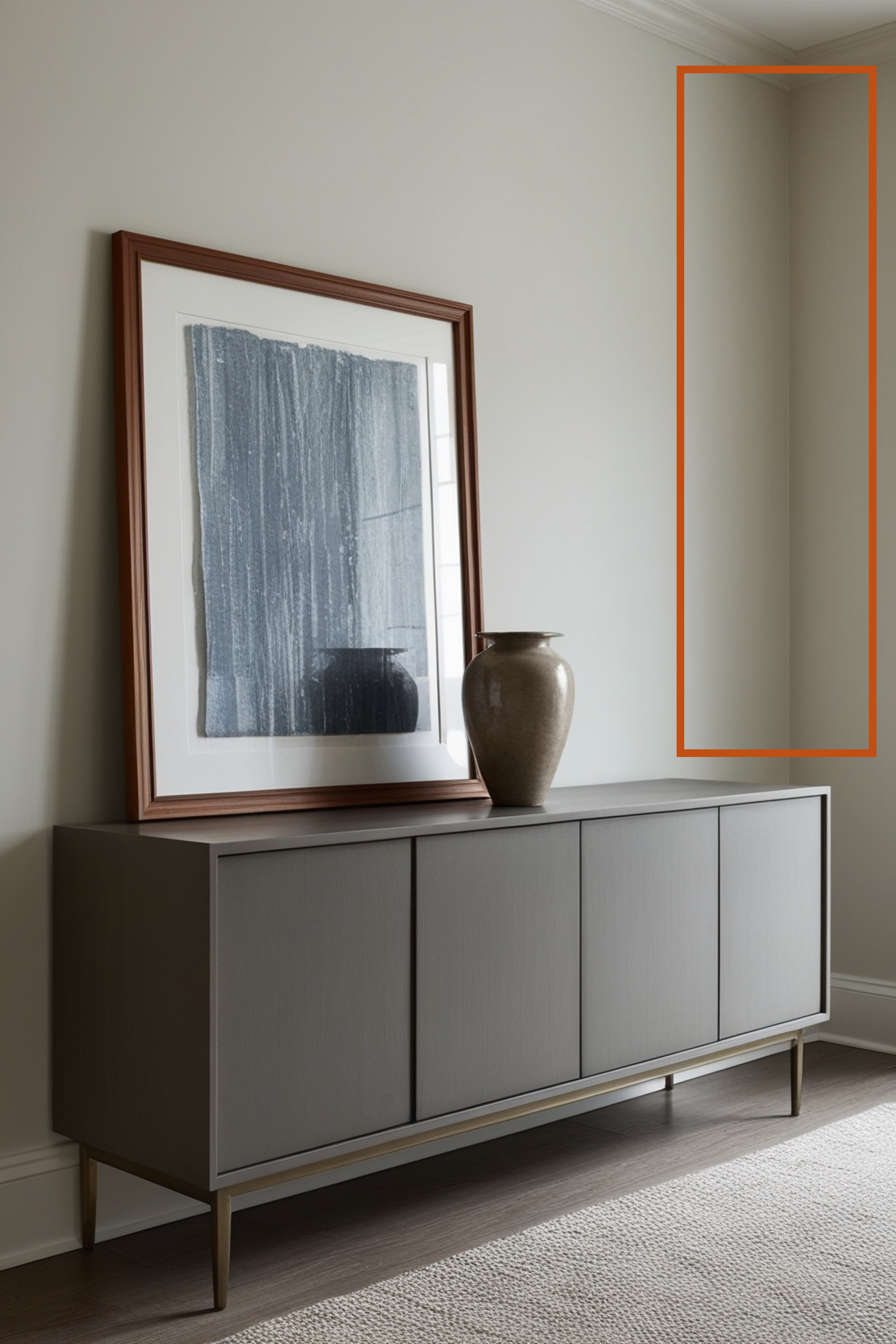
Every solution I'm about to give you addresses at least one of these three problems. The best ones address all three.
Living Room Corners
The Reading Corner
The most classic corner solution, and for good reason — it works. A comfortable chair (not a sofa, not a loveseat — a single chair), a floor lamp positioned just over one shoulder, a small side table within reach, and a small area rug to define the zone.
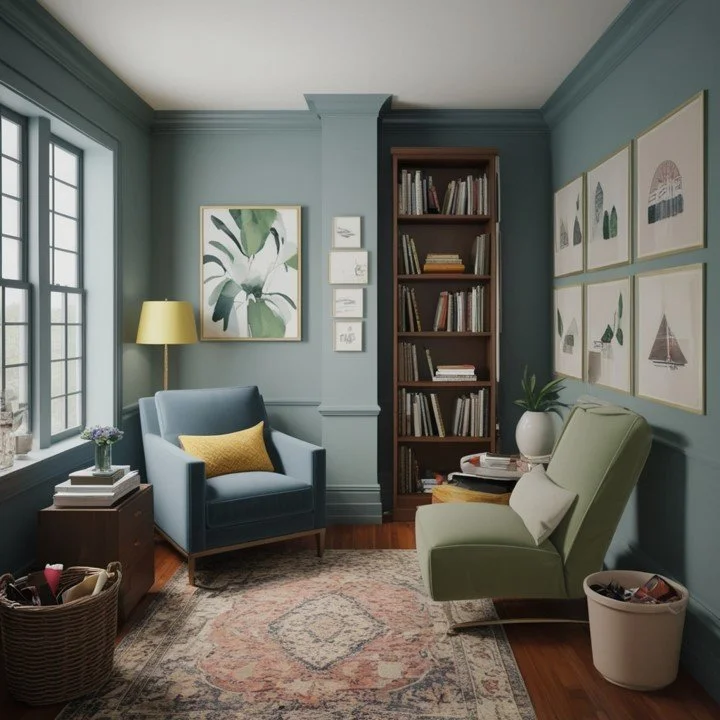
The key to getting this right is proportion. The chair needs to fit in the corner without crowding the traffic path into the rest of the room. An oversized chair in a small corner creates a bottleneck. A correctly scaled chair — something in the 28-32 inch seat width range — creates a destination without blocking the room.
The floor lamp placement matters more than most people think: It should arc over the chair from behind, not stand beside it. An arc floor lamp is your best friend in a reading corner — it puts light where you need it and takes up no additional floor space beside the chair. A standard floor lamp next to a corner chair eats into the walkway and makes the corner feel cramped.
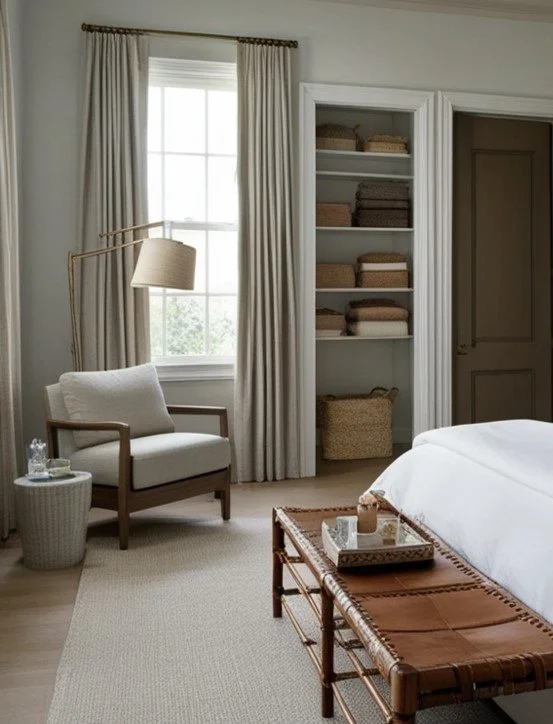
What this corner is doing: converting dead space into the most valuable seat in the house. In a small living room, a reading corner gives the room a sense of deliberate function — it's not just a room with a sofa and a TV, it's a room with zones.
Tall Bookshelf Corner
A floor-to-ceiling bookshelf in a living room corner does several things simultaneously: it adds storage, it adds visual height (making the room feel taller), and it anchors the corner so looks and feels finished, more “designed.”
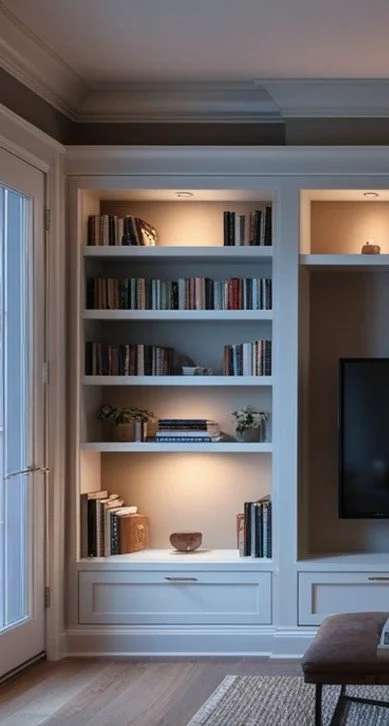
The trick is to fit it correctly. A standard bookshelf in a corner will leave gaps behind it on both sides — dusty, inaccessible, slightly embarrassing. The solution is either a corner-specific bookshelf (designed to fit flush with both walls) or two narrow bookshelves positioned at 90 degrees to each other, forming an L-shape that fully fills the corner.
Two 12-inch deep bookshelves in an L-configuration give you more storage than one larger unit, fully enclose the corner, and are far easier to source than custom corner units. The seam where they meet is barely visible when both shelves are filled. This is one of those solutions that looks custom but isn't.
Plant Corner
Sometimes a corner doesn't need function — it needs presence. A large, well-chosen plant in a corner adds height, an organic shape, and life to a room in a way that no piece of furniture can replicate.
The plant corner works best when the plant is genuinely large — something that reaches at least 4-5 feet, like a fiddle leaf fig, a monstera, a bird of paradise, or a large snake plant. A small plant in a large corner looks lost. A large plant in a corner looks intentional.
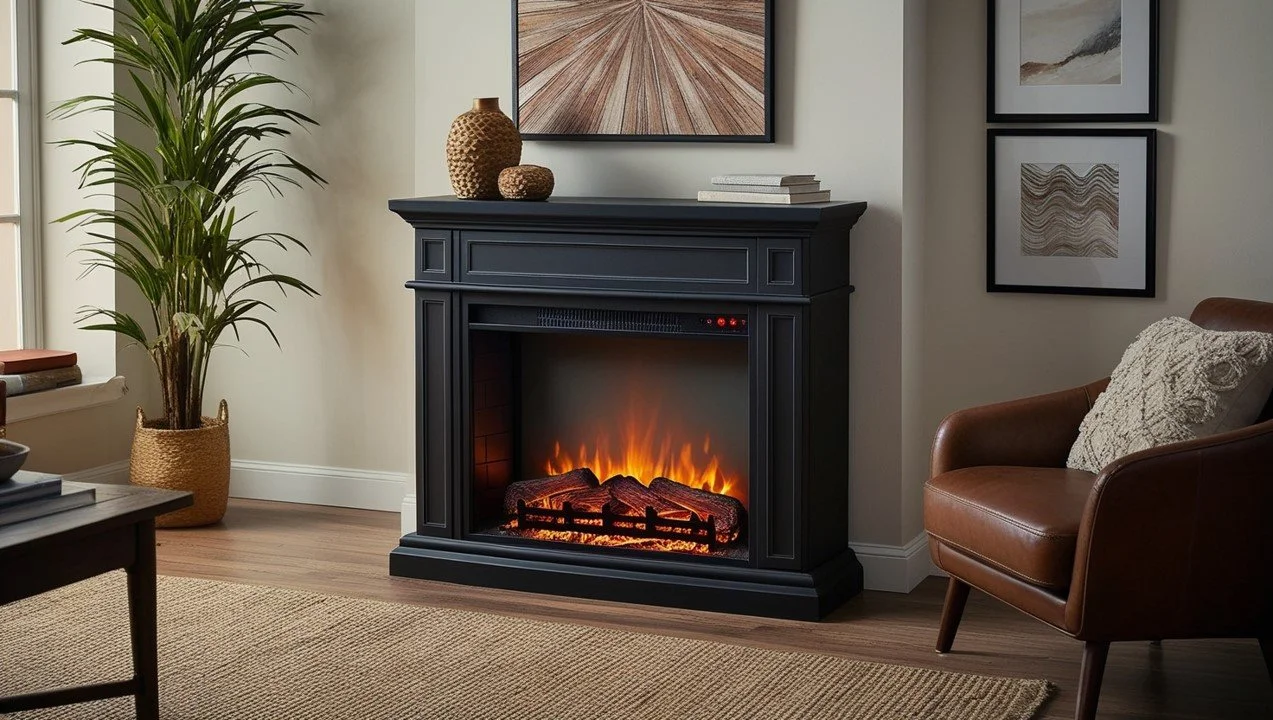
Pair it with a simple, low plant stand or a ceramic pot that's proportional to the plant, and a small accent table nearby if you need surface space. The corner goes from dead space to a focal point.
Tip: If the corner is dark, choose a silk plant. There are many beautiful faux plants that look very realistic.
Bedroom Corners
Nightstand Corner
(For Beds in Corners)
Beds pushed into corners are common in small bedrooms — it opens up more floor space than centering the bed on a wall. But they create an access problem: how do you get into the corner side of the bed? And where does the nightstand go?
For the corner side of the bed, a wall-mounted floating shelf at mattress height works better than any freestanding nightstand. It gives you the surface you need without taking up floor space and without requiring you to squeeze between the nightstand and the wall.
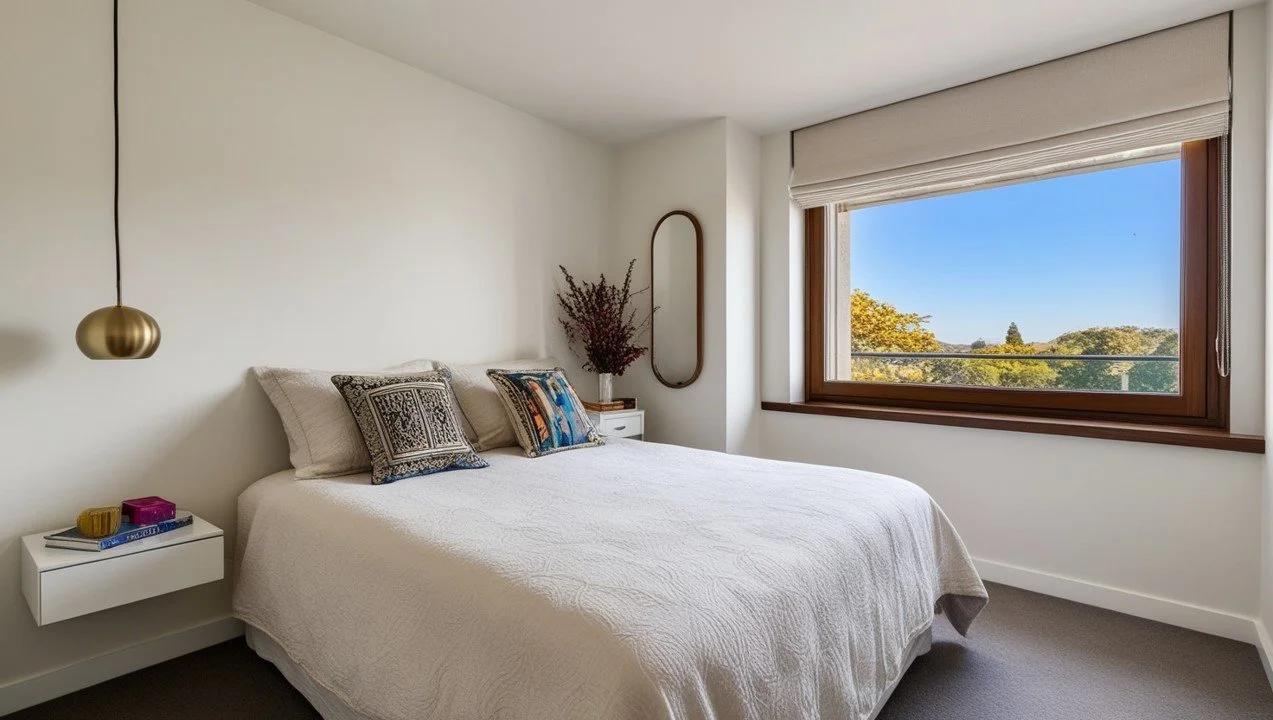
If a wall-mounted shelf isn't possible, a C-shaped side table that slides under the mattress edge is another good option. It positions the surface right where you need it without occupying the corner footprint.
Vanity Corner
A small vanity tucked into a bedroom corner is one of the smartest uses of corner dead space. A corner vanity — either a purpose-built corner design or a small demilune table with a mirror mounted above it — uses the angled corner geometry rather than fighting it.
The half-round table approach is particularly good: a 30-inch demilune table at desk height, a wall-mounted mirror above (not a freestanding mirror, which takes up additional floor space), a small stool that tucks fully under the table when not in use. That's a functional vanity in roughly 9 square feet that almost disappears when the stool is tucked.
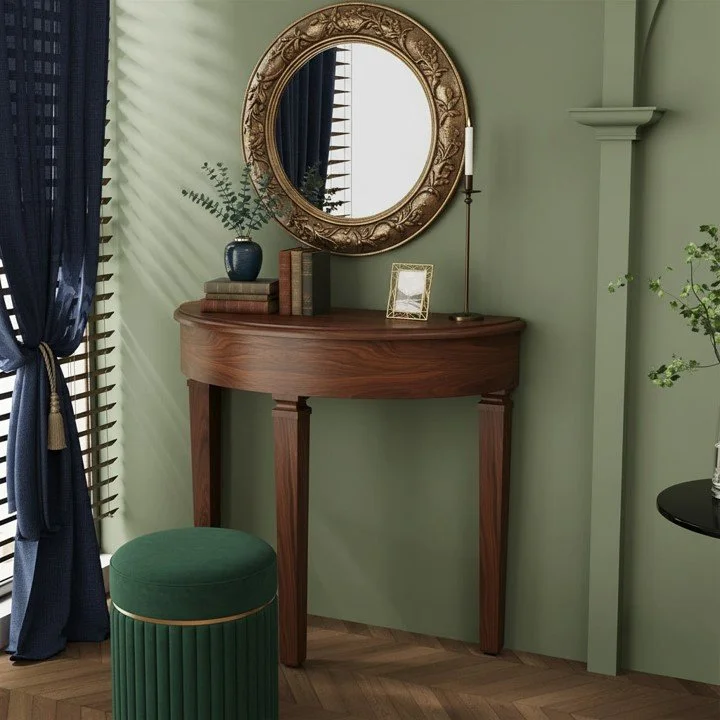
The corner vanity solves one of the bedroom's hardest problems: getting dressed in a small room where the closet and the mirror are on different walls. Bringing the mirror to the corner creates a dedicated dressing zone that keeps that task contained rather than spread across the whole room.
Wardrobe Alcove
If a bedroom corner is large enough — say, 4 feet on each wall — it can become a small walk-in closet with the right approach. Two PAX wardrobes (or similar modular units) positioned at 90 degrees, with a curtain or simple door panel across the opening, create an alcove that reads as a closet without requiring any construction.

Even in smaller corners, two narrow 12-inch-deep wardrobes at 90 degrees give you meaningful hanging and shelf storage that wasn't there before. The corner becomes productive storage rather than dead space.
Kitchen and Dining Corners
The Banquette —
Built-In Corner Seating
A corner banquette is one of the most space-efficient dining solutions that exists for small homes. Two benches meeting at 90 degrees with a table in front — the seating tucks under the table when not in use, the benches can include under-seat storage, and the corner that was previously dead space becomes the best seat at the table.
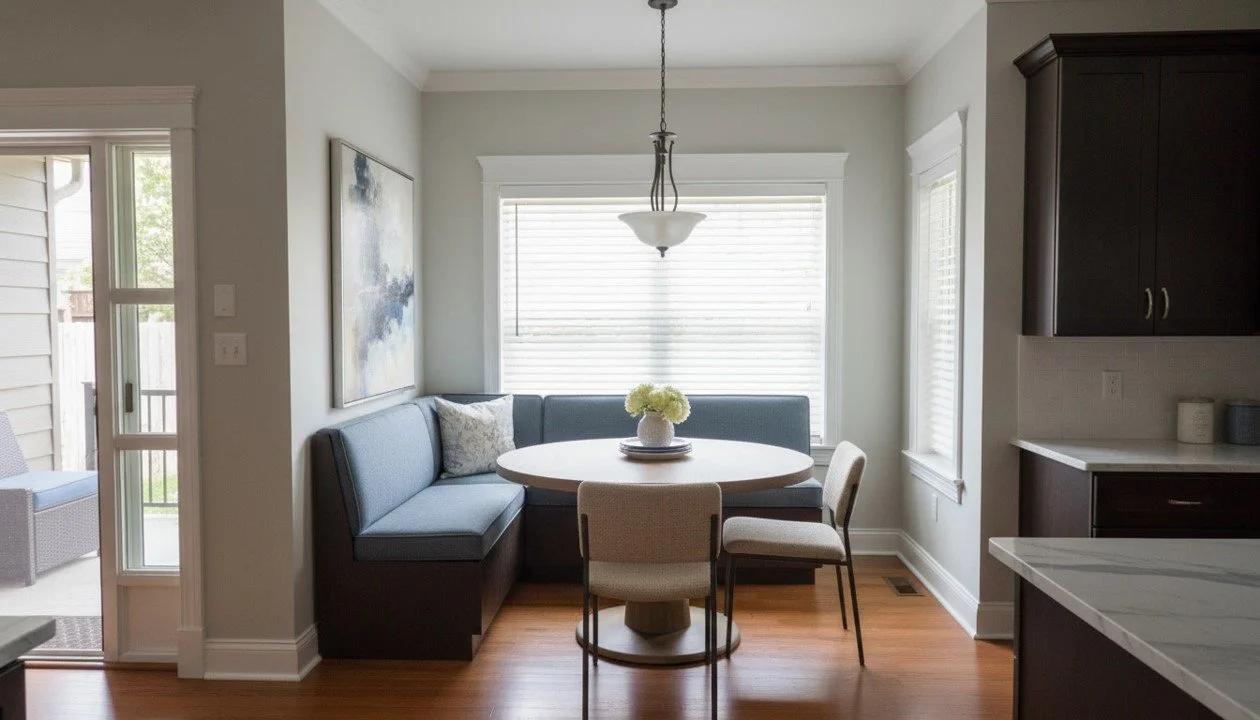
The mistake people make with banquettes is going too large. You don't need a U-shaped banquette that seats eight. In a small kitchen or dining area, an L-shaped corner bench with two chairs on the open sides seats four or five people in a space that a standard table-and-four-chairs setup couldn't manage.
Under-seat storage is the banquette's hidden superpower: Lift-top bench seating can hold table linens, extra dishes, seasonal decor — all the things that small homes never have enough room for. That corner isn't just seating; it's a storage solution for the whole room.
Kitchen Corner Cabinet —
Make It Usable
The lazy Susan is the default answer for kitchen corner cabinets, and it's a mediocre one. Things fall off the spinning shelves. The mechanism wears out. Items at the back are invisible and forgotten.
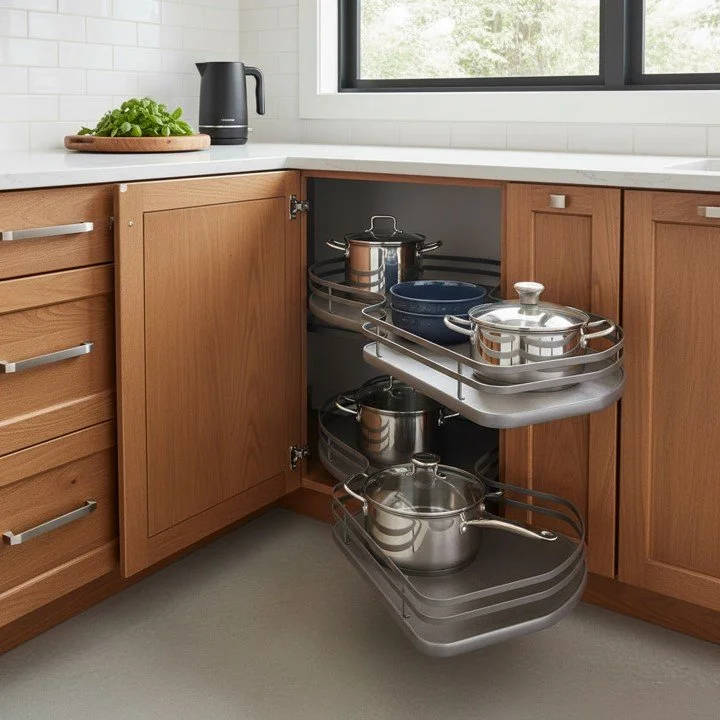
Better options exist. Pull-out corner drawer systems — sometimes called magic corner or Le Mans systems — bring everything in the corner cabinet out to you rather than requiring you to reach in and spin. They're more expensive than a lazy Susan but dramatically more usable, which means the storage actually gets used rather than becoming a black hole for expired food.
For upper kitchen corner cabinets, diagonal cabinets with a single wide door give you access to the full interior without the spinning mechanism. Pair with full-extension pull-out shelves inside for maximum usability.
Corner Bar/Coffee Station
A kitchen or dining room corner that doesn't have cabinet work in it is a candidate for a corner bar or coffee station. A small corner table or a purpose-built corner shelf unit, topped with your coffee maker, an electric kettle, and hooks for mugs, turns dead space into a dedicated beverage zone.
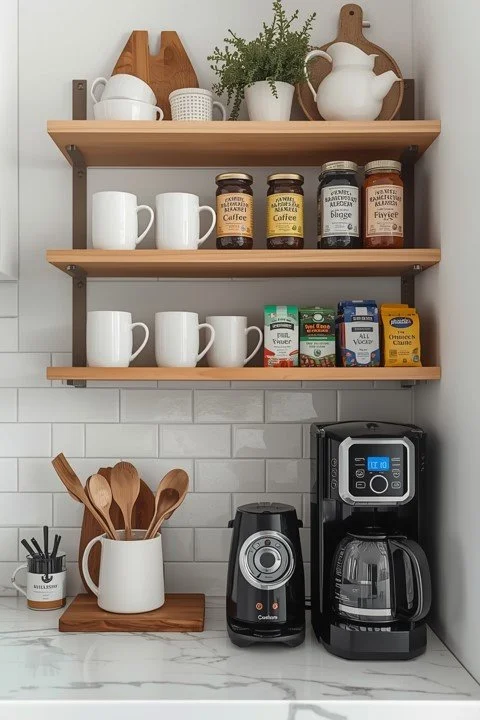
This is one of those solutions that seems small but reorganizes the whole kitchen workflow. When the coffee setup has its own corner, the main counter is more open. The corner gets a purpose. And there's something genuinely satisfying about having a dedicated spot for a thing that happens in the kitchen every single morning.
Hallway and Entry Corners
The Mudroom Corner
Entry corners — especially in homes without a proper mudroom — are perfect candidates for a mini drop zone. A narrow corner shelf or floating corner unit at about 7 feet, with hooks below it and a small tray or basket at floor level for shoes, creates a functional entry station in roughly 2 square feet.
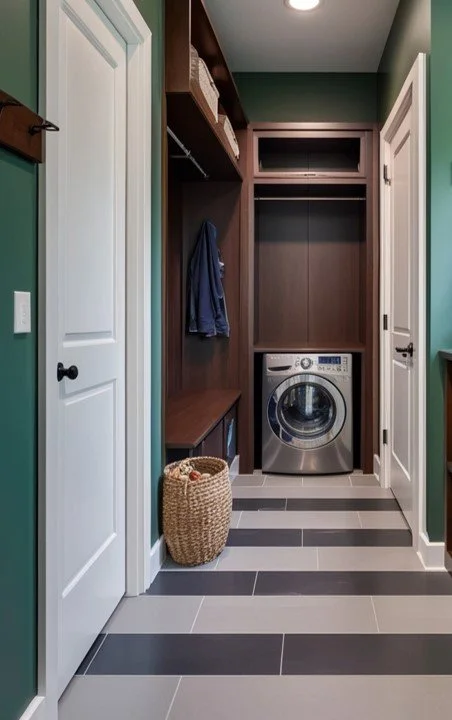
The key is keeping it scaled right. An entry corner doesn't need a full bench-with-cubbies, like a mudroom setup. It needs hooks for bags and coats, a shelf for keys and mail, and a place for shoes that isn't the middle of the floor. Those three things, done well in a corner, solve 90% of entry chaos.
(Here’s some more solutions for awkward hallways.)
The Gallery Corner
A hallway or entry corner with no functional need is a candidate for a gallery moment. A corner gallery wall — art arranged across both walls that meet at the corner, wrapping around it — is visually striking in a way that a flat gallery wall on a single surface isn't.
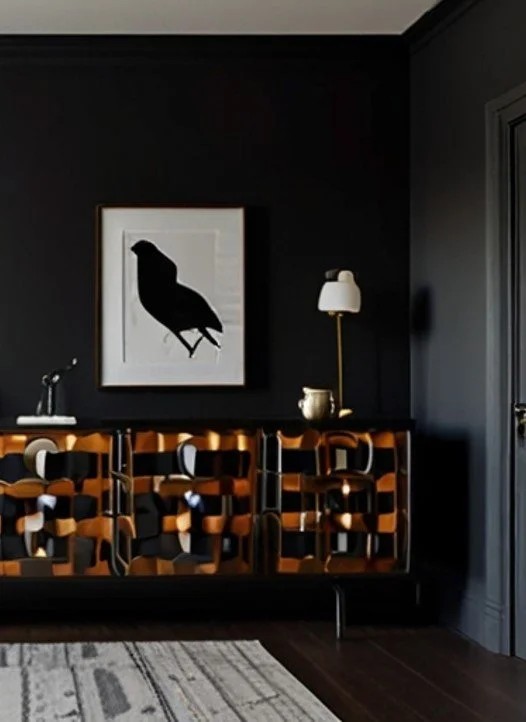
The art wrapping around a corner creates depth and draws the eye in a way that makes a hallway feel wider and more intentional. It's one of those design moves that looks difficult but is actually just about hanging things at consistent heights across both surfaces.
A corner gallery wall works best with a unifying element — same frame style, same mat color, or a consistent color palette in the artwork. Without that thread connecting the pieces, wrapping around a corner looks like an overflow of art that ran out of wall space. With it, it looks like a decision.
The Underused Corner Solutions That Work Anywhere
A few solutions work in nearly any room and deserve mention on their own:
Corner Floating Shelves
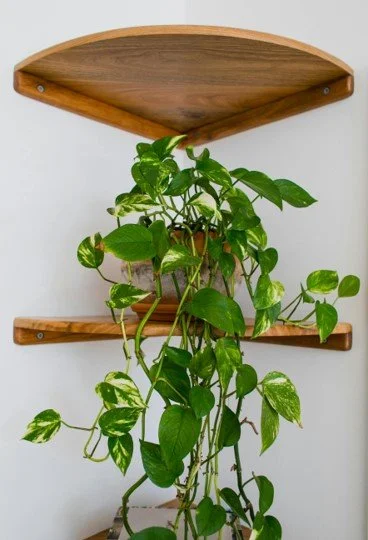
Two or three floating shelves mounted diagonally in a corner — specifically corner shelves, with a triangular shape that fits into the angle of the wall — give you surface and display space without touching the floor.
Rachel Claire
They work in bathrooms, bedrooms, living rooms, offices, and hallways. They're inexpensive, easy to install, and transform corners that have no other obvious solution.
Narrow Accent Table
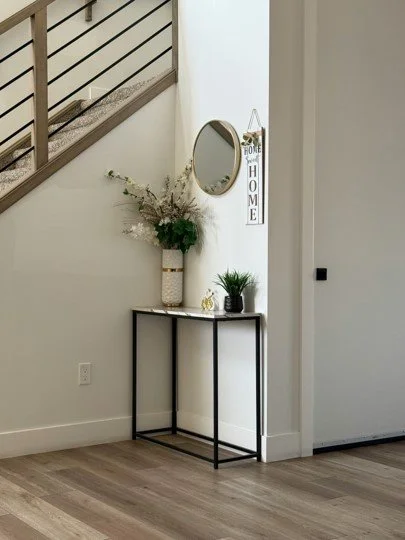
A sofa table, a narrow console, or a tall accent table positioned diagonally across a corner (at 45 degrees to both walls) is a simple, no-installation solution for a corner that needs presence but not storage.
Satvinder Ghotra
The diagonal angle fills the corner naturally without fighting the geometry. Style it with a lamp, a plant, a piece of art leaning against the wall — and a corner that was nothing becomes a vignette.
Corner Mirror
A large mirror leaned or hung in a corner — especially one that faces a window — bounces light back into the room and creates depth where there was dead space. In a small room, a corner mirror can meaningfully change how large the room feels, because it visually extends the room in two directions simultaneously.
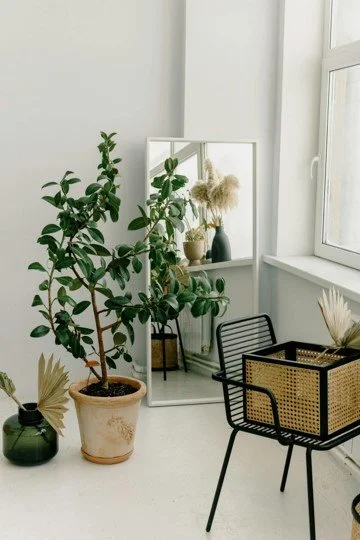
Ksenia Chernaya
Corners are where small home design either falls apart or comes together. The rooms that feel spacious, designed, and intentional are almost always the ones where the corners have been thought about. The rooms that feel smaller than they are, and more cluttered than they need to be, are almost always the ones where the corners gave up.
Which corner in your home has been bothering you the longest? Tell me in the comments — would any of these ideas work for you?
Read Next:
How I Arrange Furniture Around an Off-Center Window
Centering furniture on an off-center window highlights the problem instead of fixing it. As a small-space designer, I’ll explain the mental shift and the furniture strategies that actually fix furniture placement in rooms with awkward window placement.
Michael is Principal designer and blogger at Michael Helwig Interiors in beautiful Buffalo, New York. Since 2011, he’s a space planning expert, offering online interior e-design services for folks living in small homes, or for those with awkward and tricky layouts. He’s a frequent expert contributor to many National media publications and news outlets on topics related to decorating, interior design, diy projects, and more. Michael happily shares his experience to help folks avoid expensive mistakes and decorating disappointments. You can follow him on Pinterest, Instagram and Facebook @interiorsmh.