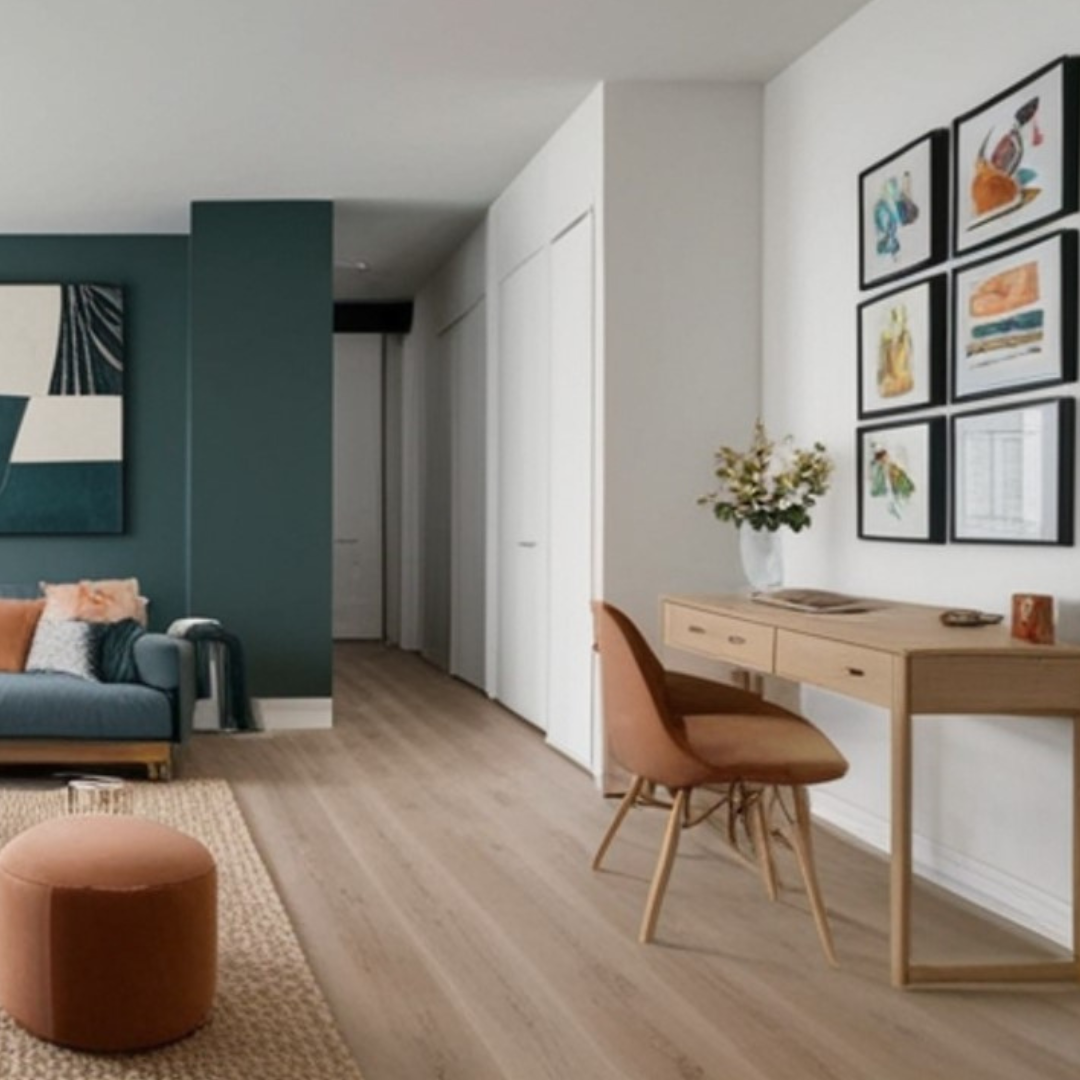
Let me tell you about the most common lie in the WFH conversation.
It goes like this: 'You really need a dedicated home office.' A room with a door. A proper desk. Built-ins, maybe. Separated from the rest of the house so you can close it off at the end of the day.
That's excellent advice if you have a spare room. Most people don't. And yet they're working from home anyway — on dining tables that need to be cleared for dinner, on kitchen counters that are one grocery run away from total chaos, on the couch in a way that their backs will remind them about for the next decade.
The problem isn't that you don't have a dedicated room. The problem is that you haven't claimed a dedicated zone. Those are completely different things — and only one of them requires extra square footage you probably don't have.
Here's what I've learned from designing small spaces for almost two decades: a functional home office isn't about a room. It's about three things — a surface at the right height, enough storage to keep work from bleeding into the rest of your life, and a visual boundary that tells your brain when you're working and when you're not.
You can do all three without a dedicated room. Here's how.
First: Stop Improvising and Start Claiming
There's a difference between working somewhere and claiming a workspace. Working somewhere is temporary — you're borrowing space from another function in your home and will give it back when you're done. Claiming a workspace is permanent — you're designating a specific zone for work, and it stays as a work zone even when you're not actively using it.
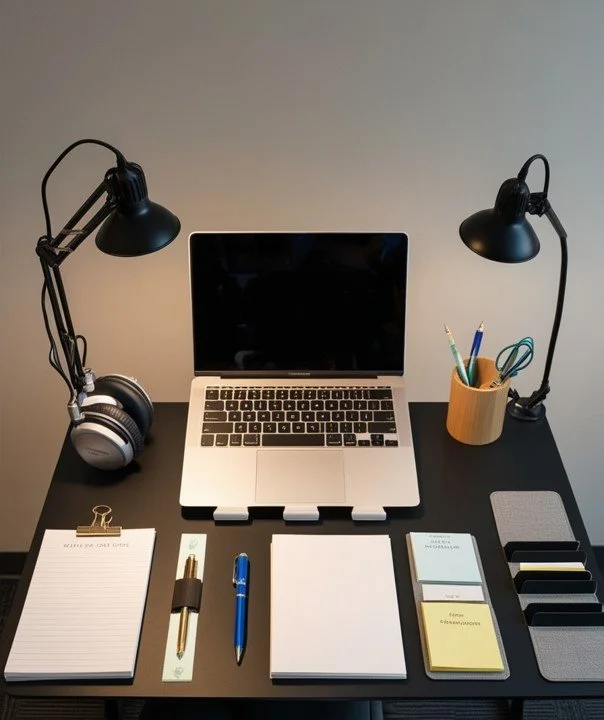
Most WFH setups that feel chaotic or stressful are improvised rather than claimed. The dining table is improvised. The kitchen counter is improvised. Even a desk in the bedroom is improvised if it's buried under laundry and general life clutter.
Claiming requires a few things:
A surface that is consistently set up for work — not cleared every evening and reassembled every morning
Storage that is specifically for work — not shared with household items
Some kind of visual signal that this is a work zone — even if it's subtle
The solutions below are all built around claiming rather than improvising. The room doesn't matter. The zone does.
The Closet Office — Flex Space at Its Smartest
If you have a closet anywhere in your home that isn't doing critical storage work, it is probably your best candidate for a WFH setup. I'm talking about linen closets, coat closets, hallway closets, even a large reach-in bedroom closet.
Remove the rod and shelf. Install a desktop surface at desk height (29-30 inches from the floor). Add shelving above. Run a power strip through the back. Paint the interior a color that feels like work to you — even just a different shade from the rest of the room.
What you have now is a home office that disappears when you close the door. Not just visually — psychologically. The work is contained. It closes. The rest of your home isn't a reminder that you have emails to answer.
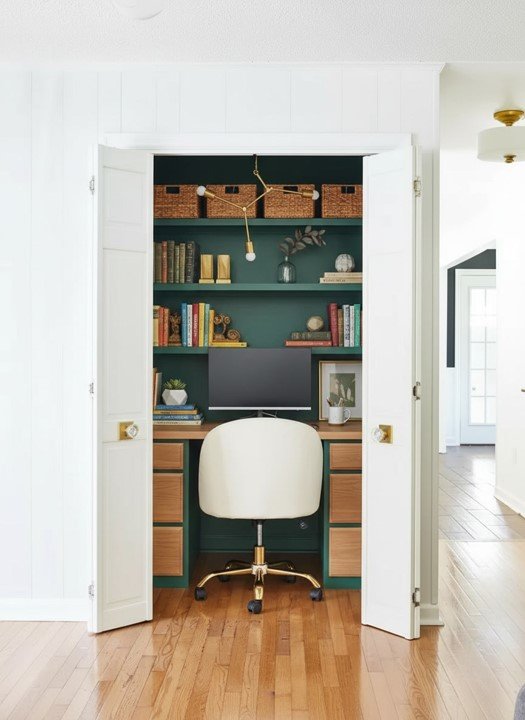
The critical detail: proper lighting inside the closet. A clip-on task light or a puck light strip under the upper shelf is the minimum. A small swing-arm wall lamp mounted inside is better. Working in a dark closet is miserable and will make you abandon the setup within a week.
What fits in a standard reach-in closet (24" deep x 36-48" wide): A laptop or desktop monitor, a small desktop printer, a cup of pens, a few books or binders on the upper shelf. It's not spacious, but it is functional — which is more than most improvised setups manage.
A closet office works especially well in bedrooms. The closet becomes a hard boundary between sleep space and work space — something that's genuinely difficult to achieve when a desk sits in the open in the same room. When the closet door closes, work is done. That's worth more than square footage.
The Bedroom Desk — Getting It Right
Most people who work from the bedroom make two mistakes. They put the desk where it fits rather than where it makes sense, and they don't create any visual separation between the desk and the sleep space.
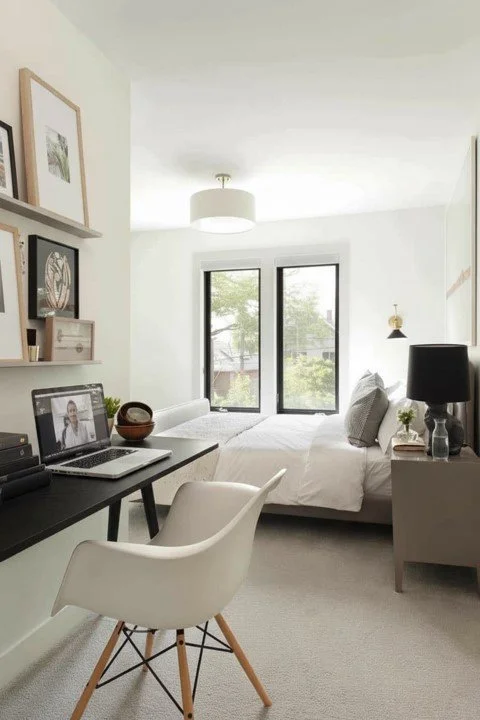
The result is a bedroom that never fully feels like a bedroom, and a workspace that never quite feels like a workspace. The two functions bleed into each other and neither works well.
Here's how to do it correctly.
Placement
Put the desk facing a wall — not the bed, and not the room at large. When you're working, you want your focus forward, not on the rest of the room. A desk facing a wall creates a natural visual boundary between your work zone and your sleep zone.
If possible, put the desk on the wall opposite the bed's headboard wall, or on a side wall — not directly in the sightline of the bed. When you're lying down, you don't want to see the desk. That's not just aesthetic preference; it's actually linked to sleep quality in small rooms.
The Visual Separation
You don't need a wall. You need a signal. A small room divider, a tall bookshelf positioned perpendicular to the wall, a curtain on a ceiling-mounted rod — any of these can create enough visual separation that the desk zone reads as different from the sleep zone, even in a studio apartment.
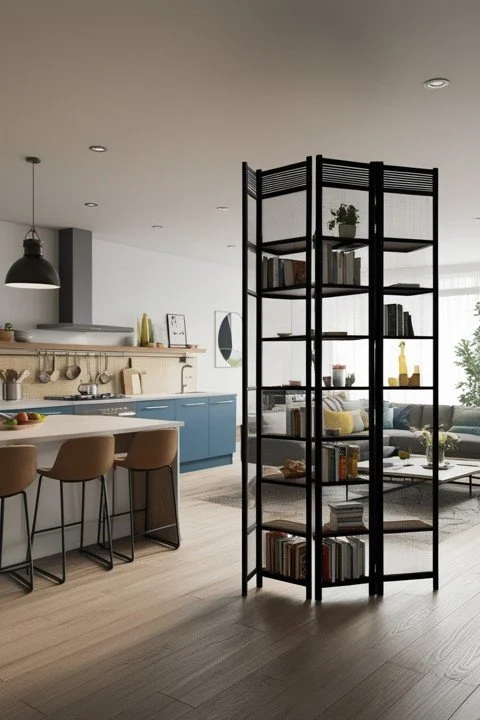
Even a rug under the desk area can work. Different zone, different floor treatment. Your brain picks up on these cues even when you're not consciously aware of them.
The Desk Itself
In a small bedroom, a floating wall-mounted desk is almost always the right call over a freestanding one. It takes up zero floor space when not in use — you can fold it up or simply slide the chair under it and it disappears into the wall. The floor stays open. The room reads larger.
Minimum desk depth for actual WFH productivity: 20 inches. Anything shallower and you're constantly fighting the space. The wall-mounted IKEA Glaerka is a stylish and functional option. For comfort and max. function, go deeper, even if the desk protrudes more than you'd like.
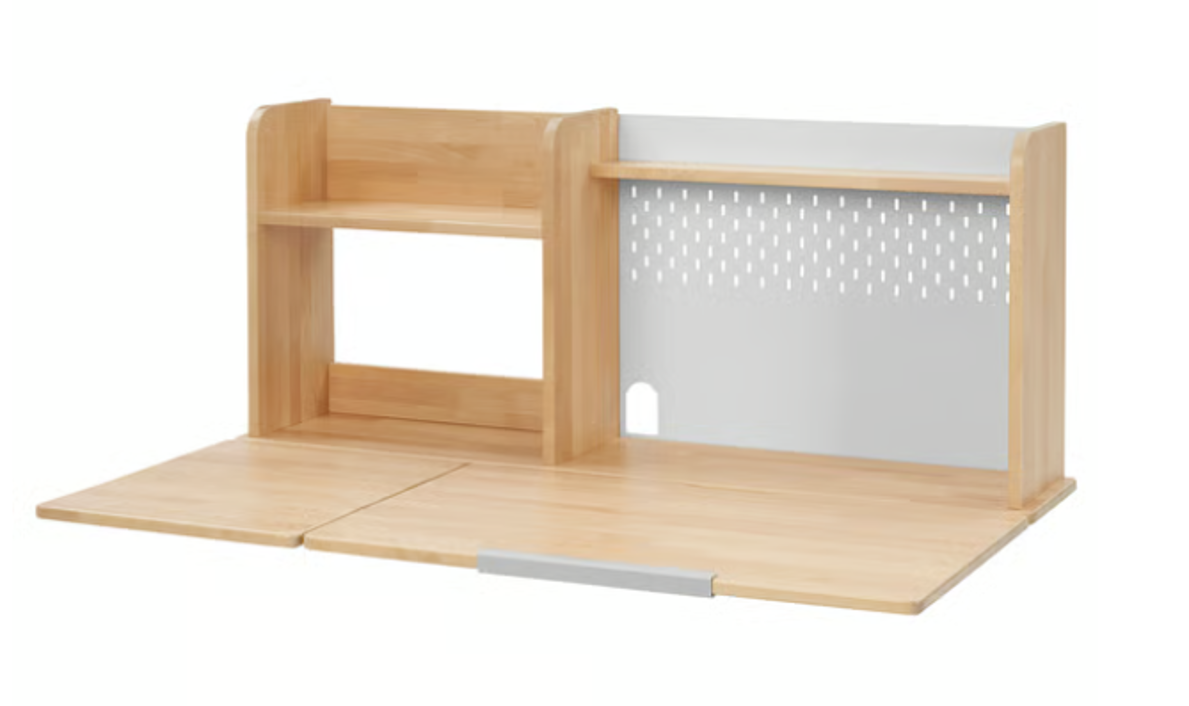
Glaerka-desk-top-and-shelf-birch
The Living Room Setup — Making It Work Without Ruining the Room
Working from the living room is the most common WFH setup and the one that causes the most frustration. Because it almost never involves a real desk — it's a laptop on the coffee table, or the couch, or balanced on the arm of a chair.
The living room can absolutely be a functional flex space for working from home. But it requires some actual investment, not just improvisation.
The Console Table Desk
A console table — typically 12-15 inches deep, 30 inches tall — positioned against a wall or behind the sofa can function as a standing desk alternative or a compact seated workspace. It takes up minimal floor space, blends into the room as a design element, and gives you a dedicated surface that isn't also your dinner table.
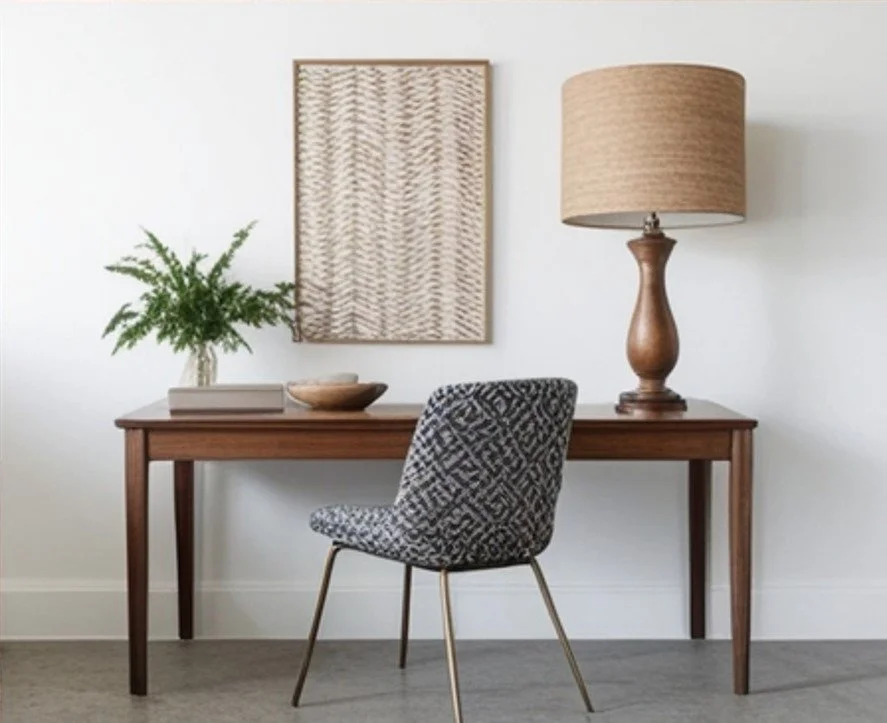
Pair it with a counter-height stool if you're using it as a standing desk, or a low slim-profile chair if you're seated. The key is that the console table is permanently designated for work — it's not a surface that gets repurposed for other things.
The Armoire or Cabinet Office
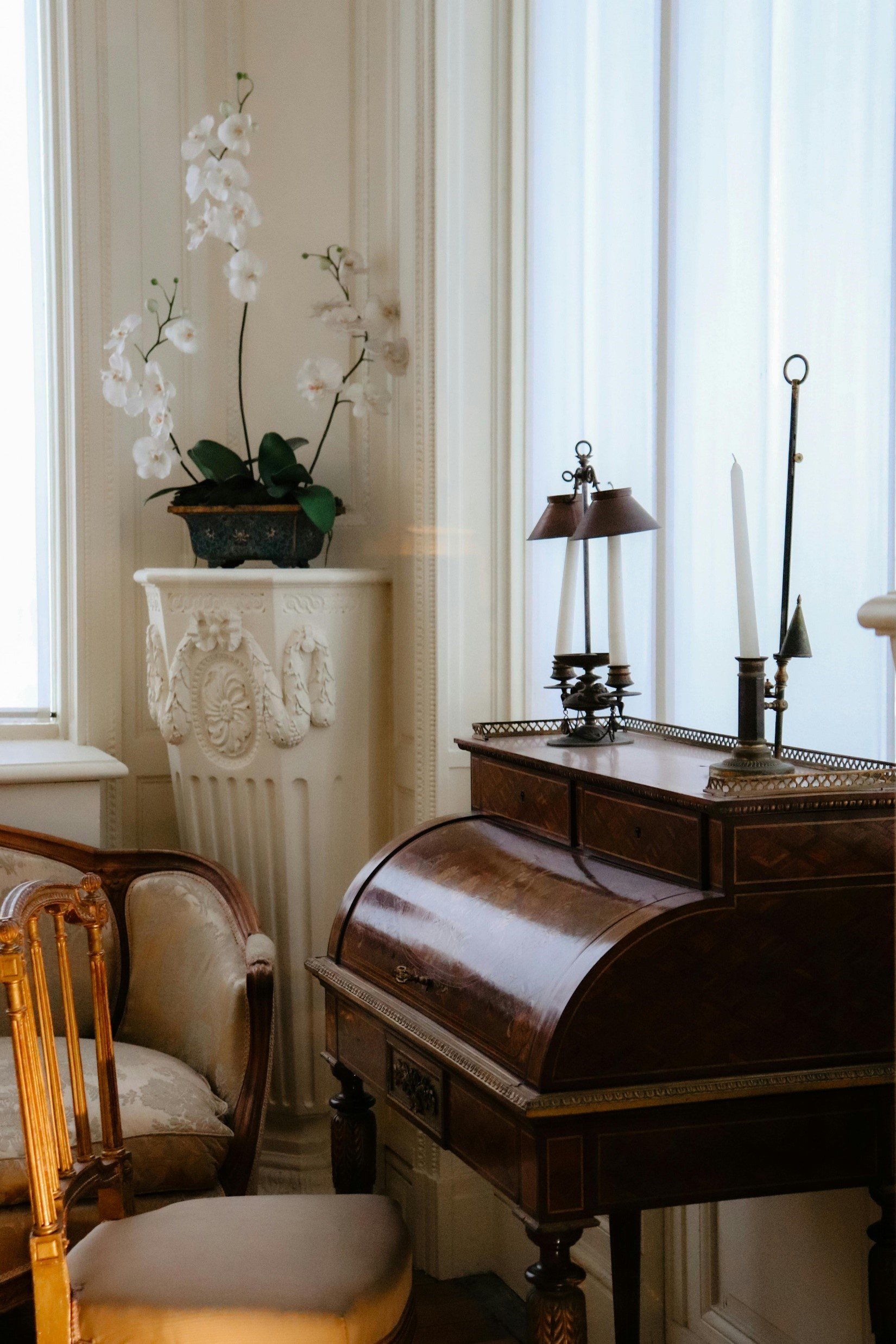
A secretary desk or a compact armoire with a fold-down desktop is one of the smartest investments for a living room WFH setup. When it's open, it's a functional workspace. When it's closed, it looks like a piece of furniture — not a home office.
Céline |
These pieces have had a serious resurgence in the last few years, and for good reason. They solve the flex space problem elegantly: dedicated work storage, a proper work surface, and a door that closes. The visual clutter of work disappears when you shut it.
What to look for: Pieces with interior outlets or cord management built in (some modern versions have these but older versions can be retrofitted with plug bars). Adequate interior storage for your specific work tools — not just a surface. A desktop depth of at least 18 inches when open. And proportions that don't overwhelm the room when closed.
The armoire office solves something most WFH setups don't: the end-of-day transition. Closing a cabinet door is a physical act that signals work is done. It's surprisingly effective as a psychological boundary — more effective than just closing a laptop tab and leaving everything on a visible desk.
The Dining Room or Kitchen: Making Double Duty Actually Work
If the dining table is your primary work surface — and for a lot of people it has to be — the goal is to minimize setup and teardown time so that work doesn't seep into mealtimes and mealtimes don't disrupt work.
The single biggest upgrade you can make: a rolling cart or small trolley that lives near the dining table and holds your work gear. At the start of the day, roll it next to your chair and set up in 60 seconds. At the end of the day, pack it back onto the cart and roll it to the corner or a closet. Your dining table is fully clear in two minutes.
This isn't glamorous. But it's genuinely functional, and it beats clearing the table every night with a stack of papers and cables going... somewhere.
The cart should have: A power strip with a long cord. A drawer or basket for cables. A flat surface for your laptop or monitor stand. The IKEA RÅSKOG and similar carts are inexpensive but undersized — look for something with a larger surface area. A bar cart or narrow utility cart in the right proportions works well and looks better.
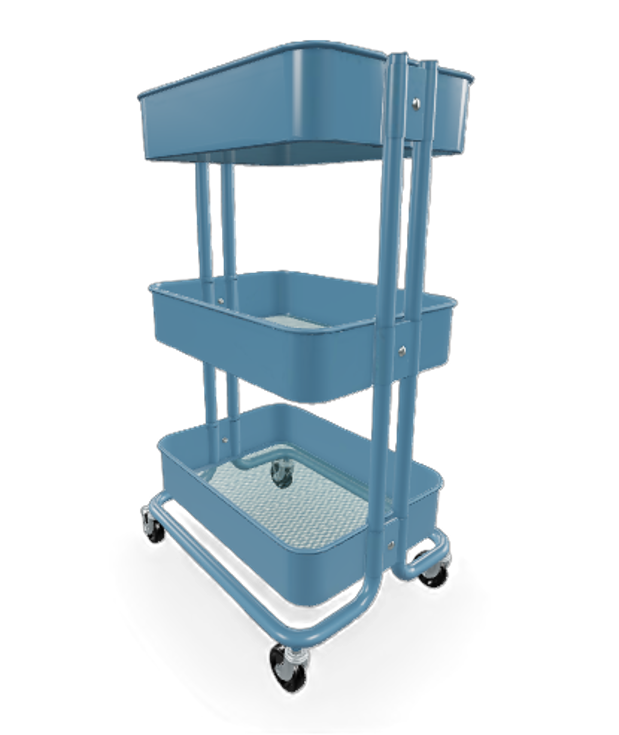
Raskog-utility-cart-gray-blue-
The Nook, Alcove, or Understairs Space
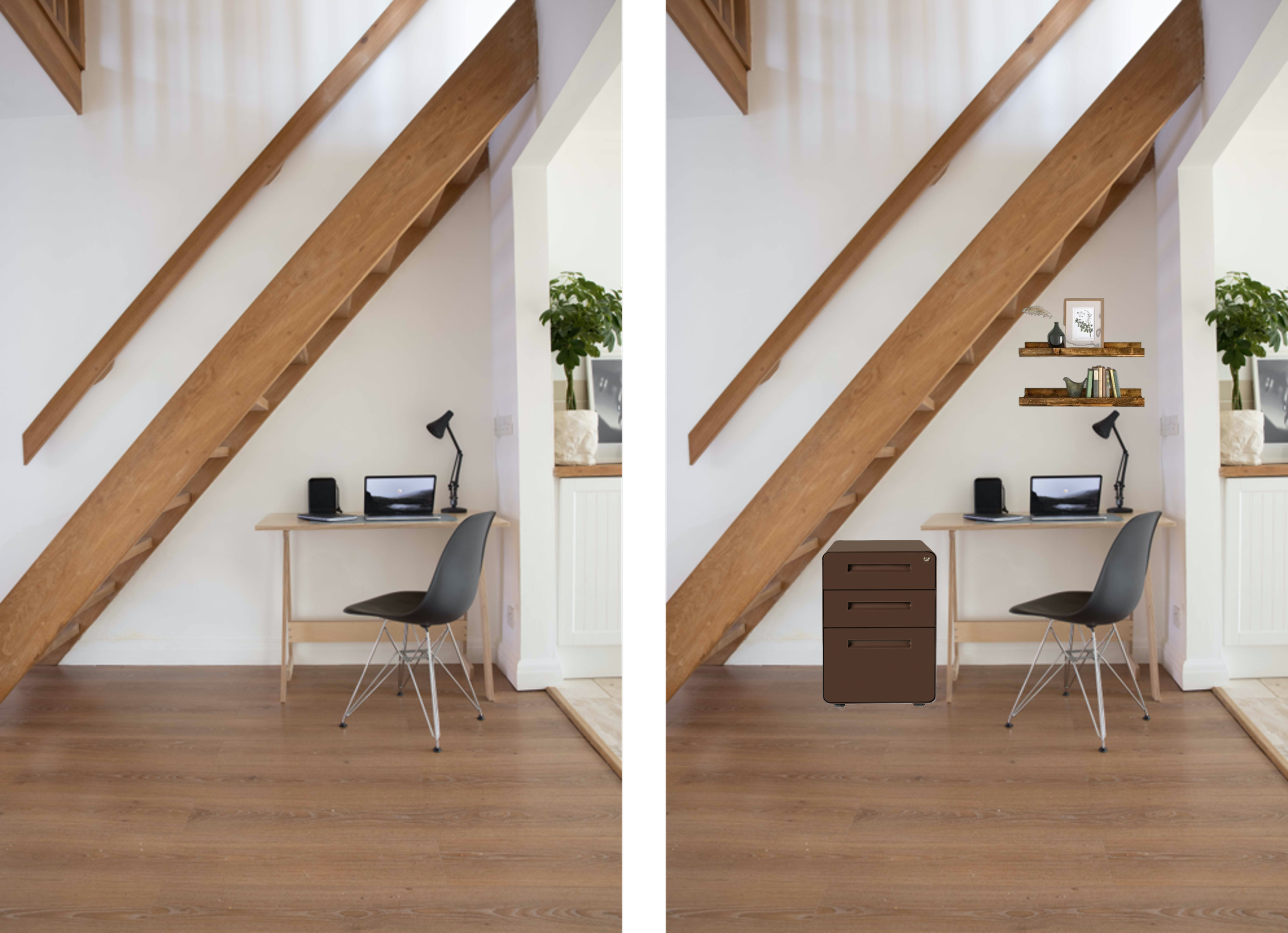
If your home has any of these — a recessed nook, a bump-out, a space under a staircase — you have arguably the best candidate for a small home office in the house.
These spaces are architecturally defined. They have natural boundaries. They feel like a room even when they aren't one. And because they're often dead space — too small for furniture, too awkward for storage — turning one into a workspace usually doesn't displace anything.
An understairs home office, in particular, is one of the most satisfying small space transformations I've done with clients. The sloped ceiling that seems like a problem becomes a feature. The triangular footprint that seems like an obstacle becomes a cozy, contained workspace. Custom shelving along the angled wall, a fitted desktop at the deepest point, good task lighting — the whole thing feels thought-out rather than improvised.
JP Lockwood
Nook and alcove spaces create a psychological enclosure that open-plan setups can't reproduce. Even without a door, the defined edges of a nook tell your brain you're in a specific zone. That matters more than most people expect for WFH focus and productivity.
The Non-Negotiables — No Matter Which Setup You Choose
Regardless of which flex space solution fits your home, these things are non-negotiable if you want the setup to actually work long-term.
Cord management
Ron Lach
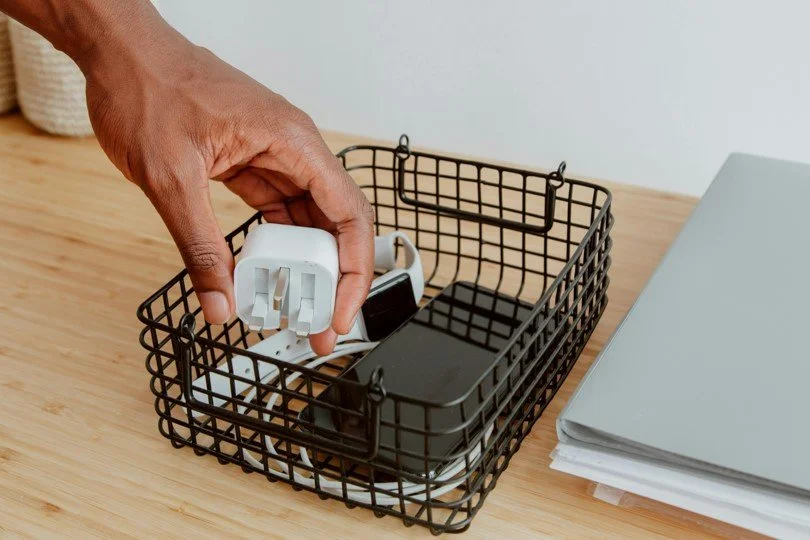
Visible cable chaos is the fastest way to make any workspace feel temporary and stressful. A cable box, cable clips, Velcro ties, or even a fabric cable sleeve — pick one and use it from day one. It takes twenty minutes and makes the space feel ten times more intentional.
Task lighting
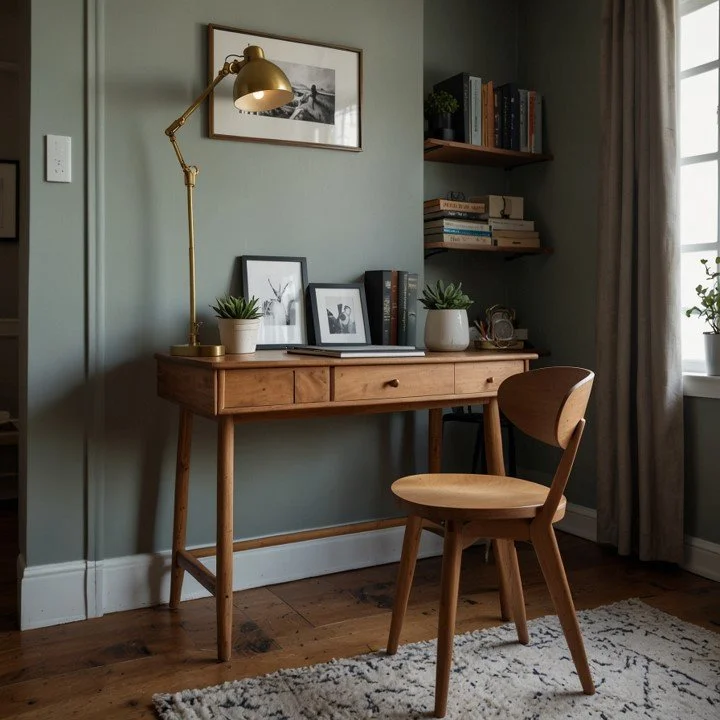
Overhead room lighting is almost never adequate for focused work. A dedicated task light — at eye level or just above, positioned to eliminate screen glare — is not optional. It's also the single cheapest upgrade with the highest return. A good adjustable desk lamp costs $40-80 and makes hours of screen time significantly less exhausting.
Ergonomic surface height
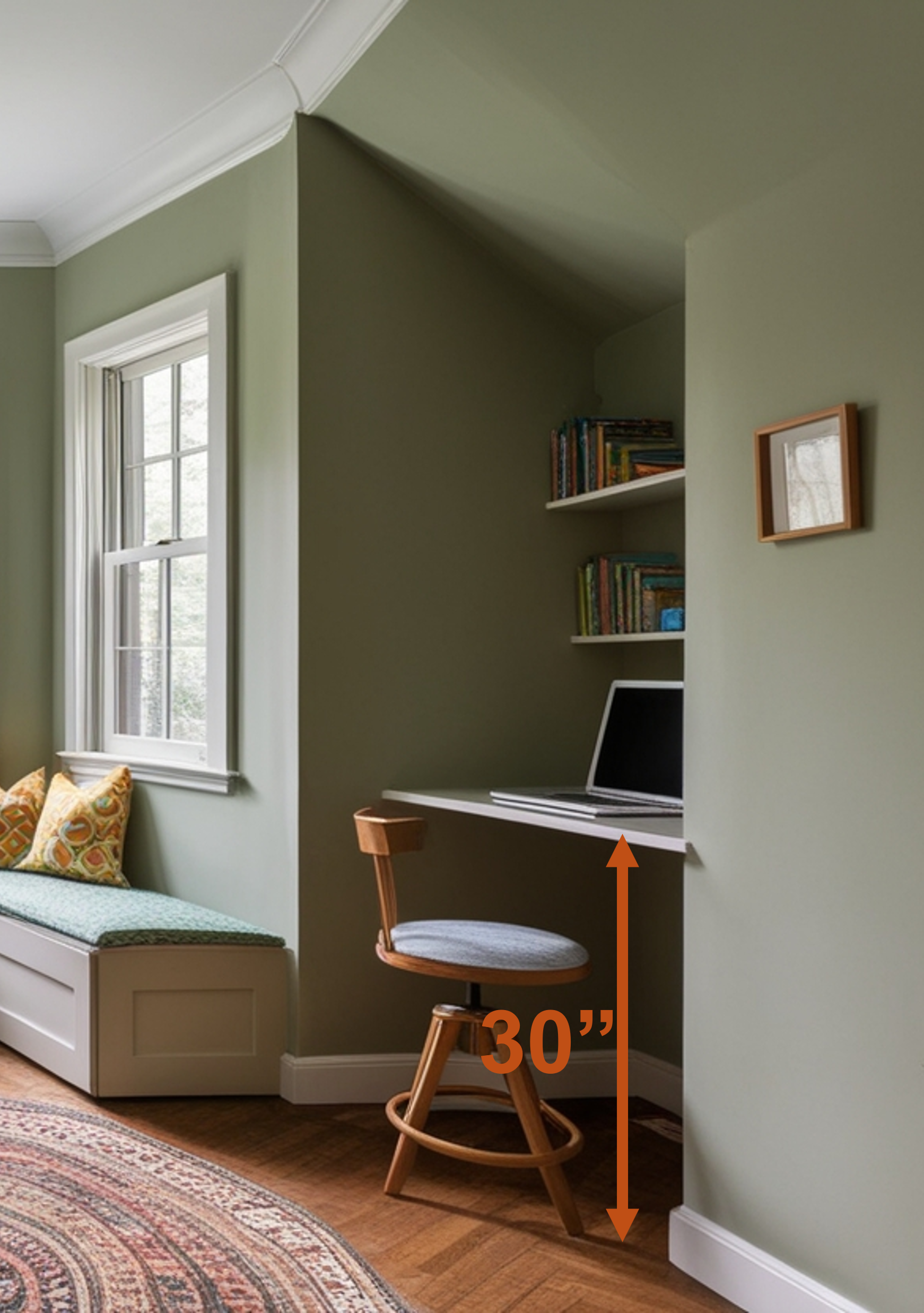
Your desk surface should be at elbow height when you're seated — approximately 28-30 inches for most adults. Working on a surface that's too high or too low creates fatigue and pain over weeks and months. If you're using a dining table (typically 30 inches) and you're shorter than average, a seat cushion or a chair with good height adjustment makes a real difference.
A real chair
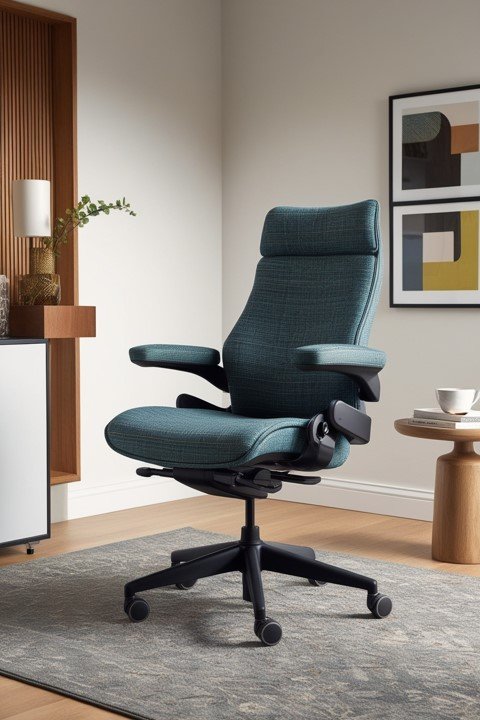
The dining chair is not a work chair. Neither is the couch. If you're working from home more than a few hours a week, an ergonomic chair is an investment in your physical health, not a luxury. It doesn't have to be expensive — a good used office chair for $75-$100 is far better than a beautiful dining chair that leaves your back aching by noon.
Working from home without a dedicated room is a design problem, and like most design problems, it has real solutions. The goal is a zone that's claimed, contained, and closable — even if 'closable' just means a curtain, a cart you can roll away, or an armoire with a door. The room doesn't matter. The intention does.
What's your current WFH setup, and what's the biggest frustration with it? Tell me in the comments — I'm always looking for new angles on this problem.
Read Next:

How to Design a Moody Masculine Home Office in a Small Space
A small, awkward spare room turned into a bold, moody home office that’s as functional as it is stylish. With dark, dramatic walls, smart storage solutions, and a layout designed for both work and relaxation, this space balances high-tech efficiency with a cozy, masculine vibe. Thoughtful lighting, layered textures, and a few unexpected design moves make all the difference—proving that even the trickiest rooms can become the perfect home office space.

Michael is Principal designer and blogger at Michael Helwig Interiors in beautiful Buffalo, New York. Since 2011, he’s a space planning expert, offering online interior e-design services for folks living in small homes, or for those with awkward and tricky layouts. He’s a frequent expert contributor to many National media publications and news outlets on topics related to decorating, interior design, diy projects, and more. Michael happily shares his experience to help folks avoid expensive mistakes and decorating disappointments. You can follow him on Pinterest, Instagram and Facebook @interiorsmh.