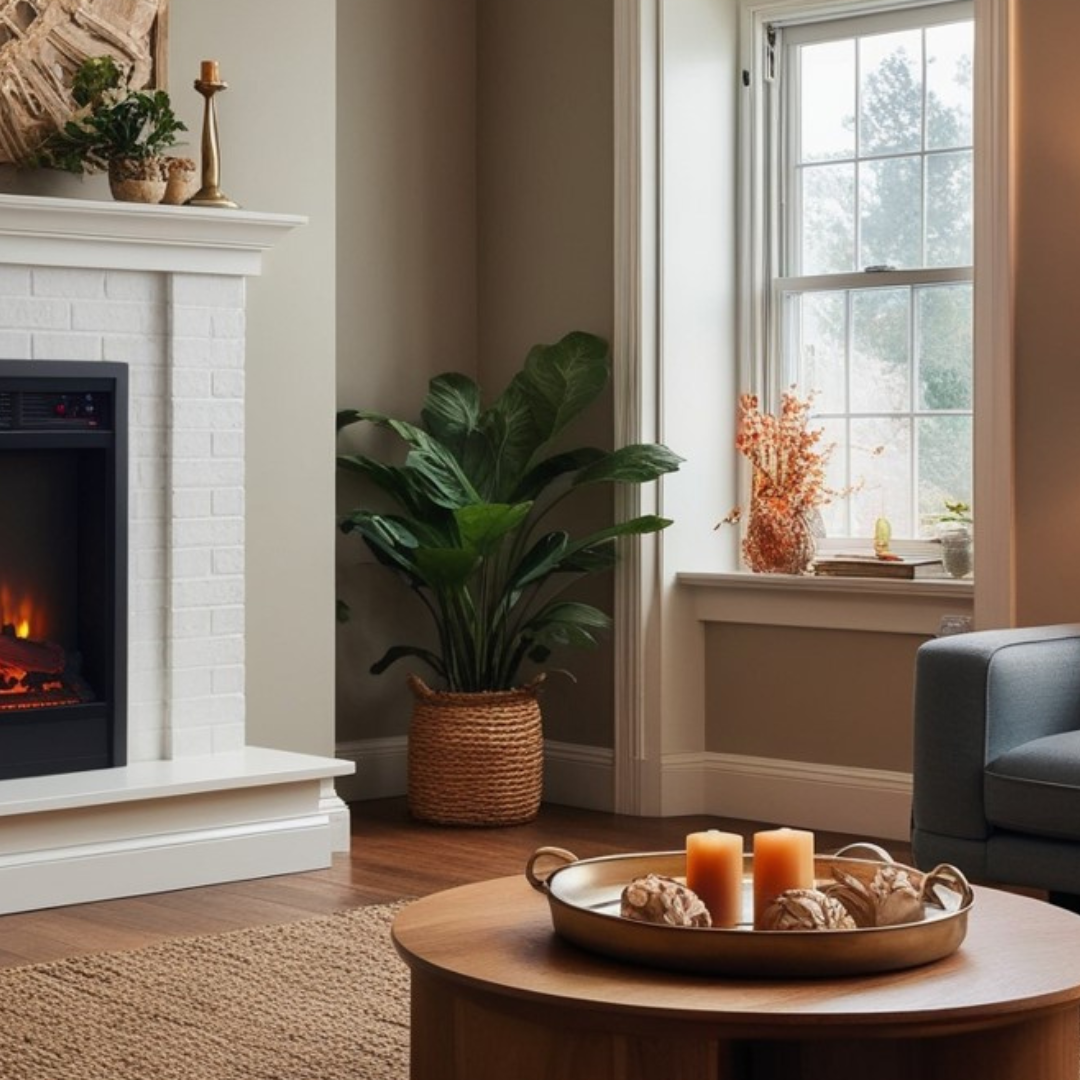
The off-center window is one of the most common layout problems I see, and one of the most mishandled.
People look at it and immediately see the problem: the window isn't where they want to anchor the room. It's not centered on the wall. It's not symmetrically placed between two corners. It's just... there. Off to one side. Creating an imbalance that feels wrong
And then folks often make the most predictable mistake possible.
They try to center the sofa on the window anyway…
Centering furniture on an off-center window doesn't fix the imbalance. It highlights it. Because now your eye goes to the window, then to the sofa that's almost-but-not-quite centered under it, and the wrongness of the whole arrangement becomes more visible, not less.
There are better solutions. Several of them, depending on your room, your furniture, and what the window is competing with. Let me walk you through the approach I use when a client has this problem — which, to be clear, is a lot of clients.
First: Stop Treating the Window as the Anchor
The first mental shift is the most important. You've been taught, whether explicitly or by looking at a thousand rooms in magazines and on Instagram, that windows are the natural focal points of a room. Put the sofa across from the window. Center the bed on the wall with the most natural light. Organize the room around the glass.
That works when the window is centered. When it's not, that thinking leads you directly into the trap.
Instead, I want you to identify the other potential anchors in your room. These are:
A fireplace or built-in shelving unit
The longest unobstructed wall
A natural traffic flow corridor that suggests a layout
An architectural feature — a beam, a column, a door opening that has some visual weight
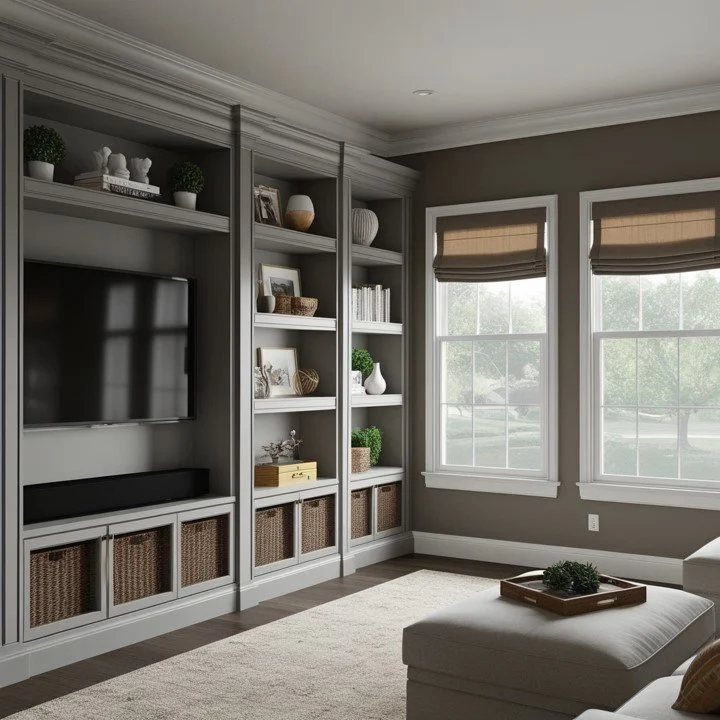
In most rooms with off-center windows, one of these alternatives exists. And that alternative is what you should be arranging your furniture around. The window is a light source and a view. It doesn't have to be the room's organizational spine.
Second: Identify Which Problem You Actually Have
Off-center windows aren't all the same problem. There are a few distinct problems, and they require different solutions.
The Window That's Slightly Off
This is the window that's 18 inches off from where it should be. It's close enough to symmetrical that you keep trying to make it work symmetrically, but far enough off that every attempt reads as “almost-right.”
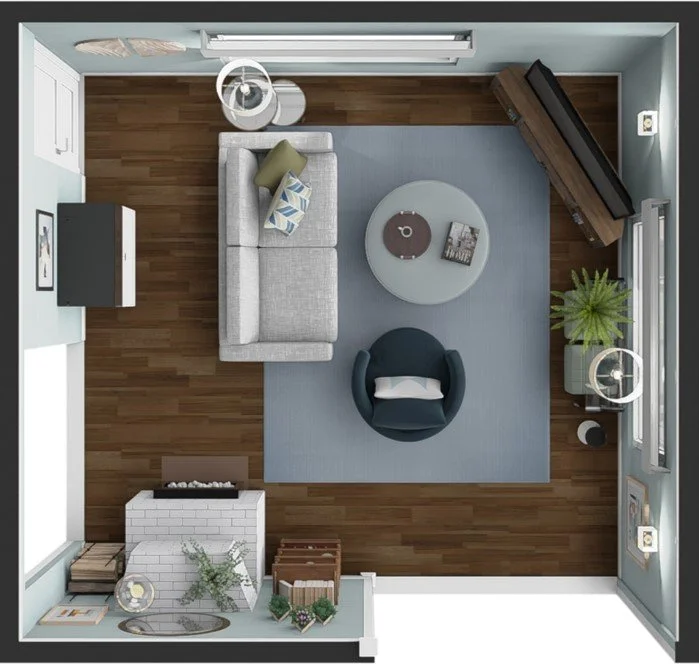
Solution: Stop trying to center on it. Create an asymmetrical arrangement that makes the off-center placement look deliberate. This often means floating the sofa in the room rather than pushing it against the window wall and using a console table or bookshelf on the longer side of the window to visually balance the wall.
The Window That's Way Off — Pushed into a Corner
This window is clearly not centered. It's tucked toward one end of the wall, maybe only 2 feet from the corner, with a lot of blank wall space on the other side.
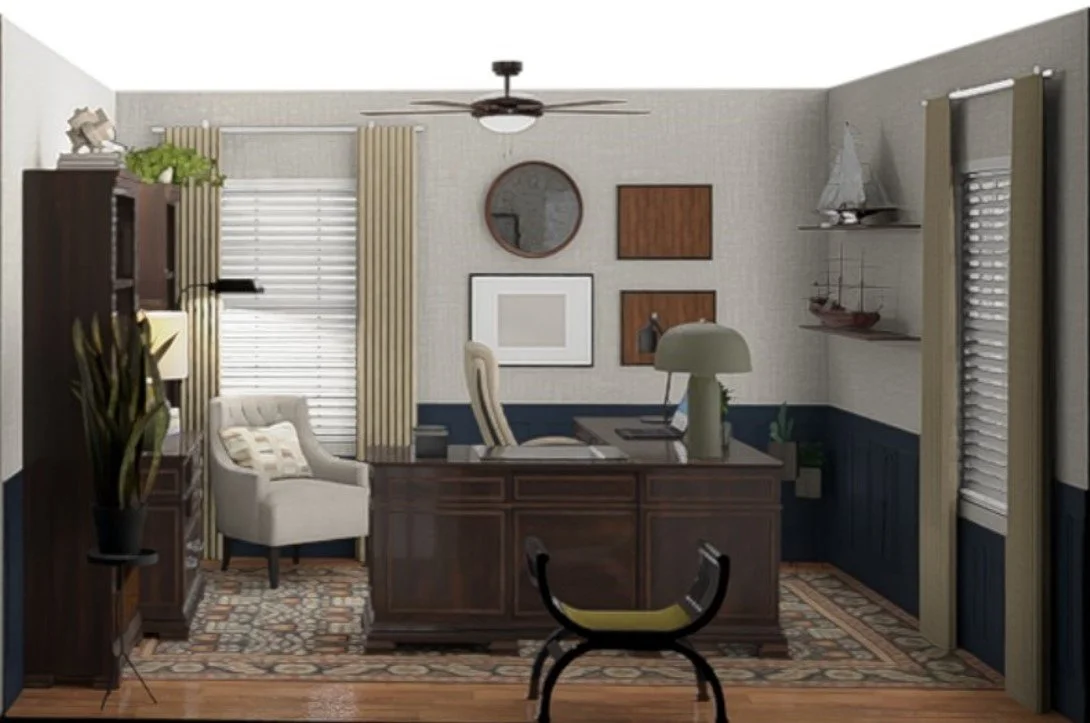
Solution: This window has effectively become a side window. Design accordingly. The furniture should be anchored on the long blank wall opposite the corner window, not on the window wall at all. Use the corner window as task lighting — put a reading chair and floor lamp there rather than trying to make it a feature.
The Wall with Two Windows — Neither Centered
This is the trickiest version. Two windows, placed asymmetrically, with varying amounts of wall space between and around them.

Solution: Treat the space between the windows as a single visual unit and anchor something there — a console, a piece of art, or a low bookshelf. This gives the eye a central point between the two windows and makes the asymmetry read as framing rather than randomness.
The Floating Furniture Approach
Here's the move that solves most off-center window problems: float your primary seating.
Most people push the sofa against a wall. In a room with an off-center window, that means the sofa is either awkwardly aligned with the window or awkwardly misaligned from it. Either way, the misalignment is visible because the sofa is right there next to the wall where the comparison is obvious.
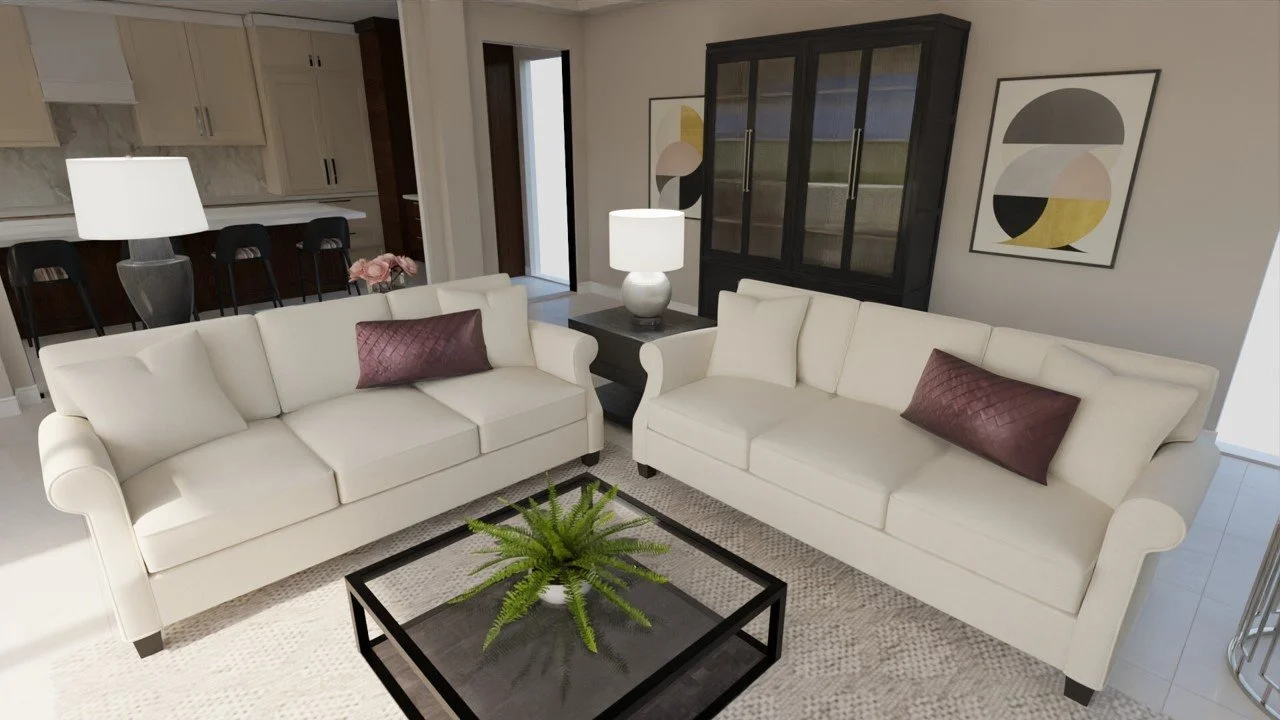
Pull the sofa off the wall — even just 12-18 inches — and arrange your seating slightly toward the room's real focal point (fireplace, TV wall, longest wall). Suddenly the window's relationship with the sofa becomes irrelevant. They're no longer in the same visual reference frame. The off-center window is just a window. The sofa is arranged around the room's logic, not the window's position.
Floating furniture also makes small rooms feel larger. Counterintuitive but true: when everything is pushed against the walls, the center of the room becomes empty dead space. When you float the seating into the room, you activate the center and the perimeter walls recede.
The key is to give the sofa something to face — a coffee table, a rug that anchors the grouping, a focal point across the room. Floating furniture without a destination looks lost. Floating furniture with clear intention looks designed.
The Balancing Act: Visual Weight on the Other Side
Sometimes you can't move the furniture. Maybe the room is too small to float the sofa, or the layout has constraints that require the furniture to stay near the walls. In that case, you solve the off-center window problem with visual weight.
The principle: whatever is missing on the short side of the window needs to be compensated for with something that has visual presence.
Tall Furniture
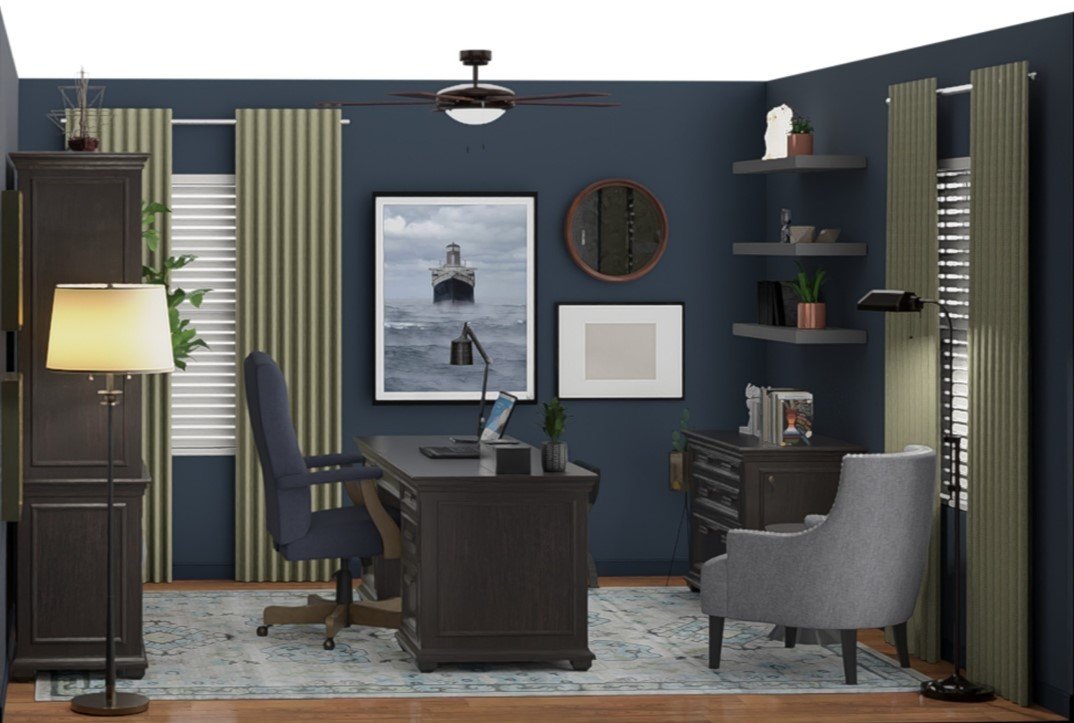
A bookshelf, a tall floor plant, a floor-to-ceiling curtain panel on the short side of the window. The height draws the eye upward and outward, compensating for the wall mass that isn't there on that side.
A Large Piece of Art

Centered on the short side of the window wall, above a low console or sideboard. The art becomes a visual anchor that balances the window's positioning. The wall goes from empty to thought out.
Curtains That Extend Past the Window Frame
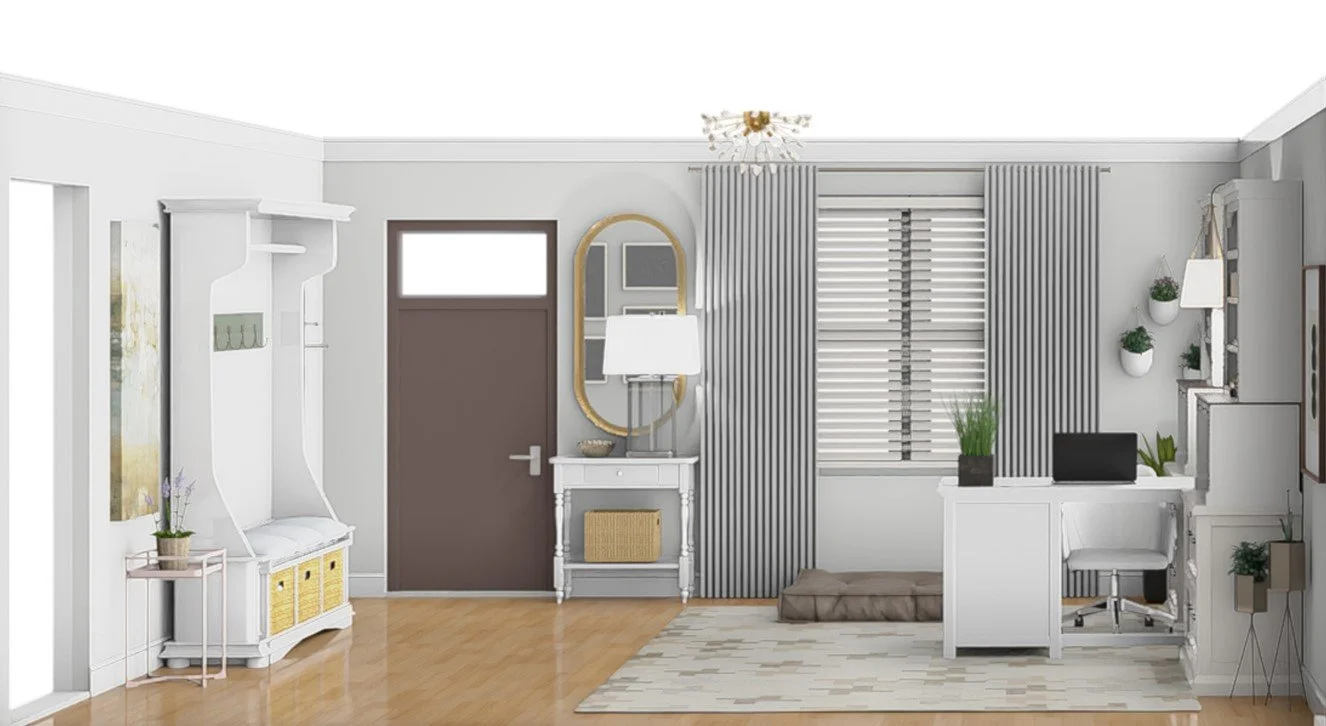
Hang curtain rods that extend 12-20 inches past the window frame on both sides. The curtains — hung from ceiling to floor — create a tall, symmetrical frame around the window that makes the window appear centered within the treatment, even if it isn't centered on the wall. This is one of the simplest, most effective tricks in my small-space toolkit.
Extended curtain rods do double duty: they make the window look centered, and they make the window look larger. A small off-center window dressed with ceiling-height curtains that extend well past the frame becomes a design feature rather than a ‘good enough’ compromise.
What to Do with the Sofa — Specifically
Let me get specific, because 'create visual balance' is sometimes easier said than done.
If the sofa is on the window wall (parallel to it):
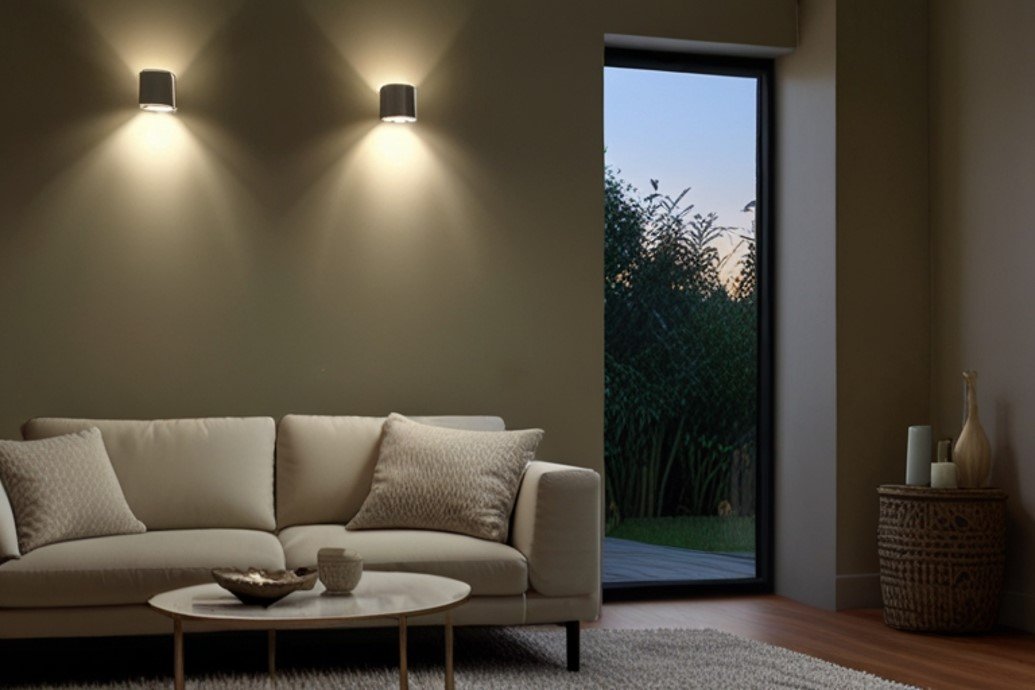
Don't center it on the window. Instead, push it toward the side of the window that has more wall space. Flank the end of the sofa with a tall plant or floor lamp on the short side. On the long side, add a side table and a lamp. You've created asymmetry that feels composed instead of accidental.
If the sofa is on the opposite wall, facing the window:

The sofa should be centered in the room — not on the window. Measure the room width and center the sofa on that dimension. The off-center window becomes background. Your eye lands on the sofa first, the window registers as a light source, and the misalignment becomes a non-issue.
If the sofa is on a side wall (perpendicular to the window wall):
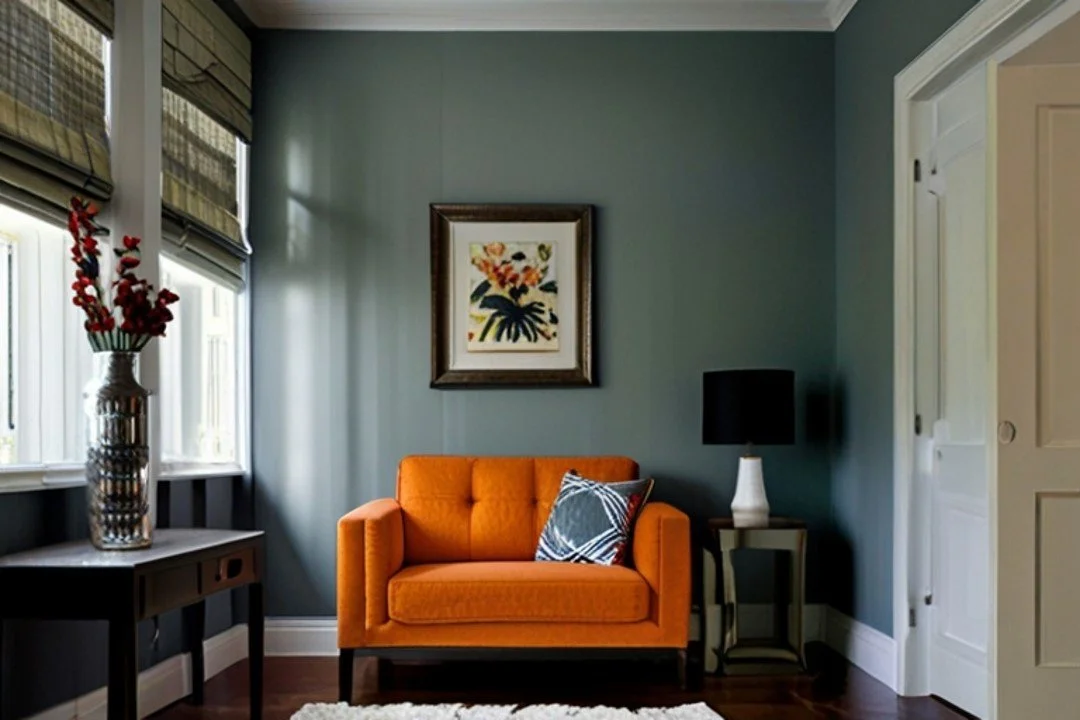
This is often the best solution in small rooms with off-center windows. The sofa runs parallel to a side wall, facing into the room. The window is to one side — a source of light and view, not an anchor point. This arrangement completely sidesteps the off-center problem because the sofa isn't trying to relate to the window at all.
The Rug: It Sets the Geometry
Once you've decided on your furniture arrangement, the rug anchors it — and the rug placement determines whether the whole thing reads as ‘designed’ or hap hazard.
Rule: center the rug on your furniture grouping, not on the window, and not on the room's center. The rug should make the seating area look complete in itself. When someone walks into the room, the rug-plus furniture should read as one cohesive zone.
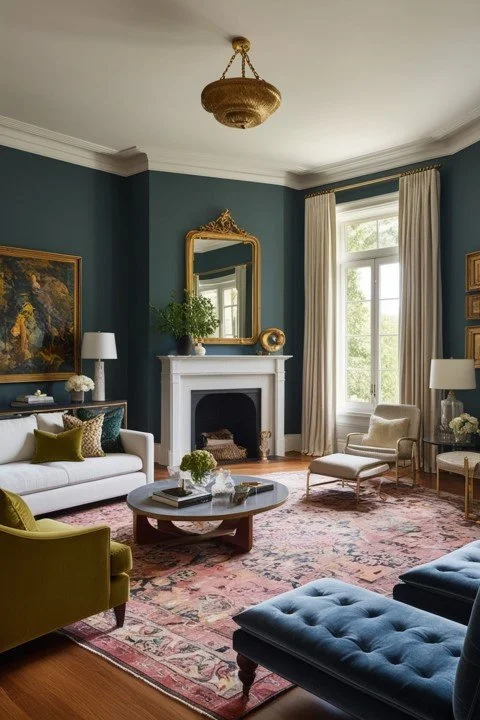
In a room with an off-center window, a well-placed rug redirects attention from the asymmetry to the arrangement. The eye lands on the zone — the seating, the rug, the coffee table — and the window's awkward position becomes unimportant.
When Nothing Else Works: Lean into It
Occasionally a room has an off-center window that isn't fixable with any of the above strategies. The room is too small, the window is too far off, the architecture is too constrained. In those cases, my advice is to stop fighting it and design around the asymmetrical features.
In small and awkward spaces, the goal is never to make the room look like something it isn't. The goal is to make it look like someone who knows what they're doing made thoughtful decisions. An off-center window, handled well, can be one of those decisions.
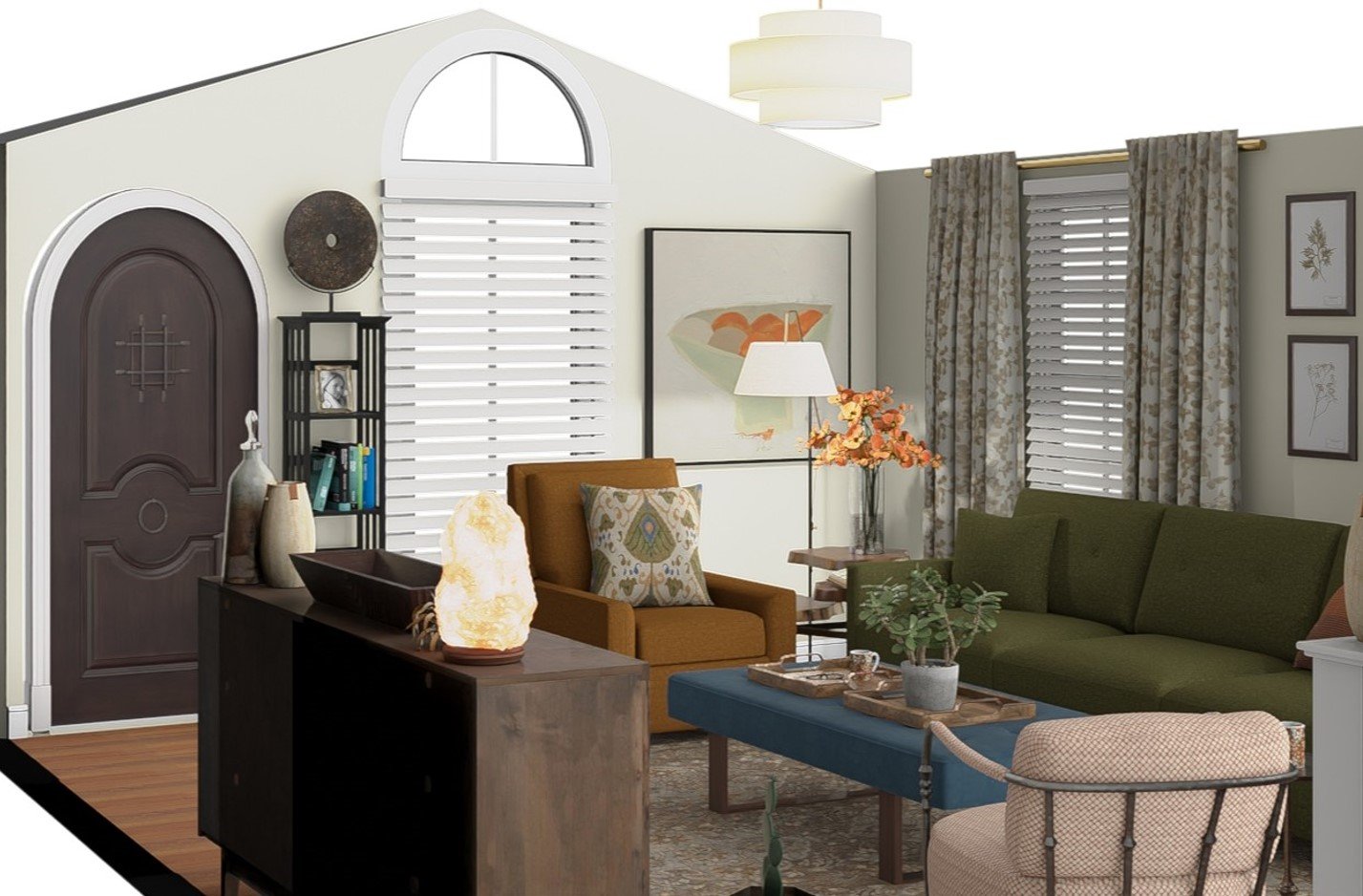
Asymmetrical rooms can be beautiful if the asymmetry is owned rather than apologized for. This means:
Placing a statement chair in the corner near the window — not trying to make it symmetrical, but giving it intentional placement
Using art placement that's deliberately asymmetrical on the opposite wall — creating a visual echo of the window's off-center position
Designing the room around movement rather than symmetry — furniture that follows traffic flow feels intentional even without a centered anchor
Have you dealt with an off-center window in your own space? Tell me what you tried — and whether it worked. Comments are open below.
Read Next

How to Arrange Furniture in a Through-Room Without Blocking Pathways or Flow
Struggling to arrange furniture in a through-room without blocking pathways or making the space feel awkward? Learn how to work with built-ins, doorways, and tricky layouts to create a functional, inviting room that flows beautifully.
Michael is Principal designer and blogger at Michael Helwig Interiors in beautiful Buffalo, New York. Since 2011, he’s a space planning expert, offering online interior e-design services for folks living in small homes, or for those with awkward and tricky layouts. He’s a frequent expert contributor to many National media publications and news outlets on topics related to decorating, interior design, diy projects, and more. Michael happily shares his experience to help folks avoid expensive mistakes and decorating disappointments. You can follow him on Pinterest, Instagram and Facebook @interiorsmh.