

Here's a situation I hear about all the time — and if you're reading this, it's probably yours.
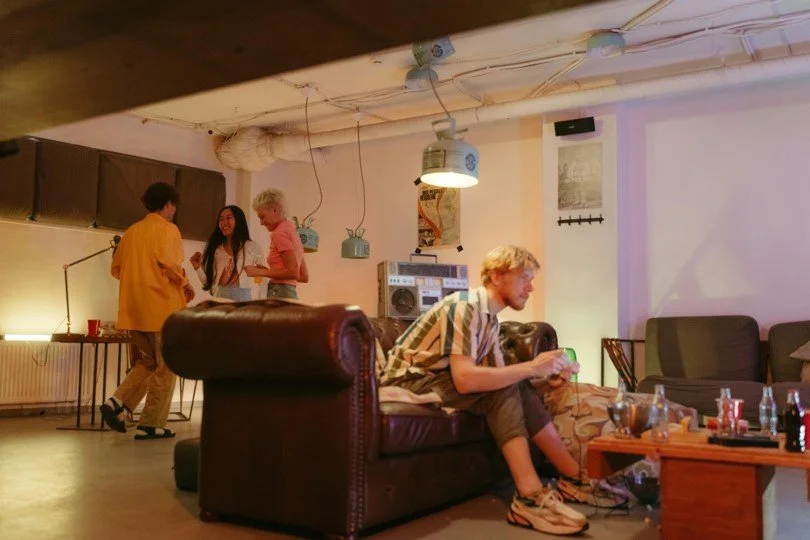
The house is the right size for the family you had when you bought it. But families grow. Kids become teenagers. Suddenly one smaller living room upstairs has to serve everyone at once — parents trying to decompress after work, a teenager who wants to game or watch something with friends, a younger kiddo doing homework on the floor. Nobody gets what they need, and the room feels like a pressure cooker.
The basement is right there. It's got the square footage. It's underused. But it has no windows, the lighting is terrible, and right now it feels like exactly what it is — a basement.
MART PRODUCTION
I've worked with this scenario so many times, and I want to share what I actually recommend to people when they're staring at a dark, uninspired basement and wondering if it can become a real living space. Not a showroom renovation with a six-figure budget. A real, doable basement transformation that gives your family the extra room they need — without moving, without adding on, and without a full-scale construction project.
The goal isn't to make your basement look like it has windows. The goal is to make it feel like a place people actually want to be. Those are different problems, and the second one is much more solvable than the first.
You with me? Here's what I would do.
Step One: Deal With the Ceiling First
I'm starting here because the ceiling is where most basement transformations go wrong before they even get started. People focus on the walls and the floor, and then they're stuck with a ceiling that makes the whole room feel like a bunker.

Curtis Adams
If your basement has exposed joists and ductwork overhead, you have two options — and the one you pick sets the tone for everything else.
Option A: Paint It All Black (or Very Dark)
This is counterintuitive when you're trying to make a basement feel brighter, but stay with me. Painting the ceiling, joists, ductwork, pipes, and all — everything overhead — in a flat black or very deep charcoal does something remarkable: it makes the ceiling visually disappear. Your eye stops registering it as a surface and starts reading the room as taller than it is.
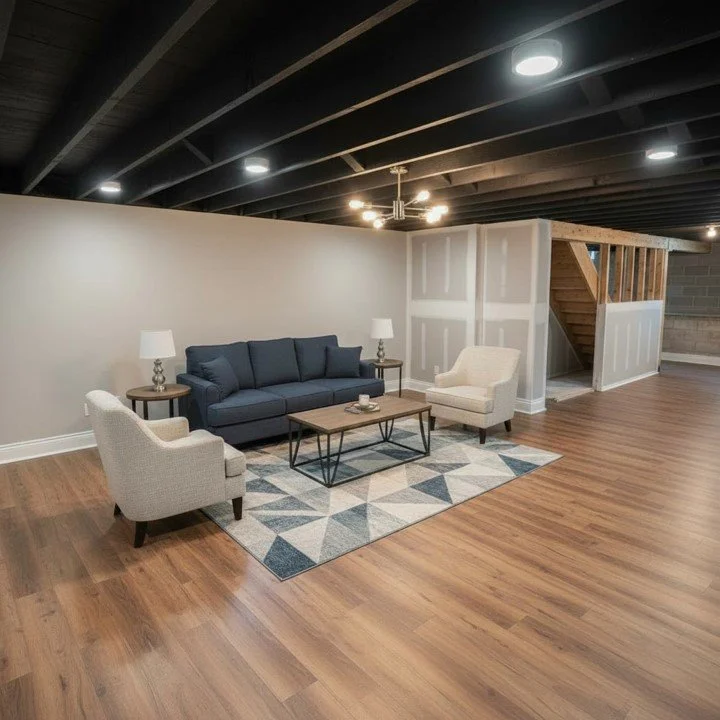
This is a weekend project with a sprayer or a roller and extension pole. It costs the price of a few gallons of ceiling paint. And the transformation is significant enough that I've had clients tell me they couldn't believe it was the same room.
The key detail: use flat or matte finish only. Anything with sheen will catch the light and make every pipe and wire more visible, not less. Flat black absorbs light and recedes. That's exactly what you want.
Don’t have the time to do the painting? Here’s my take on hiring a professional to paint inside your home.
Option B: Drop Ceiling with Large Tiles
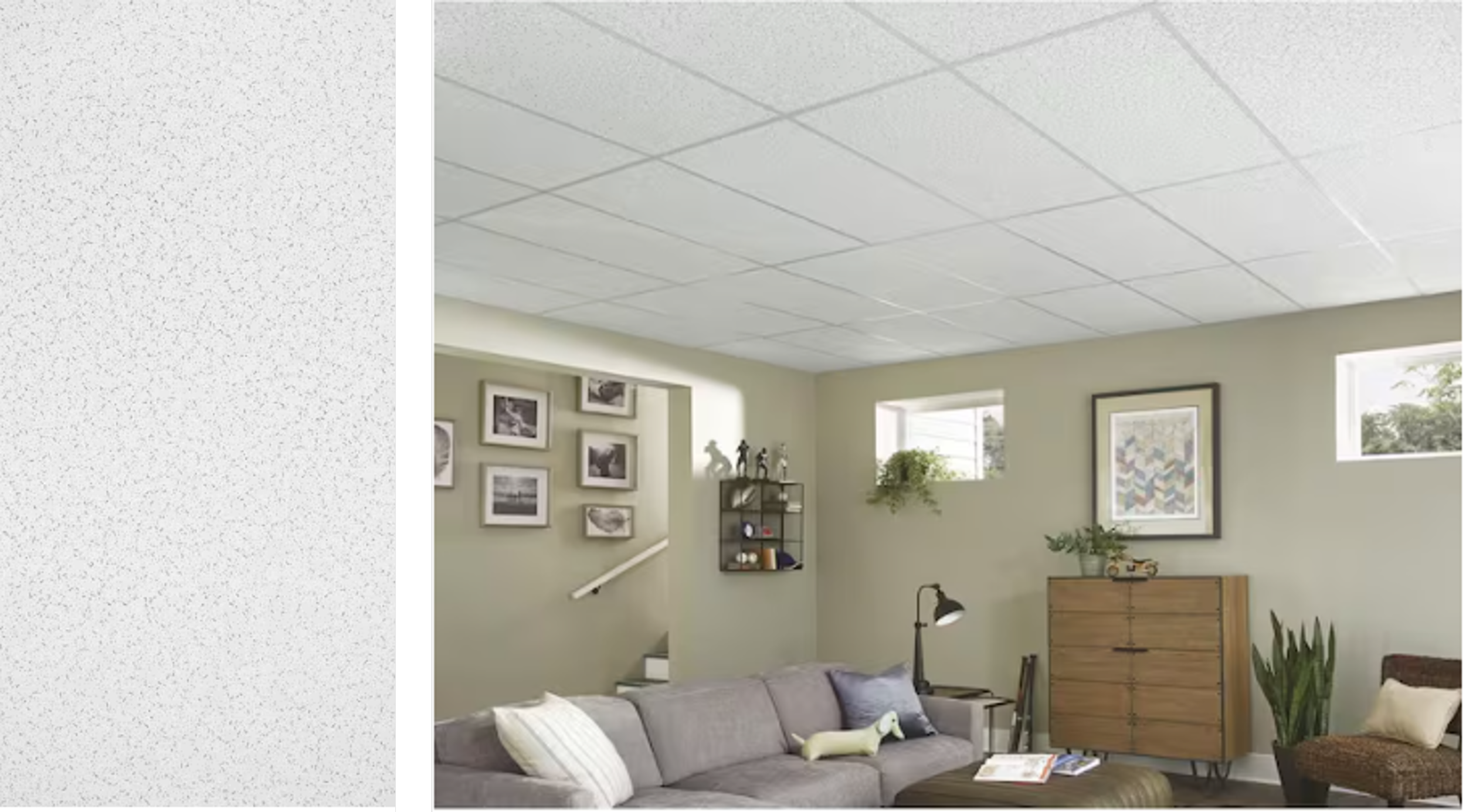
If you want the cleaner look of a finished ceiling, a drop ceiling is the practical choice — especially if you need access to mechanicals above. My recommendation here is to skip the standard 2x2 tiles (they look like a 1990s office) and go with 2x4 tiles in a simple, white finish. The larger tile format looks more residential and less institutional.
Armstrong CEILINGS Home Depot
The honest trade-off: a drop ceiling will lower your finished ceiling height, which matters in basements that are already close to 7 feet. If you're working with 8 feet or more, a drop ceiling is completely workable. Below 7 feet of finished height, I'd stick with the painted approach.
Step Two: Light It Like You Mean It — Layered and Intentional
Lighting is the single most important thing you can do in a windowless basement. Not one thing — a system of things. This is where I see people spend money in the wrong places and skimp in the wrong places. Let me walk you through how I'd approach it.
Recessed Lighting as the Base Layer
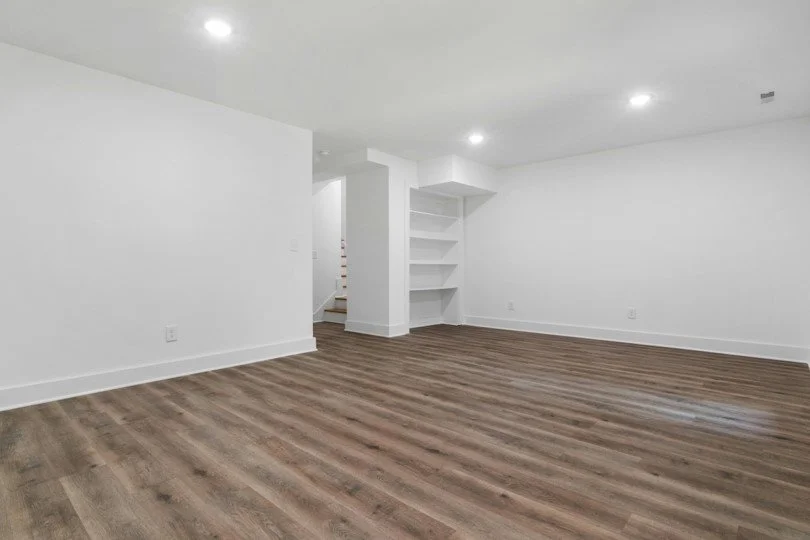
Recessed cans (or the newer slim LED wafers, which are even easier to install) are your baseline. In a windowless space, you want more of them than you think — on a grid roughly every 4-6 feet across the ceiling. The goal is even, consistent light coverage with no dark corners.
Curtis Adams
If you're not running new electrical, there are plug-in recessed lights that connect to an existing ceiling fixture — no electrician required. They don't look quite as clean as hardwired, but they work, and for a basement family room they're a very reasonable solution.
Critical spec: choose LED recessed lights rated between 2700K and 3000K color temperature. This is the warm white range that feels like a living space rather than a hospital. Anything above 4000K (cool white or daylight) will make your basement feel exactly like what it is — a basement with no natural light.
Lamps Are Non-Negotiable
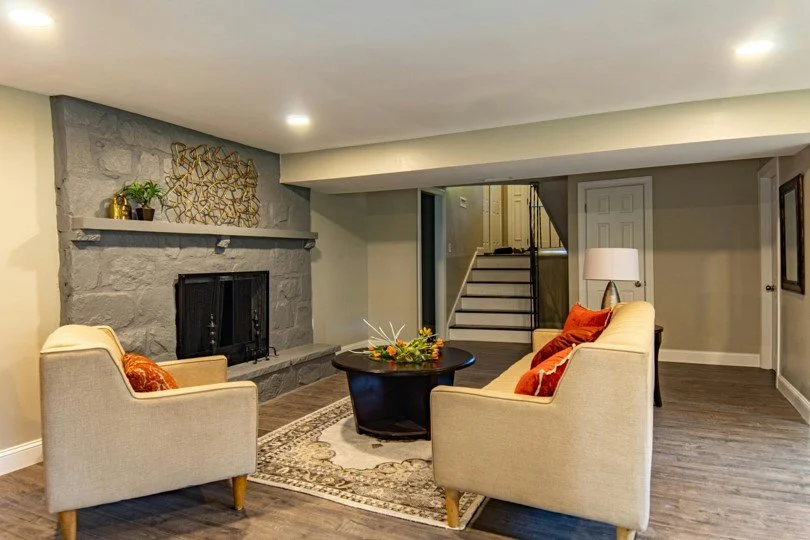
Recessed lights alone, even done well, create a flat, slightly institutional feel. Lamps — floor lamps and table lamps — add warmth, variation, and the quality of light that makes a room feel lived-in rather than lit up.
Dan Hadley
In a basement family room, I'd plan for at least two floor lamps and one or two table lamps, depending on the room size. Position them in corners and at seating areas. When the recessed lights are dimmed and the lamps are on, that basement should feel like the coziest room in the house.
This is not a small thing. Lamps are doing the emotional heavy lifting in a windowless space. They're creating the warmth and intimacy that windows and natural light would provide if you had them. Don't skip them.
Dimmer Switches on Everything
Every circuit in the basement should be on a dimmer. Gaming night needs bright light. Movie night needs the recessed lights low and maybe just the lamps. A teenager doing homework at a desk needs task-level brightness. Dimmers make one basement serve all of those needs without rewiring for each scenario.
Standard dimmers are inexpensive and straightforward to install if you're comfortable with basic electrical work. Smart dimmers (like Lutron Caseta) add the ability to control everything from a phone or voice command, which for a family with teenagers is genuinely useful.
Step Three: Color Strategy for a Room with No Natural Light
Here's where conventional wisdom about basements gets people into trouble. The instinct is to go very light — bright white, pale gray, something that bounces as much of that artificial light around the room as possible.

Curtis Adams
I understand the logic, but in a windowless basement, very light colors under artificial light often read as cold, flat, and slightly dingy. The room doesn't have sunlight to warm those light colors up, so they just sit there looking pale.
My recommendation for a windowless basement family room: go warm and go medium. A warm greige, a soft warm white with yellow or cream undertones, or even a warm medium tone like a caramel or terracotta on an accent wall. These colors look intentional under artificial light in a way that cool pale shades simply don't.

For the main walls, I'd use something in the warm off-white to warm light gray range — Benjamin Moore Pale Oak, Sherwin-Williams Accessible Beige, or similar. These colors work with warm LED lighting to create a room that feels genuinely comfortable rather than artificially bright.
For one focal wall — typically the one behind the TV or the main seating wall — I'd consider going bolder. A deeper warm tone: a muted rust, a forest green, a moody navy. In a basement with no windows, a bold accent wall reads as a design choice rather than an attempt to compensate for a lack of light. It gives the room personality.

Step Four: The Floor — Warm It Up
Basement floors are almost always concrete, and concrete is cold — literally and visually. Whatever you put over it needs to address both.
Luxury Vinyl Plank (LVP) — My Top Recommendation
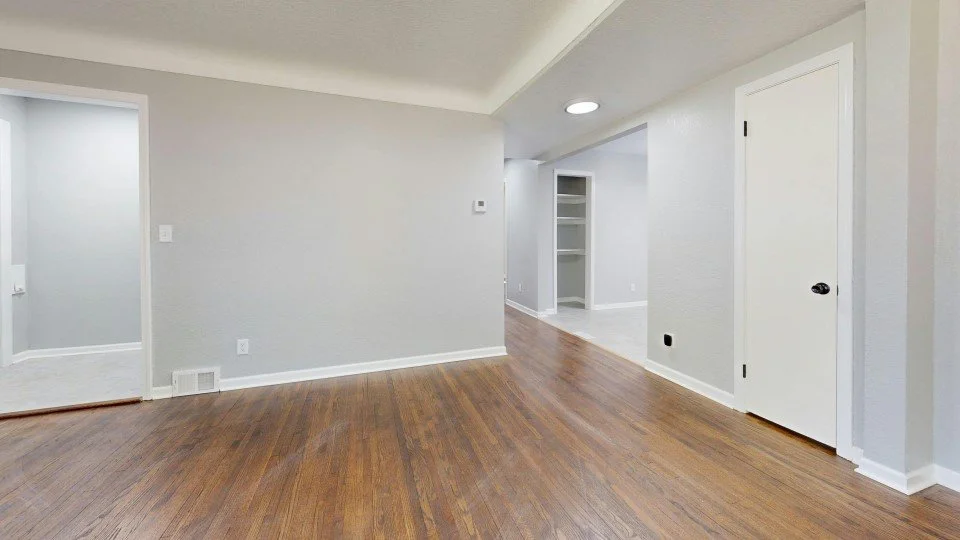
For a basement family room that's going to get heavy use from teenagers and the general chaos of family life, luxury vinyl plank is my consistent first recommendation. It's waterproof (critical in a basement), durable, comfortable underfoot, and available in warm wood-look finishes that completely transform how the space feels.
Peter Vang
It floats over the existing concrete without adhesive — a skilled DIYer can do a moderate-sized basement in a weekend. And because it's waterproof, a minor flood or humidity issue won't ruin it the way it would ruin hardwood or laminate.
What to look for: at least 6mm thick (8mm or 12mm is better for comfort and sound), with a pre-attached underlayment if possible. Choose a warm medium-tone wood look — something in the honey, oak, or warm gray-brown range. Very light or very dark floors in a basement without natural light both have problems; medium warm tones are the most forgiving.
Area Rugs on Top — Essential, Not Optional
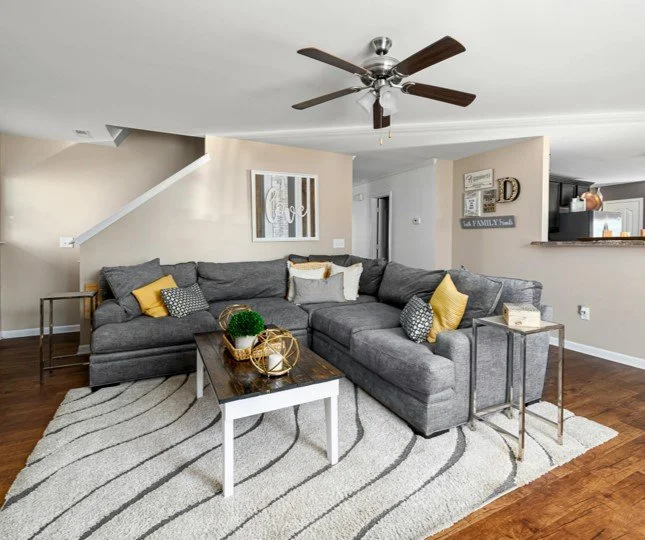
Even with LVP down, a large area rug in the main seating area is non-negotiable in a basement family room. The rug adds warmth (actual thermal warmth as well as visual), absorbs sound (basements can get echo-y), and defines the seating zone in a way that makes the room feel designed.
Curtis Adams
Go large. In a basement family room with a sectional or a sofa-and-chairs arrangement, a 9x12 rug is not too big. A rug that's too small makes the space feel unresolved. A rug that's large enough to anchor all the furniture reads as thought-out and finished.
Step Five: Create Actual Zones — This Is a Family Room, Not Just a TV Room
This is the part where a basement transformation either becomes a real living space or stays a glorified TV room. The difference is zones.
A basement family room that needs to serve teenagers and parents and multiple activities at once need to be designed with more than one zone in mind. Here's how I'd set it up.
The Main Seating and Viewing Zone
A sectional or a sofa with a chair or two, anchored by a large rug, facing the TV. This is the primary zone — the one that gets used the most. Orient it so that it's the first thing you see when you come down the stairs, so the room reads as a living space immediately.
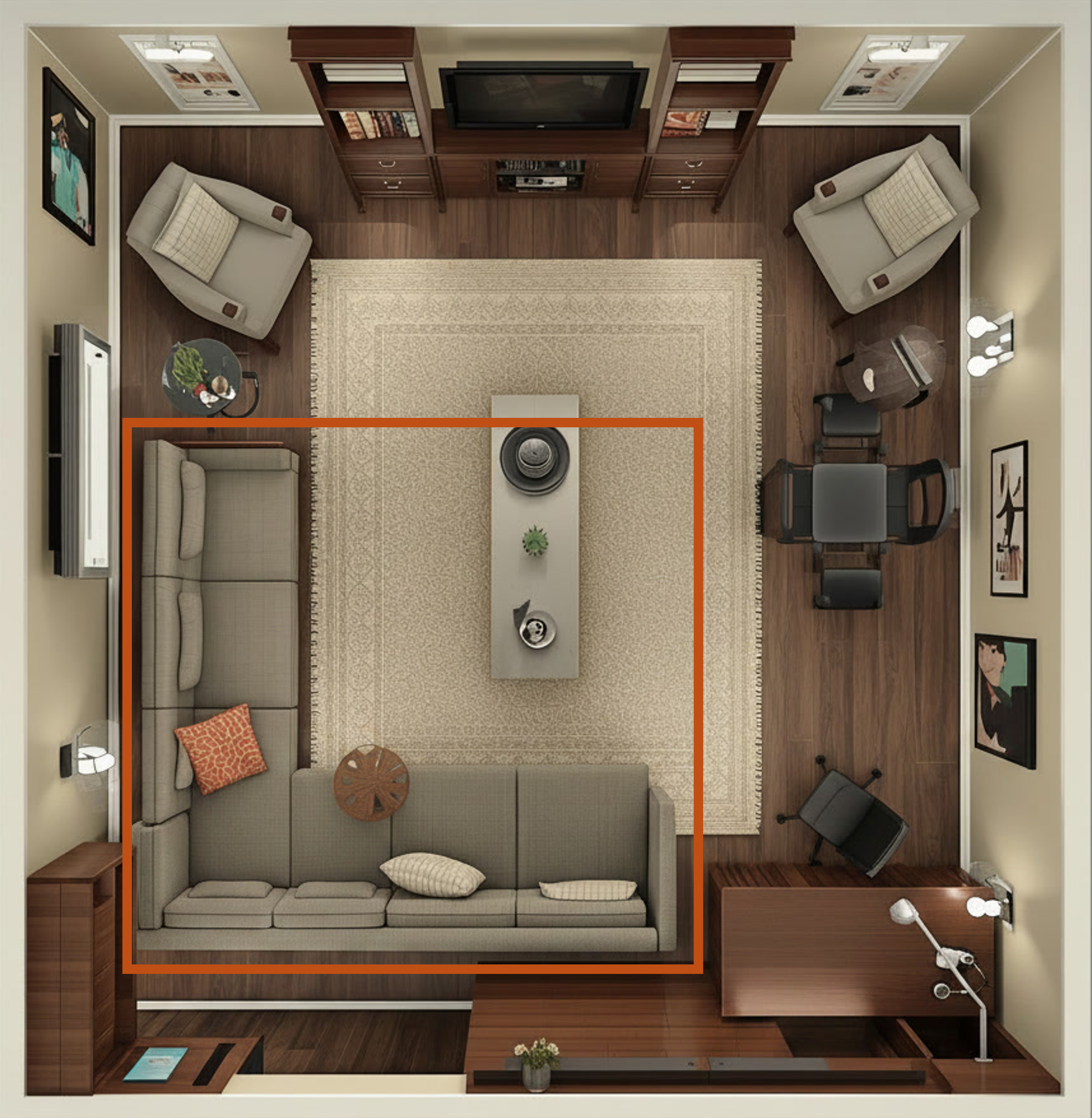
Try not to push all the seating against the walls, if possible. Float the sectional or sofa into the room. In a basement, where the perimeter often has mechanicals or ductwork you want to minimize attention to, pulling furniture away from the walls and toward the center actually helps the room feel larger and more finished.
A Secondary Zone for Teenagers
A gaming setup, a small study area, or even just a game table in a different part of the basement gives teenagers a spot that's clearly theirs without the whole space becoming a gaming den that parents don't want to be in.
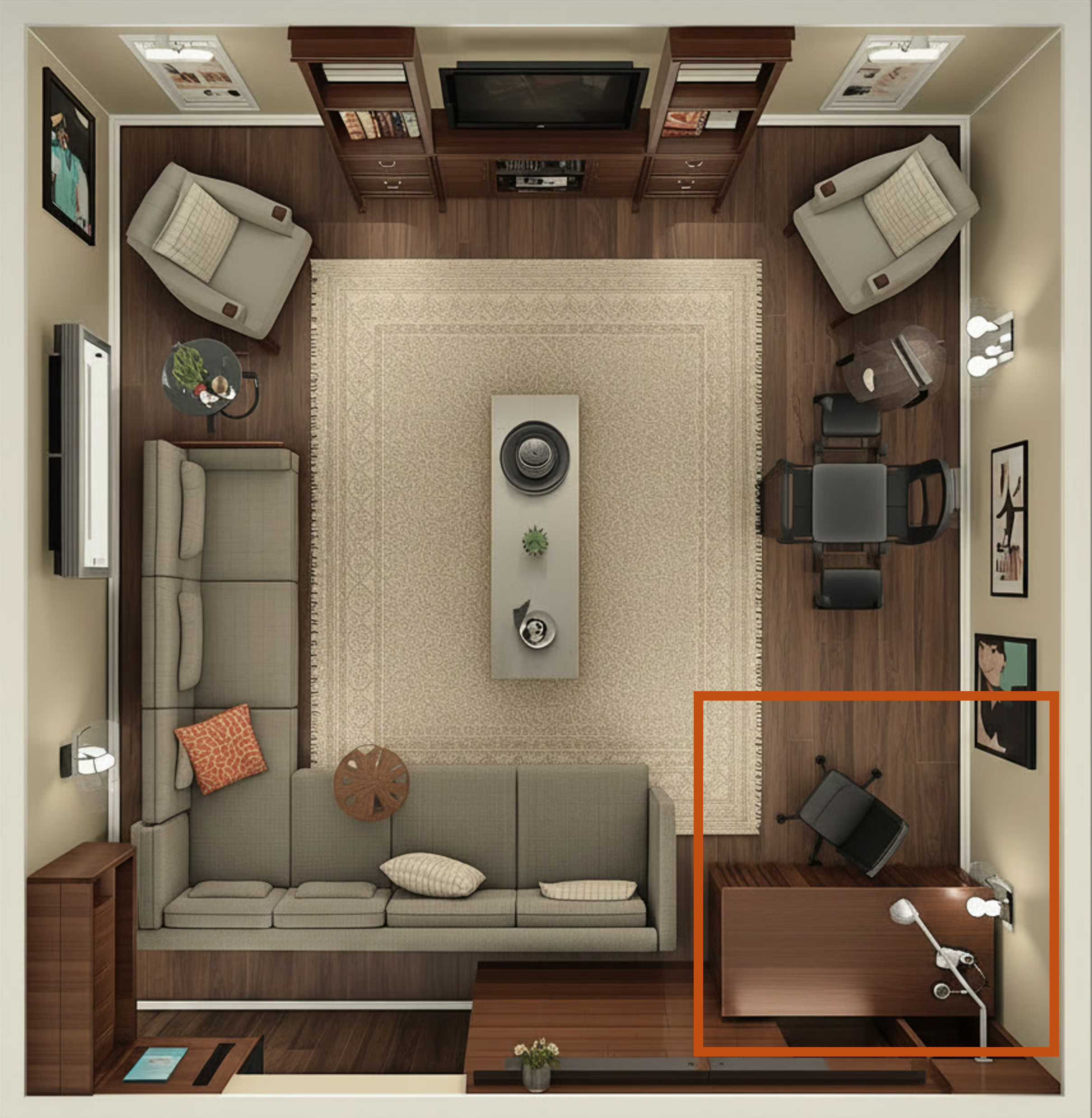
This doesn't have to be elaborate. A 4x4 corner with a desk, a monitor, a good chair, and its own task light is enough to establish a separate zone. The visual separation — even without walls — tells everyone where the gaming happens and where the family gathering happens.
Storage That's Part of the Design
Basements accumulate stuff. If you don't plan for storage as part of the design, the stuff will accumulate in ways that undermine everything else you've done. Built-in shelving along one wall (IKEA Billy bookcases finished with trim to look built-in is a classic and genuinely effective approach), a media console with closed storage, ottomans with hidden storage — all of these make storage part of the room's design rather than an afterthought.
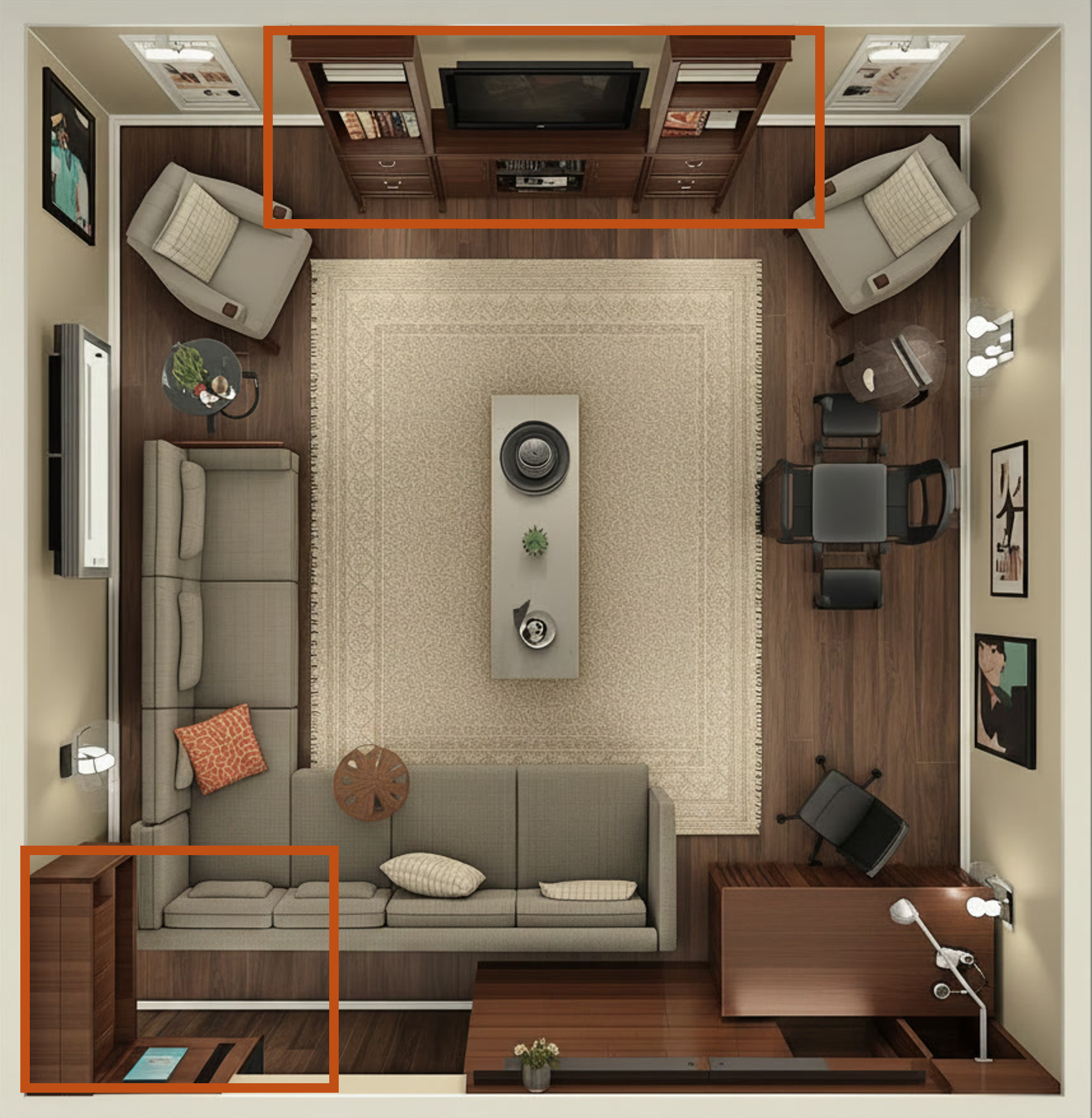
The basement family room that stays looking good is the one where everything has a place. Teenagers are not going to organize things that don't have an obvious home. Give the stuff a home — closed storage for the chaos, open storage for the things you don't mind seeing — and the room maintains itself much better.
A Few Final Things I'd Do Before Calling It Done
Bring in something living — plants or greenery
In a windowless space, this requires some thought. You're not going to keep sun-loving plants alive in a basement.

Koushalya Karthikeyan, Dmitry Alexandrovich, Ryszard Zaleski
But low-light plants — pothos, snake plants, ZZ plants, cast iron plants — thrive in exactly these conditions. A few well-placed plants add life and warmth in a way that a windowless room really needs. They also subtly signal that this is a livable space, not just a finished basement.
Art and personal touches on the walls
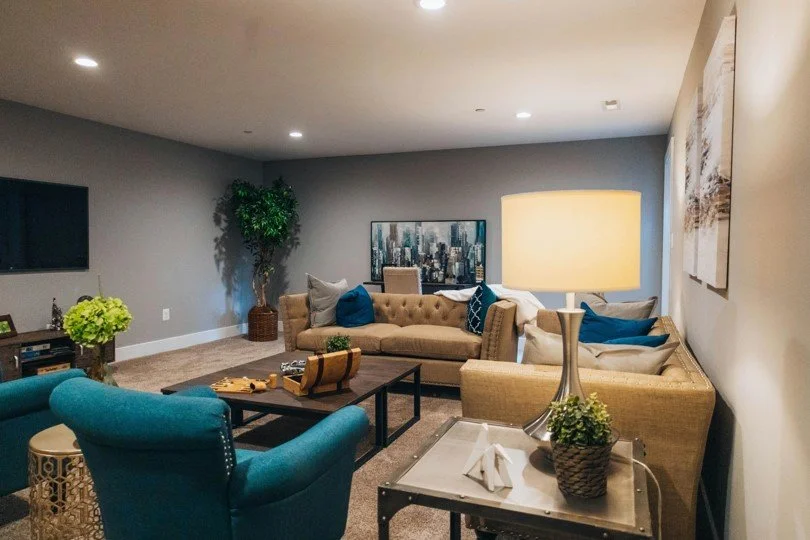
Basement family rooms often feel like they're missing something even after all the practical work is done. Nine times out of ten, what's missing is personality on the walls. Art, framed photos, a gallery wall, a large statement piece behind the sofa — these are what make the space feel like it belongs to your family rather than like a generic finished basement.
Samuel Peter
Don't save the good stuff for upstairs. The art you really love, the framed photos from trips, the pieces that make you happy — put them in the room your family is going to spend real time in.
Sound matters more than people realize
Basements are often hard-surfaced and echoey — concrete floors, drywall walls, nothing to absorb sound. Once you add people, a TV, and a gaming setup, it can get loud. The rug helps. Upholstered furniture helps. Curtains on a blank wall — even without a window behind them — add acoustic absorption and visual warmth simultaneously. A few throw pillows and a blanket on the sofa. These soft surfaces collectively make a significant difference in how the room sounds when it's in use.
A basement transformation doesn't have to be a massive project. The moves that make the biggest difference — lighting, color, flooring, zones — are all doable with a reasonable budget and a plan. The basement your teenagers want to be in, that your family actually uses, is closer than it looks from where you're standing right now.
What does your basement look like right now, and what's the biggest challenge you're facing with it? Tell me in the comments.