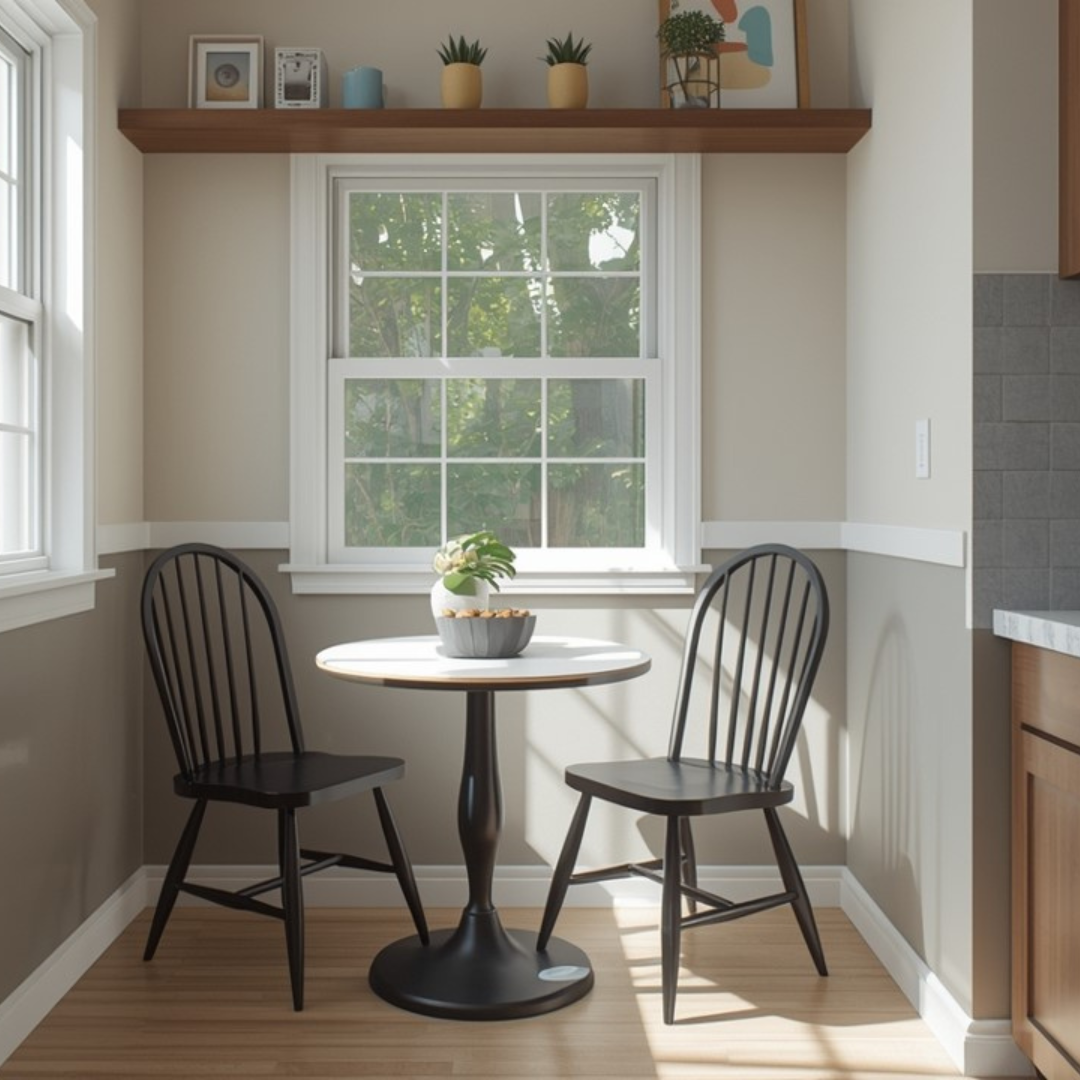
I'm looking at a corner in a studio apartment. It's 7 feet by 7 feet—49 square feet, technically, but let's call it 50. Two small walls have windows. The other wall has the kitchen on the other side. The corner where they meet? Dead space. The kind of spot that usually gets a floor lamp and maybe a sad plant.
But this client wants to eat here. Real meals, at a real table, like an adult. Not balanced on the couch with a plate in her lap. Not standing at the kitchen counter. A proper dining experience in 50 square feet.
Here's what I'd do.
First: Understanding What 50 Square Feet Actually Means
Before we talk furniture, let's be honest about the constraints. A 7x7 space can fit a small dining table, two chairs, and enough clearance to pull those chairs out and sit comfortably. That's it. You're not adding a sideboard or a buffet or extra seating for guests.
But here's what people get wrong: They think small space dining means compromise. It doesn't. It means focus.
This corner is going to be a dining nook and nothing else. Not storage with a table wedged in. Not a multipurpose catch-all. A dedicated space for eating.
Once you accept that, the design gets easier.
The Table: Why I'm Going Round, 36 Inches
Most people default to a small rectangular table—30x48 inches or something similar. It feels practical. But in a 7x7 corner, a rectangle creates problems.
First, you lose the corner. Rectangular tables sit parallel to walls, which means that valuable corner space—the deepest part of your 50 square feet—goes unused.
Second, rectangular tables have aggressive corners that jut into walkways. In a tight space, those corners become shin banging magnets.
So, I'm putting a 36-inch round pedestal table in the corner, angled so it sits about 18 inches from each wall. The round shape means no corners blocking traffic. The pedestal base means no table legs to navigate around when pulling chairs in and out.
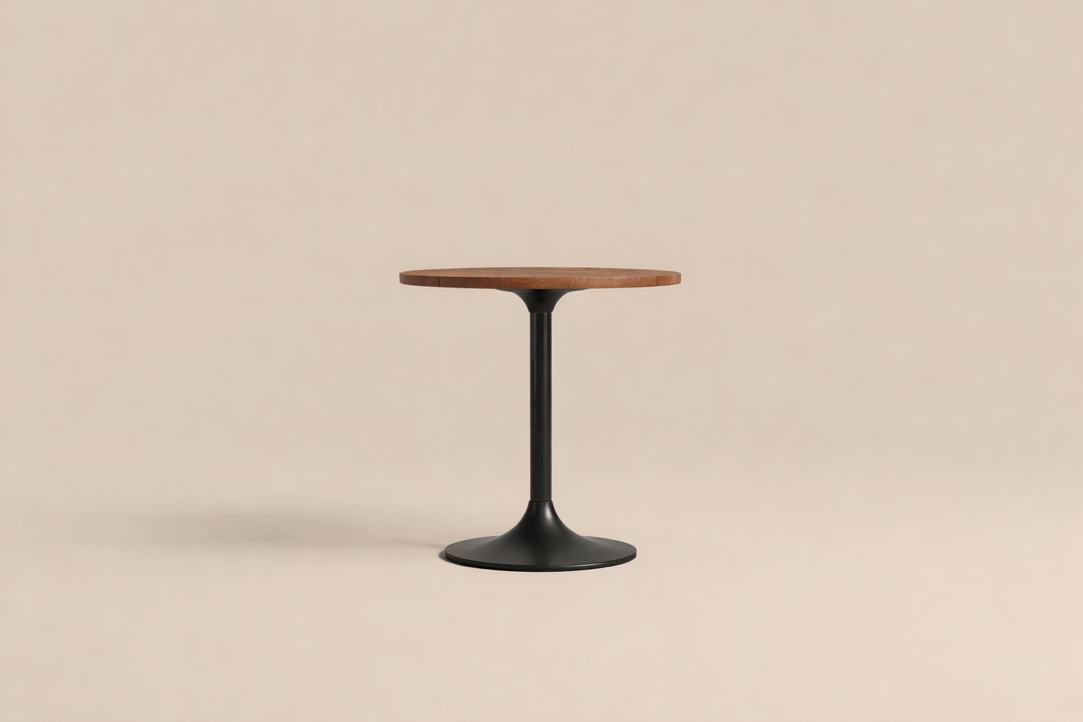
Why 36 inches specifically? It seats two people comfortably with actual elbow room. A 30-inch round feels cramped. A 42-inch round won't fit with proper chair clearance. Thirty-six is the sweet spot.
The table I'd choose: A simple pedestal base in white or light wood with a top that's not fussy. West Elm, CB2, or even IKEA's Docksta if budget is tight. Clean, timeless, gets out of the way visually.
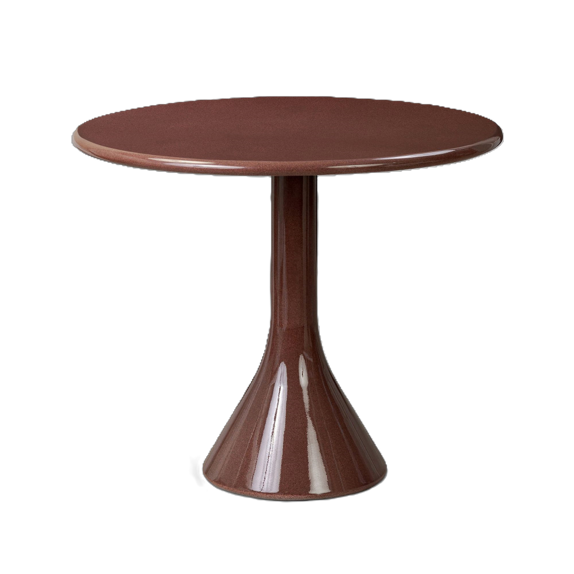
West Elm, Thaline Bistro Table (36")
The Chairs: Armless, Lightweight, Tuckable
Chairs in a 50-square-foot nook have three jobs: be comfortable, tuck completely under the table when not in use, and not look bulky or visually heavy.
That rules out armchairs (arms prevent tucking and add visual bulk), upholstered dining chairs with skirts (too heavy-looking), and anything too wide (eats table space).
I'm choosing armless chairs with slim profiles—either wood with curved backs or metal with padded seats. The key is they need to slide fully under the table so when you're not eating, the table looks almost floating. That openness keeps the corner from feeling cluttered.
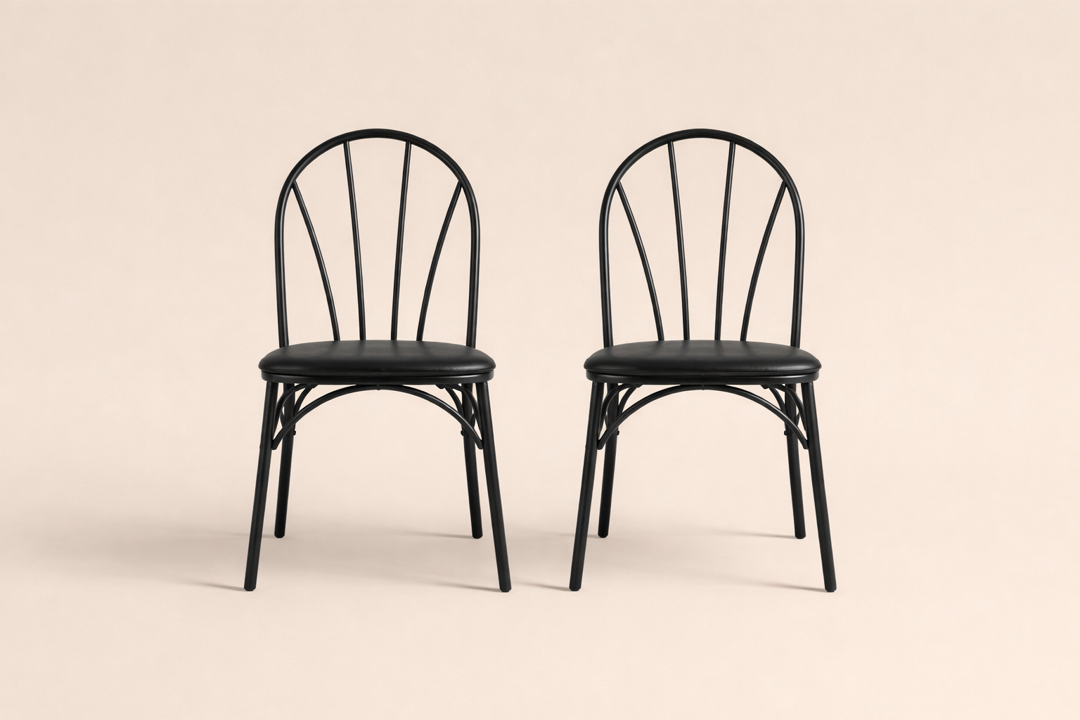
The lightweight factor matters too. In tight spaces, you're pulling chairs in and out many times a week. Heavy chairs become exhausting. I want something you can move with one hand.
Chair options: IKEA's Leifarne (under $50, lightweight, clean lines), Target's Windsor chairs (classic, affordable), or if budget allows, West Elm's Mid-Century chairs in a light finish.

Target, Buylateral Set of 2 Windsor Farmhouse Solid Wood Spindle Dining Chairs
The Lighting: A Pendant That Defines the Zone
Here's where some magic starts to happen. A 50-square-foot corner can either feel like an afterthought or like a destination. The difference is lighting.
I'm hanging a pendant light centered over the table, 30-36 inches above the tabletop. Not a flush-mount ceiling fixture that treats the whole room equally. Not a floor lamp in the corner. A pendant that says, 'this is the dining zone.'
The pendant creates a pool of light that visually separates the dining nook from the rest of the studio. When it's on, that corner becomes intimate and purposeful. When it's off during the day, it's a sculptural piece that adds to the vibe.
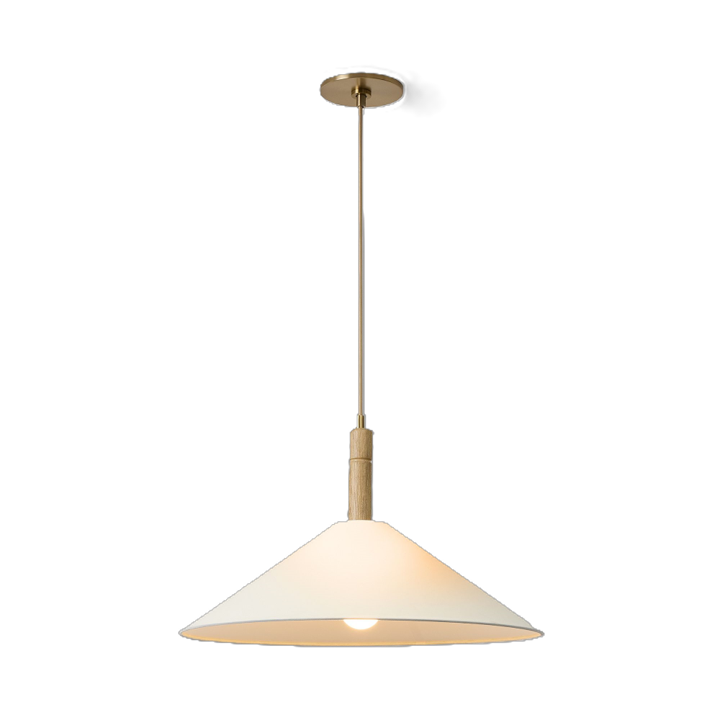
West Elm Devon Pendant
If you can't hardwire a pendant: Use a plug-in swag pendant. Install a small ceiling hook (Command makes removable ones rated for light fixtures), swag the cord across the ceiling to the nearest outlet, and plug it in. Looks hardwired but isn't.
Pendant style: I'd go simple—a globe pendant, a drum shade, or a minimal metal cage. Nothing too ornate. The goal is to define the space without overwhelming it.
Install a dimmer switch or use a smart bulb. Bright for breakfast, dimmed for dinner. That flexibility makes a 50-square-foot nook feel a ton more functional and special.
The Window: Softness That Doesn't Sacrifice Light
The window in this corner is an asset, not a problem. Natural light makes small spaces feel bigger and makes food look better (yes, this matters). But bare windows feel harsh, and heavy curtains make tight spaces feel stuffy.
I'm adding cafe style curtains that add just the right amount of embellishment.
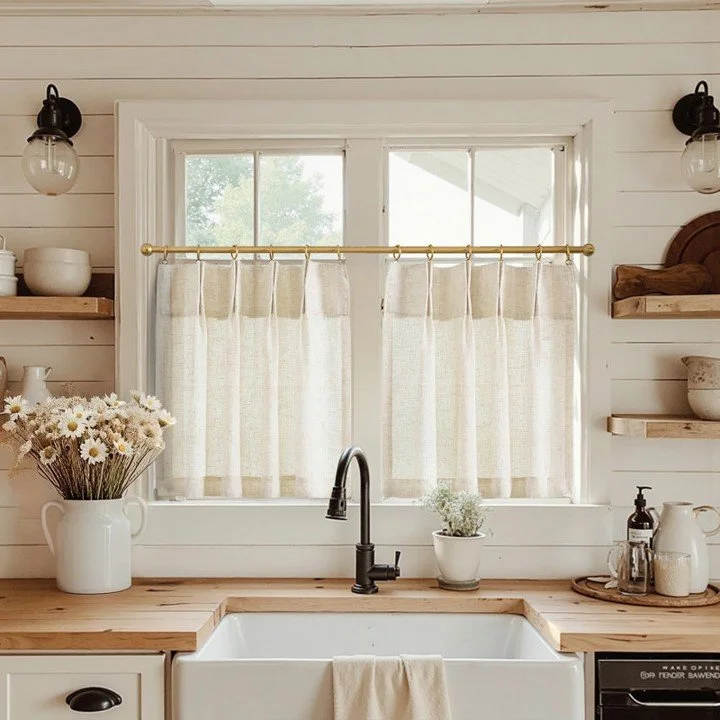
Wayfair, Linen Pinch Pleated Kitchen Curtains
Why not blinds or shades? They're functional but don't add warmth. A dining nook needs to feel inviting. Fabric does that in ways hard materials can't.
The details matter. Short curtains, like café style (sill-length or apron-length), will chop the wall visually and make ceilings feel lower, in larger spaces. So don’t use them in living rooms or bedrooms if you can help it. However, in small nooks like this, a sill length curtain will nicely dress the window and allow lots of natural light and a bit of privacy.
The Rug: Yes, Even in 50 Square Feet
A lot of people skip rugs in small spaces. They worry it'll make the area feel smaller or create visual clutter. (I tend to leave out rugs in dining spaces because dining chairs tend to get stuck off the edges of the rug. #notafan.)
But a rug under a dining table does three important things.
First, it defines the zone. Without a rug, the table and chairs float in the corner with no clear boundaries. The rug says 'this is the dining area' without the walls or dividers.
Second, it protects the floor from chair scrapes and dropped food. In a studio apartment, that matters for your deposit.
Third, it absorbs sound. Hard floors in small apartments echo. A rug under the dining area adds to the whole space feeling quieter and more finished.
Size: I'd use a 5x7 rug. Large enough that when you pull chairs out to sit, they're still on the rug (not half on, half off—that feels unstable and looks bad). This size is small enough that it doesn't creep into the surrounding space.
Pattern and color: Keep it simple. A solid or subtle pattern in a neutral or warm tone. The rug is grounding the space, not competing for attention.
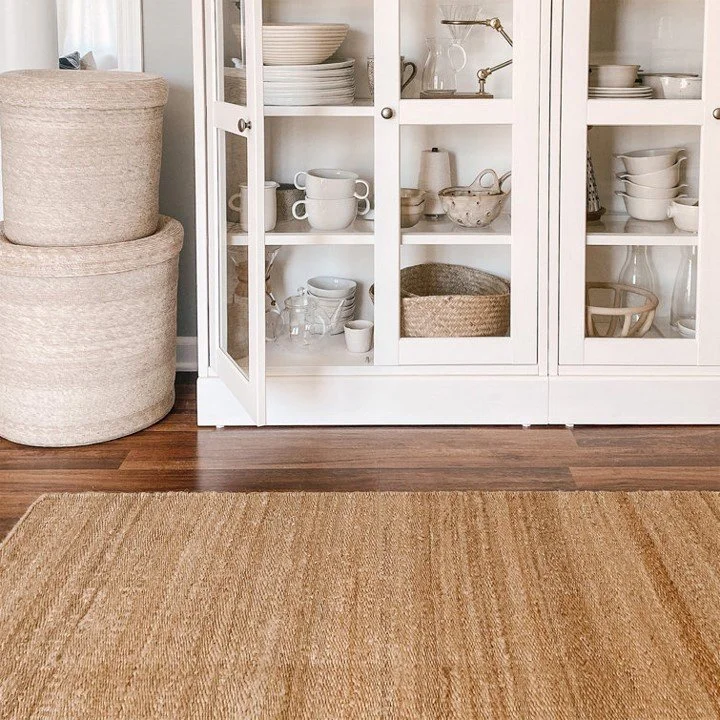
Wayfair, Hart Jute Rug
Practical note: Choose a low-pile rug or flatweave. High-pile rugs make it hard to pull chairs in and out. Also, washable rugs (like Ruggable) are even better in dining areas—spills are inevitable.
The Walls: One Piece of Art, Intentionally Placed
The wall behind the table—the one without the window—needs something. Bare walls make dining nooks feel unfinished. But cluttered walls make small spaces feel chaotic. Look for the happy medium.
I'm hanging one piece of art, centered on the wall at eye level when seated (about 48-52 inches from the floor to the center of the piece). Not a gallery wall. Not floating shelves with tchotchkes. One simple piece that creates a focal point.
Why one piece? In a 7x7 corner, you see everything at once. Multiple pieces create visual competition. One piece gives your eye a place to land and rest.
What kind of art? Something that makes you happy to look at while you eat. This is personal—abstract, landscape, photography, whatever speaks to you. But keep it simple in composition and not too busy.
Size: 18x24 or 24x36 inches. Big enough to matter, not so big it overwhelms. Frame it simply—thin black, natural wood, or white depending on your table finish.
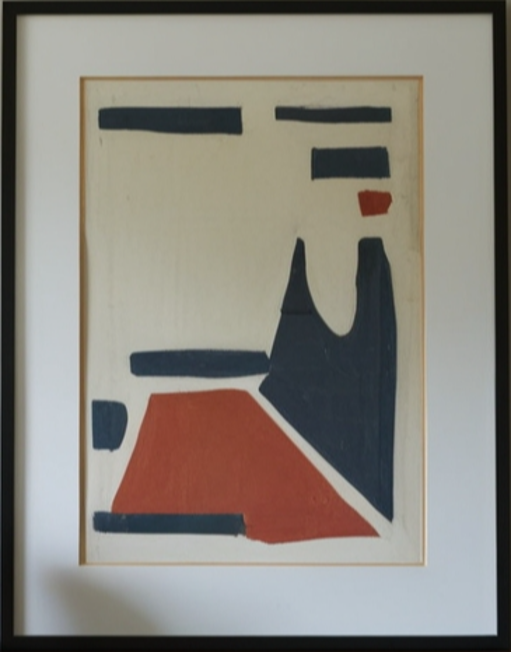
The Finishing Touch: A Single Centerpiece
On a 36-inch round table, you don't have space for elaborate centerpieces or table runners. But you do want something that makes the table feel styled, not bare.
I'm putting a single low vessel in the center—a ceramic bowl, a small vase, a wooden tray. Something with visual weight that grounds the table without blocking sightlines when you're seated across from someone. Also, something that is easy to move when you want to use the whole table for serving dishes and place settings.
What goes in it: Fresh fruit (lemons, apples, whatever's seasonal), a small plant, or nothing—just the vessel itself if it's beautiful.
Why not flowers? You can do flowers, but keep them low—under 8 inches tall including the vase. Tall arrangements block conversation across a small table. Low and lush works. Tall and dramatic doesn't. Once again, easy to move when necessary.
The centerpiece can change with seasons or your mood. But always keep it singular and simple. One thing, beautifully chosen.
What This 50-Square-Foot Nook Actually Feels Like
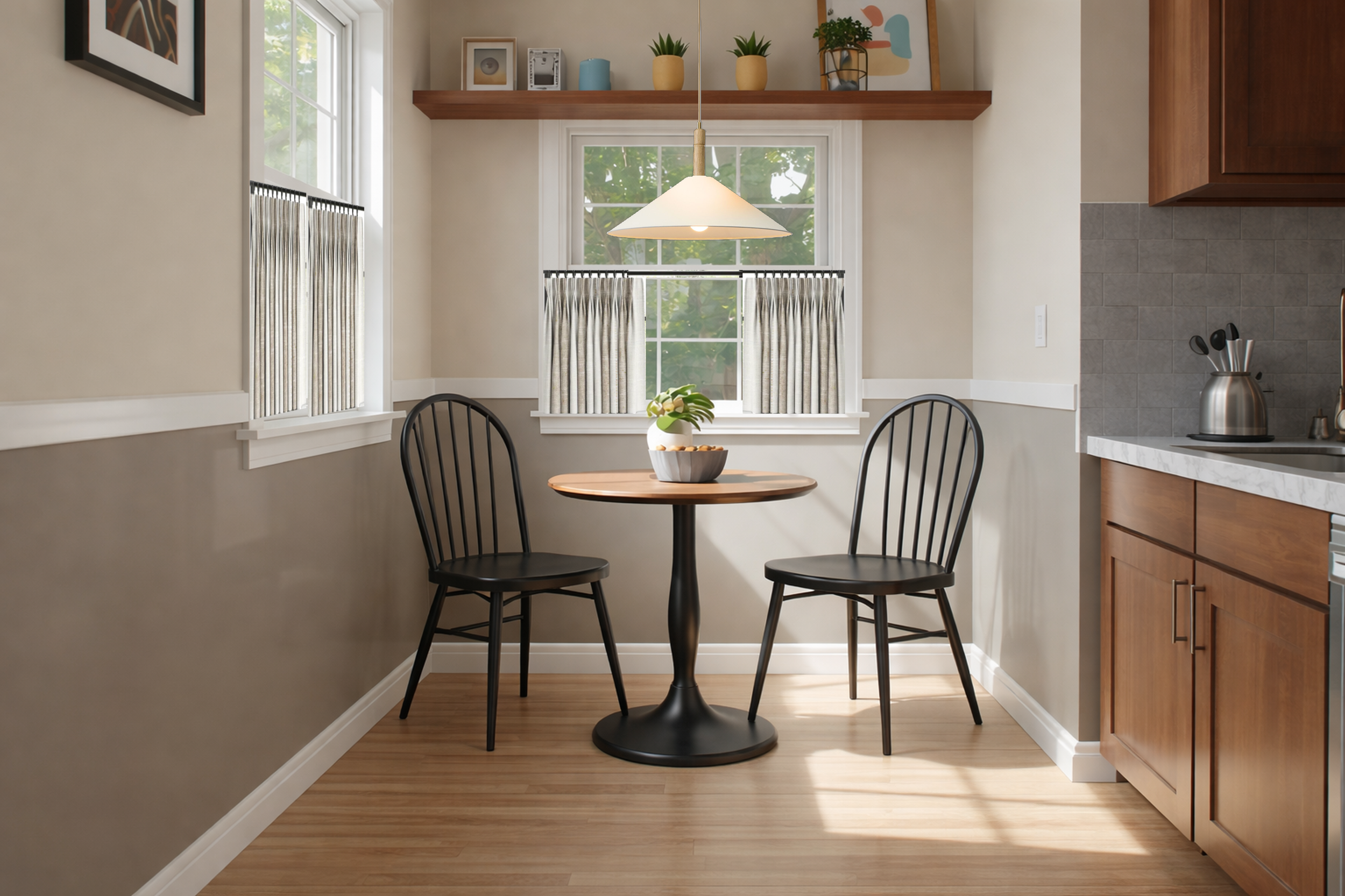
When you walk into this studio apartment, the dining nook reads as functional and useful. Not an afterthought. Not squeezed in. A designated place to sit, eat, and linger.
The round table and pendant light create a visual anchor. The sheer curtains soften the corner without blocking light. The rug grounds everything. The single piece of art gives you something to look at besides your phone.
And because everything tucks away—chairs slide under the table, no bulky furniture—the corner doesn't feel cramped when you're not using it. It's there when you need it, unobtrusive when you don't.
Fifty square feet. One corner. A place that feels like dining, not just eating.
The Budget Reality
Budget Option (~$400):
• Table: IKEA Docksta ($179)
• Chairs: IKEA Leifarne x2 ($90)
• Pendant: Simple plug-in from Target ($40)
• Rug: Ruggable 5x7 or similar ($80)
• Curtains: IKEA sheers ($30)
• Art: Printable from Etsy, framed ($30)
Mid-Range Option (~$800):
• Table: West Elm or CB2 pedestal ($400)
• Chairs: Target Windsor or West Elm Mid-Century x2 ($200)
• Pendant: Better fixture from West Elm/Schoolhouse ($120)
• Rug: Mid-range washable or natural fiber ($150)
• Curtains: Linen or linen-look ($60)
• Art: Framed print or original ($80)
The point isn't the budget level. It's the strategy. Round table in the corner, armless chairs that tuck, pendant that defines the zone, soft window treatment, simple rug, one piece of art.
That's how you turn 50 square feet into a dining nook that doesn't feel like a compromise.
Have experience with small dining corners or nooks? What have you done to make the space feel functional and pulled together. Tell me in the comments below!
Read Next:

What’s it Like to Live in just over 200 square feet? How to layout a 12’ x 19’ New York City Studio Apartment.
What’s it like to live in just over 200 square feet?
When all the rooms in your home are in one space, what makes it all work? How can you make living in 12’ x 18’ total, feel like you have elbow room for days? Living without interior walls in a small space doesn’t have to mean sacrificing style or functionality. Studio apartments can be highly efficient, wildly practical and truly beautiful. Let me show you how.
Michael is Principal designer and blogger at Michael Helwig Interiors in beautiful Buffalo, New York. Since 2011, he’s a space planning expert, offering online interior e-design services for folks living in small homes, or for those with awkward and tricky layouts. He’s a frequent expert contributor to many National media publications and news outlets on topics related to decorating, interior design, diy projects, and more. Michael happily shares his experience to help folks avoid expensive mistakes and decorating disappointments. You can follow him on Pinterest, Instagram and Facebook @interiorsmh.