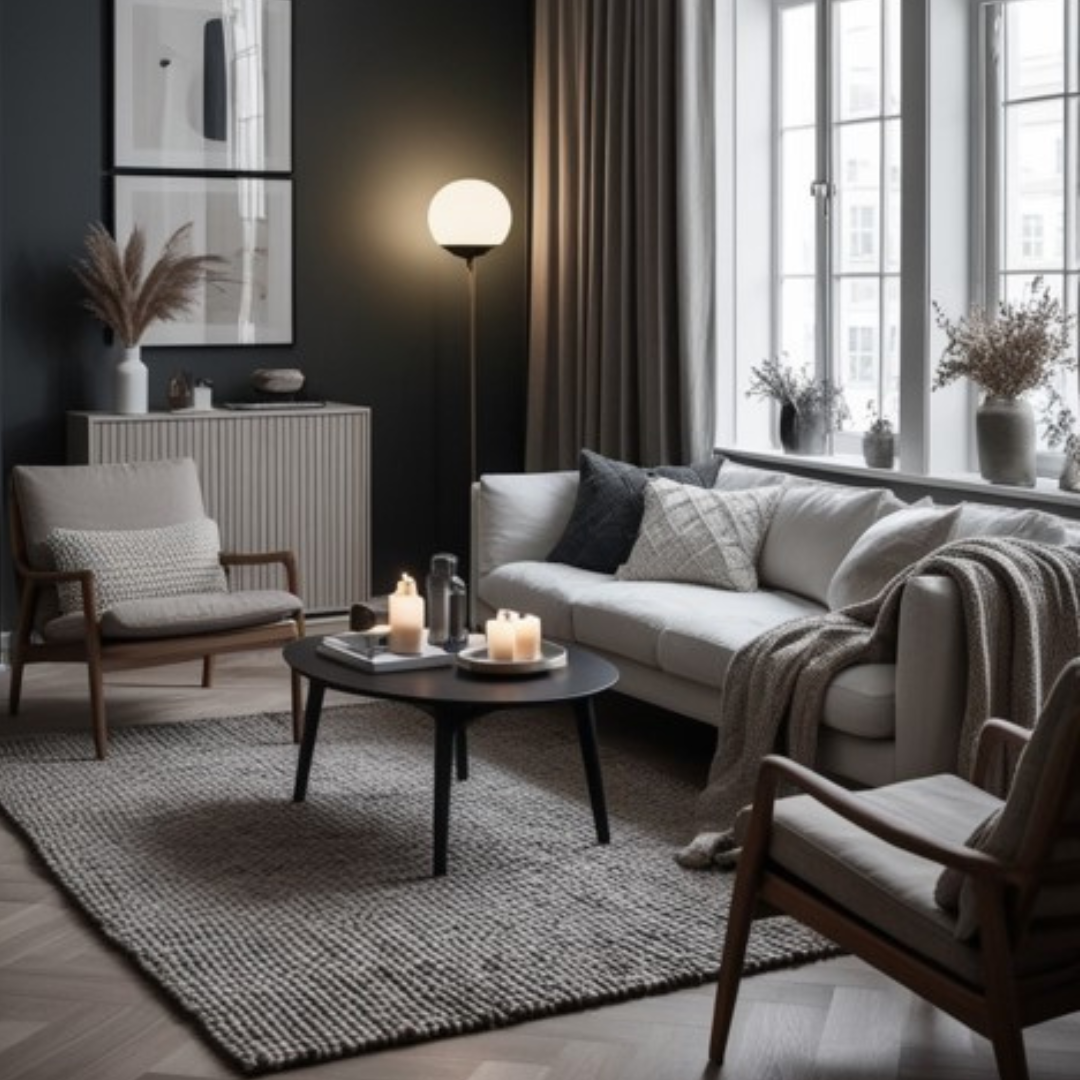
You need a sofa that fits in a small room. So, you search 'small sofas' and get bombarded with loveseats.
Cute, compact, perfectly sized for your 10x12 living room. And they look like dorm furniture. Not at all what you had in mind, right?
Here's the problem: Size isn't what makes a sofa look cheap or substantial. Proportion is.
A loveseat can be perfectly sized for your room and still look like you furnished your apartment from a college catalog.
The best small space sofas don't scream 'small.' They look appropriate, not like a compromise that’s “good enough.”
Here's how to find a sofa around 76 inches that still looks like grown-up furniture—plus specific things to look for and mistakes to avoid.
Why Most Small Sofas Look Like Loveseats (And What Makes the Good Ones Different)
The Proportion Problem
A typical loveseat is 58-64 inches wide. A typical full-size sofa is 84-96 inches wide. When manufacturers make a 'small sofa,' they often just shrink the full-size proportions down.
The result? Stubby arms, shallow seat depth, low backs. Everything looks miniature instead of scaled down.
What Makes a Small Sofa Look Bigger
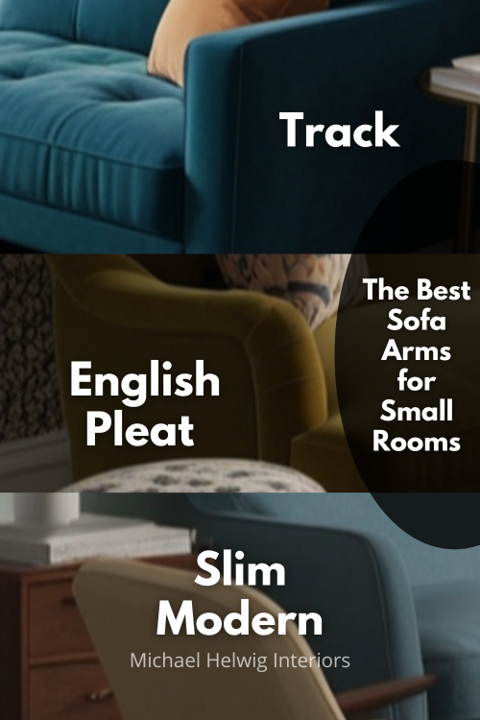
1. Arm style and width
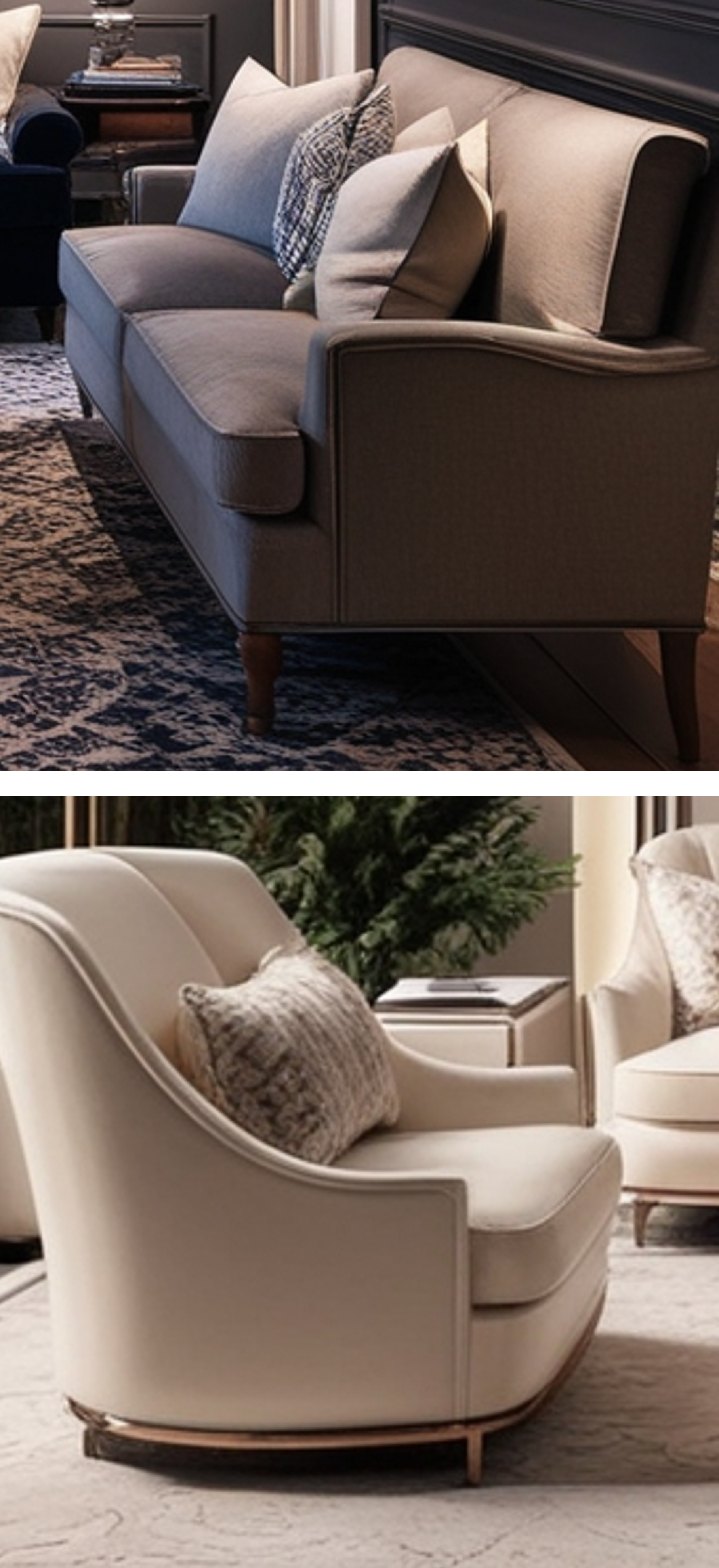
Narrow arms (4-6 inches) maximize seating width without adding bulk. Track arms, tight English arms, or slim modern arms keep the sofa from looking chunky while preserving a full-size feel.
2. Seat depth
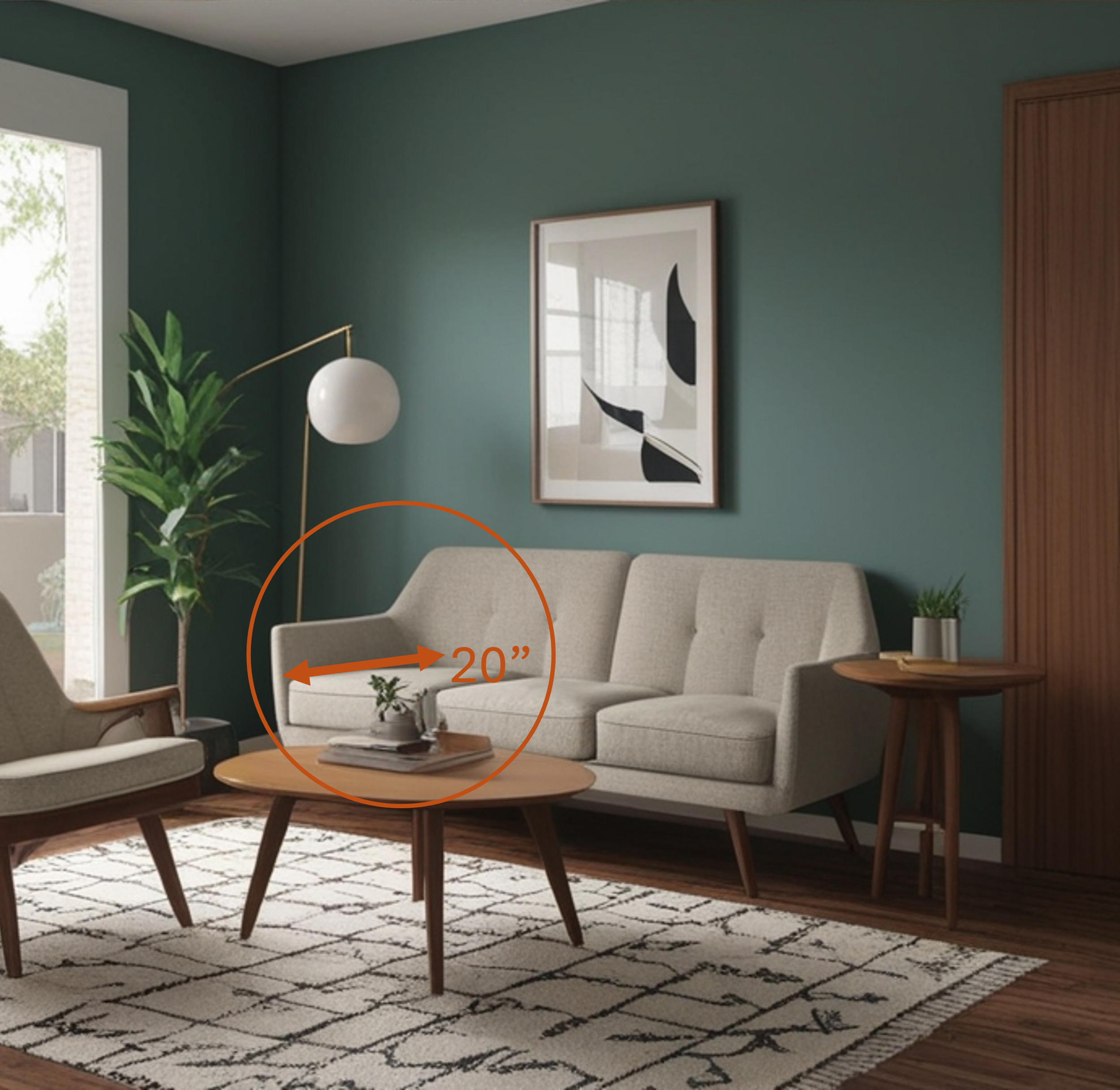
It should be 20-22 inches minimum. Anything less than 20 inches feels like you're perched on the edge. Most loveseats skimp here and that's why they're uncomfortable.
3. Back height
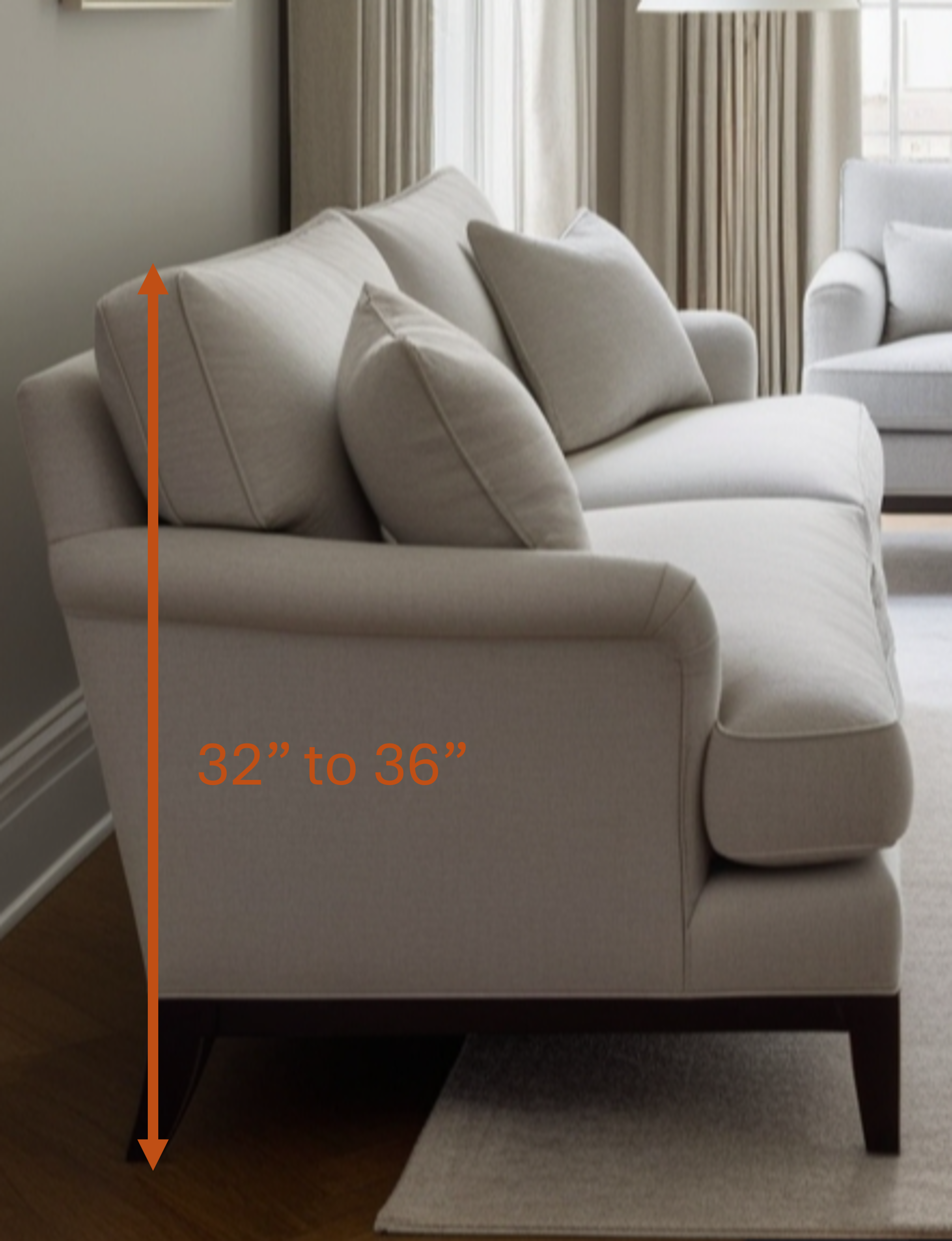
Taller backs (32-36 inches from floor to top of cushion.) This is not only scaled better; it looks way better too. Low-back sofas look cute but insubstantial.
4. Leg style
Exposed legs (wood, metal, or tapered) make small sofas feel more substantial. Conversely, skirted or hidden legs can make them look like they're trying to hide their size. Plus, those types of sofa bases can make a small room feel smaller.
The Ideal Size Range for Small Space Sofas
Here's the sweet spot: 68-76 inches wide. This is the Goldilocks zone—compact enough to fit in small living rooms, big enough to not look like a loveseat.
Why 68-76 Inches Works
Under 68 inches: You're in loveseat territory. Can two adults sit comfortably? Yes. Does it look like a full sofa? Nope.
68-76 inches: Seats 2.5-3 adults comfortably. Doesn't overwhelm a 10x12 room. And still looks substantial and comfortable.
Above 76 inches: You're back in standard sofa range. Great if your room can handle it, but probably too big for truly tiny spaces.
Not sure how much floor space you actually have? Check out this article to know what you’re working with for sure!
(It’s the very first blog post I ever wrote a decade ago, but the information still holds up today. And there’s even a Kim K and Kayne reference. Awkward….)
Measure your room for furniture
The first thing to do each and every time you purchase new furniture for your living room, or any room for that matter, is to measure. The best way to do this is to draw a quick sketch of your room. The idea is to get the shape of your space down so when you measure you can translate the measurements onto the paper. Sketch in where the doorways and windows are, and include architectural elements like a fireplace, built-in’s, or any other unmovable feature. For this first step, just measure the length and width of the room and write those measurements in the center of your sketch..
Measuring Your Space
Before shopping here’s a quick hack to get you pointed in the right sofa size direction. This works well if your new sofa is anchored’ on a wall. Measure your room and apply this formula:
Step 1: Measure the wall where the sofa will go
Step 2: Subtract 12-18 inches total (6-9 inches breathing room on each side)
Step 3: That's your maximum sofa width
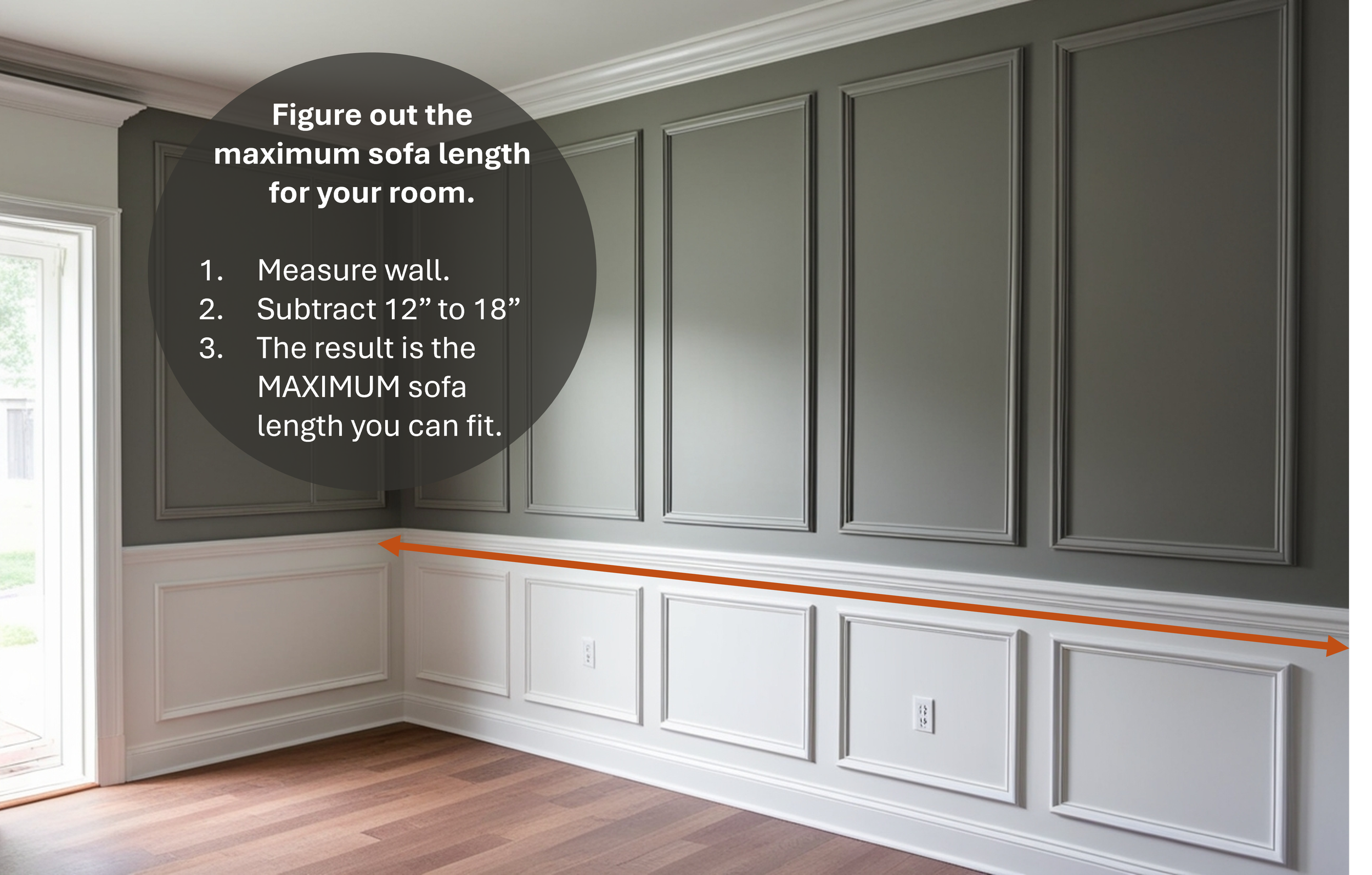
Example: 9-foot wall (108 inches) minus 18 inches = 90 inches max. But if you want the sofa to feel proportional to the room rather than wall-to-wall, aim for 72-76 inches. This should give you room for small end tables.
Pro Tip: Depth matters as much as width. Measure how much the sofa will pop into the room (typically 32-38 inches including space behind for cords/airflow). Make sure you have at least 30 inches clearance for walkways.
5 Sofa Styles That Work Best in Small Spaces
Style #1: Apartment Sofa with Track Arms
Dimensions: 68-74 inches wide, 32-35 inches deep, 5-6 inch arms
Why it works: Track arms (straight, square) are slim and modern. They maximize seating width without bulk. Clean lines prevent visual clutter.
Best for: Modern, minimalist, or contemporary spaces. Small living rooms and studio apartments.
Where to find: West Elm, CB2, Room & Board, Article (search 'apartment sofa' or 'compact sofa')
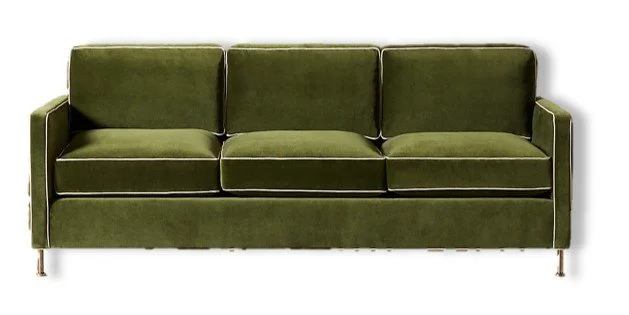
Brett 76" Jade Green Velvet Sofa, CB2
Style #2: English Roll Arm Sofa (Tight Back)
Dimensions: 70-80 inches wide, 34-36 inches deep, 6-7 inch arms
Why it works: English roll arms are curved but tight—not the big, puffy rolled arms that eat up space. Tight back cushions (not loose pillows) maximize depth and keep the frame compact.
Best for: Traditional or transitional spaces. Adds classic elegance without overwhelming small rooms.
Where to find: Pottery Barn (Cameron or York models), Crate & Barrel, Joybird
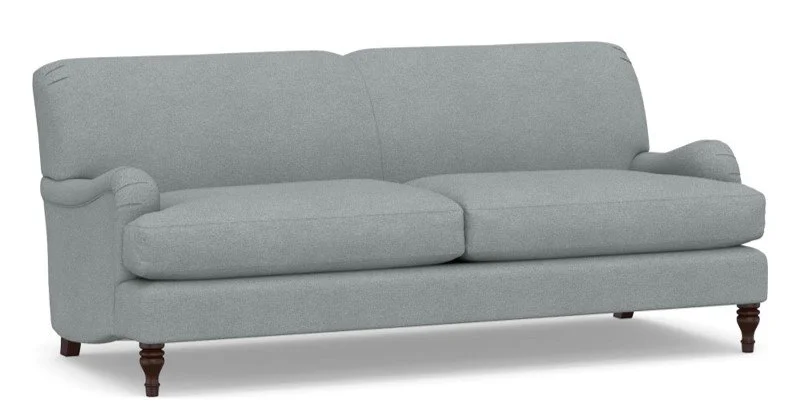
Carlisle 80” Tightback Sofa in Chambray performance fabric, Pottery Barn
Style #3: Lawson Sofa with Tapered Legs
Dimensions: 68-85 inches wide, 32-35 inches deep, 6-inch arms, exposed wood legs
Why it works: Lawson style has moderate arms and a clean profile. Exposed tapered legs create visual lightness—they show floor space, making the room feel bigger.
Best for: Versatile—works in modern, traditional, or eclectic spaces. Great if you want a timeless looking sofa.
Where to find: Interior Define, Burrow, Joybird, AllModern

Nomad 85” Sofa in Crushed Gravel performance fabric, Burrow
Style #4: Mid-Century Modern Sofa
Dimensions: 70-80 inches wide, 30-33 inches deep, slim angled arms, tapered wood legs
Why it works: Low profile, slim arms, elevated on legs. Visually light despite solid construction. Iconic silhouette reads as classic, not stuffy.
Best for: Mid-century, modern, Scandinavian, or eclectic spaces. Works especially well in rooms with low ceilings.
Where to find: Article, West Elm, Joybird, Wayfair (search 'mid-century sofa 72 inch')

Blair 80” Sleeper Sofa in Bentley Daisey chenille fabric, Joybird
Style #5: Apartment-Size Chesterfield or Tuxedo
Dimensions: 68-74 inches wide, 32-34 inches deep, same-height arms and back
Why it works: Bold, architectural silhouette. The uniform arm and back height create strong lines that look sophisticated, not scaled down.
Best for: Modern, glam, or traditional spaces where you want a statement piece. Works great when you want the sofa to be the focal point.
Where to find: CB2, Apt2B, Anthropologie (Edlyn or Elwick models)
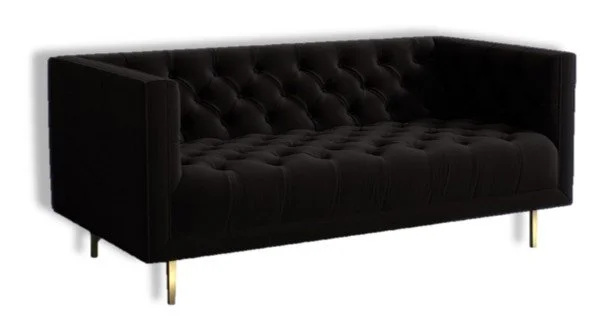
Mina 68” Sofa in Black Velvet fabric, Anthropologie
What to Avoid: Small Sofa Red Flags
Red Flag #1: Pillow-Back Sofas Under 70 Inches
Loose pillow backs eat 4-6 inches of usable seat depth. On a full-size sofa (84+ inches), that's fine. On a small sofa, it makes the already-compact depth feel cramped. Stick to tight-back cushions for small sofas.
Red Flag #2: Rounded or Oversized Arms
Big rolled arms, overstuffed English arms, or wide pillow arms steal 8-10 inches of exterior width. On a 68-inch sofa, that's a huge percentage and that will take up precious floor space you can’t afford to lose. Look for arms under 7 inches wide. (Track arms, or a small, rolled sock arm.)
Red Flag #3: Skirted or Block-Leg Sofas
Skirts or hidden block legs make small sofas look bottom heavy and too bulky. Exposed legs (wood, metal, tapered) create visual breathing room and make the sofa feel lighter, elevated.
Red Flag #4: Seat Depth Under 20 Inches
Shallow seats force you to perch instead of lounge. Measure seat depth (front of cushion to back) before buying. If it's under 20 inches, keep looking.
Red Flag #5: 'Apartment Sofa' in Name Only
Some retailers slap 'apartment' or 'compact' on sofas that are just cheap and poorly proportioned. Don't trust the label—check the actual dimensions and construction quality.
Budget Guide: What to Expect at Each Price Point
$500-$900: Budget Range
What you get: Basic construction, synthetic fabrics, particle board frame. Functional but not heirloom quality.
Where to shop: IKEA, Wayfair, Target, Amazon, Walmart
Best bet: IKEA Friheten or Vimle (modular options, decent for price)
Expect lifespan: 3-5 years with normal use
$1000-$2000: Mid-Range Sweet Spot
What you get: Hardwood or engineered frame, better fabrics, higher-density foam, some customization options.
Where to shop: Article, Burrow, Joybird, West Elm, AllModern, Interior Define
Best bet: Article Sven or Burrow Nomad (modular, well-built, good proportions)
Expect lifespan: 7-10 years
$2000-$4000: Premium Range
What you get: Kiln-dried hardwood frame, 8-way hand-tied springs, performance fabrics, full customization, white-glove delivery.
Where to shop: Room & Board, Crate & Barrel, Pottery Barn, Joybird (custom), Interior Define
Best bet: Bassett Furniture, Ethan Allen, Pottery Barn, Arhaus
Expect lifespan: 15+ years
My Recommendation: If you can afford $1200-1800, that's the quality jump sweet spot. You get significantly better construction than budget sofas without premium pricing.
Your Small Space Sofa Checklist
Before you buy, make sure your sofa checks these boxes:
☐ Width is 68-82 inches (large enough to look substantial)
☐ Seat depth is at least 20 inches (22+ is ideal)
☐ Arms are 7 inches or narrower (more seating width)
☐ Back height is 32+ inches from floor (visual presence)
☐ Legs are exposed (wood or metal, not skirted)
☐ Construction quality matches your budget expectations
☐ Style complements your room (not just 'fits in, good enough')
Small space doesn't mean you have to settle for furniture that looks small. The right sofa feels elevated, substantial, and exactly right for how you live.
What's your small space sofa struggle? Share in the comments.
Read Next
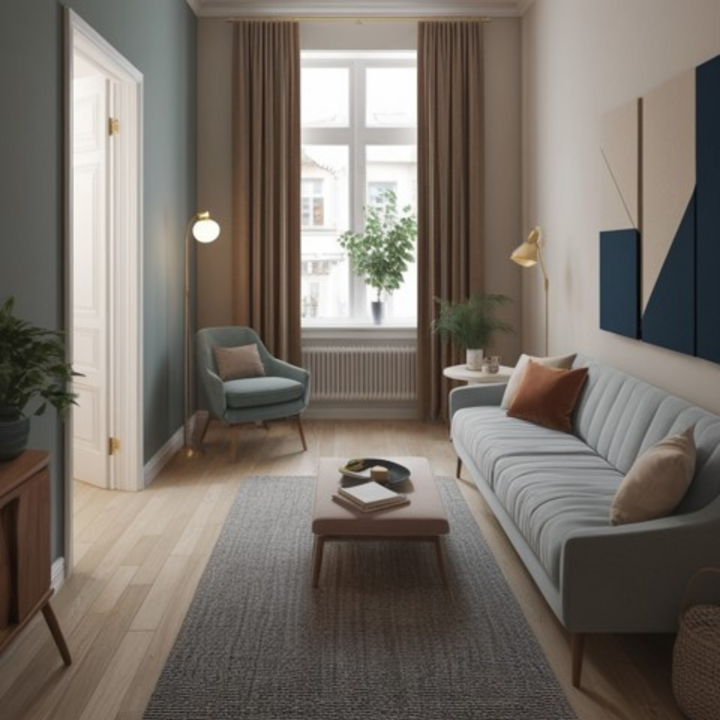
5 Furniture Arranging Rules You Can Break in Awkward Rooms
Float furniture away from walls? Center on focal points? These textbook rules fail in awkward rooms. Learn which rules to break and what works instead.
Michael is Principal designer and blogger at Michael Helwig Interiors in beautiful Buffalo, New York. Since 2011, he’s a space planning expert, offering online interior e-design services for folks living in small homes, or for those with awkward and tricky layouts. He’s a frequent expert contributor to many National media publications and news outlets on topics related to decorating, interior design, diy projects, and more. Michael happily shares his experience to help folks avoid expensive mistakes and decorating disappointments. You can follow him on Pinterest, Instagram and Facebook @interiorsmh.