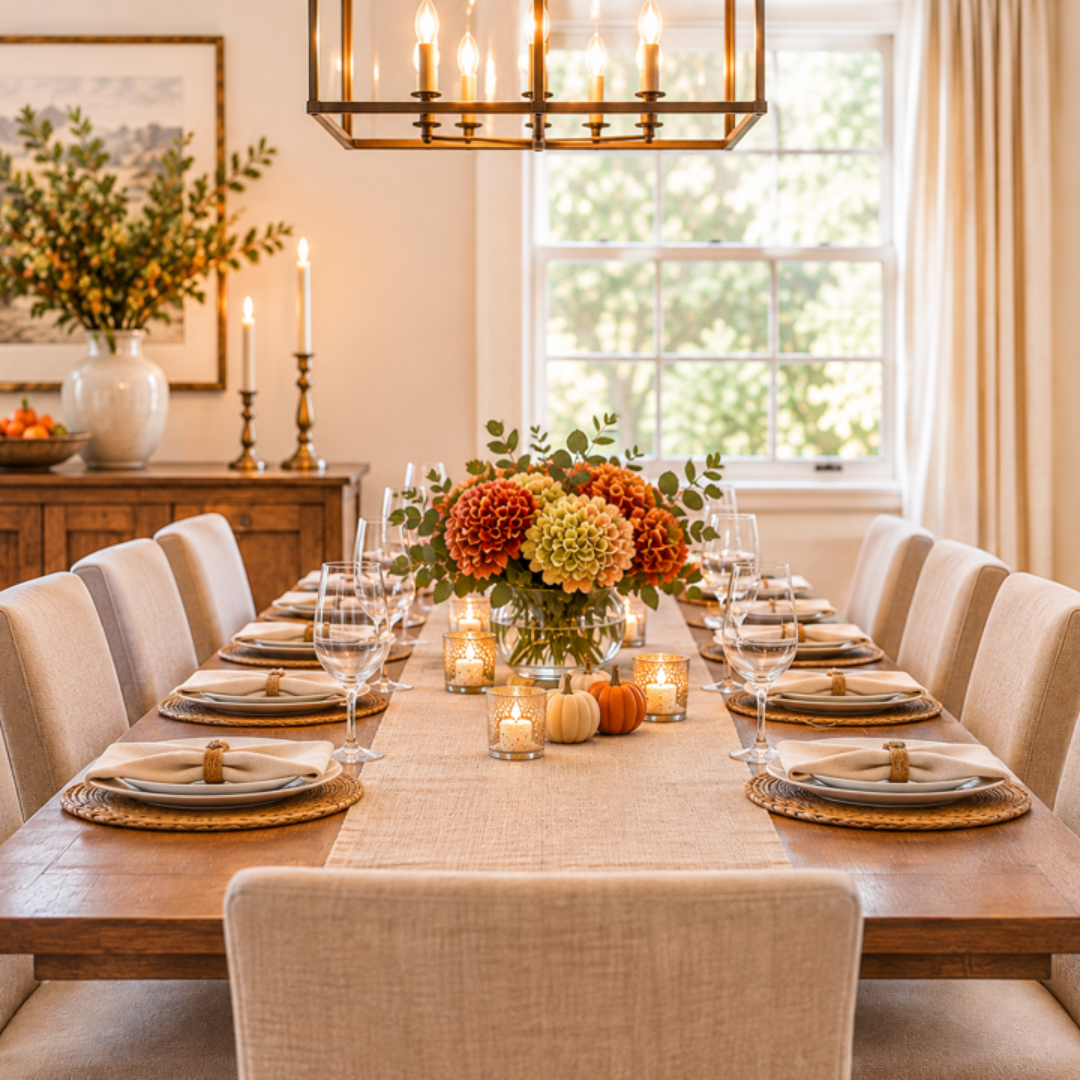
Thanksgiving is THE holiday when everyone wants to gather around the table, enjoy a good meal, and spend a little time together. It’s the cozy vibe holiday, right? But what if your dining room is barely big enough for your everyday family dinners, let alone 12 people?
If you live in a smaller house, you know the challenge. You want to host, you want everyone to have a comfortable place to sit, and you definitely don't want your dining room looking like a janky makeshift banquet hall, right?
This is where a little planning goes a long way.
You don't necessarily need a bigger house or a completely different dining room. You just need to be smart about the furniture, seating, and how you use the space.
Here are some of my top practical ways to make Thanksgiving dinner work in a small dining room without sacrificing all the good holiday vibes.
1. Really think about Your Dining Table
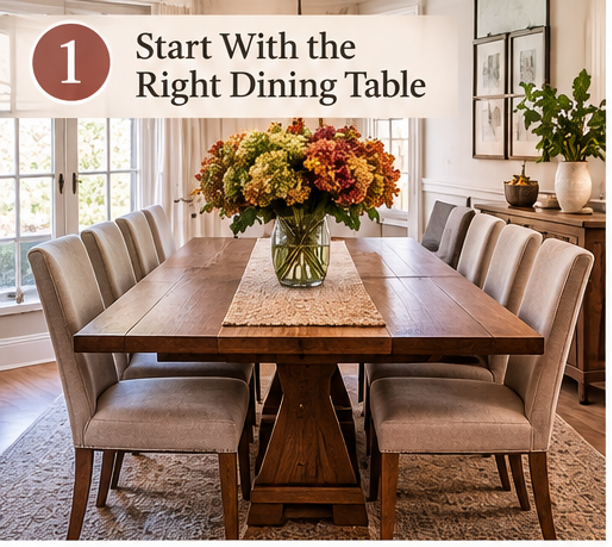
If you're trying to seat 12 people, the table must do most of the heavy lifting.
A rectangular table is generally your best bet. It makes better use of a narrow room and gives you more usable seating along the sides than a round table of a similar size.
Better yet, a rectangular table that expands is better. You can keep it at its everyday size and add the leaves when company comes over. It's one of those pieces that absolutely earns its keep in a small home.
For 12 people, you'll generally want a table in the neighborhood of 10 feet long, depending on the width of the chairs and how much elbow room everyone needs. That's a substantial table, so measure your room before assuming it will work.
Also be mindful of the width of the table too. Stay clear of ones that are so wide you won’t be able to navigate around them inside the room. That also means don't forget to account for the space needed to get in and out of the chairs comfortably.
A table that technically fits isn't necessarily a table that works.
2. Maximize your seating space
Here's a trick that can make a big difference.
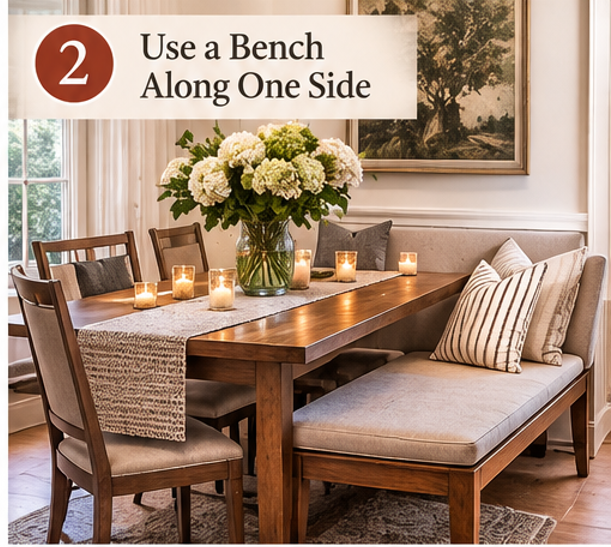
If your dining room has one side against a wall or doesn't have much room for chairs to pull out, use a bench along that side of the table.
A bench can accommodate more people in less space because you aren't dealing with individual chair arms and legs. It also has a clean, streamlined look that works particularly well in smaller rooms.
A built-in banquette is another option if you have one or are considering making a more permanent change.
Just make sure the bench is deep enough to be comfortable and that people can get in and out without having to move the entire table. Before buying it, scoot in and out of the set-up at the store to test how easy it is to move. If you buy online, look for the lengthy reviews to see if past buyers touch on this scenario.
Last, don’t seat little kids or elderly relatives in the middle of the table on a bench seat. The goal is comfort, so make it easy for them to get up from the table with ease instead of trying to scoot across a bench. Make sense?
3. Get functional with smaller chairs
This is not the time for oversized upholstered armchairs…
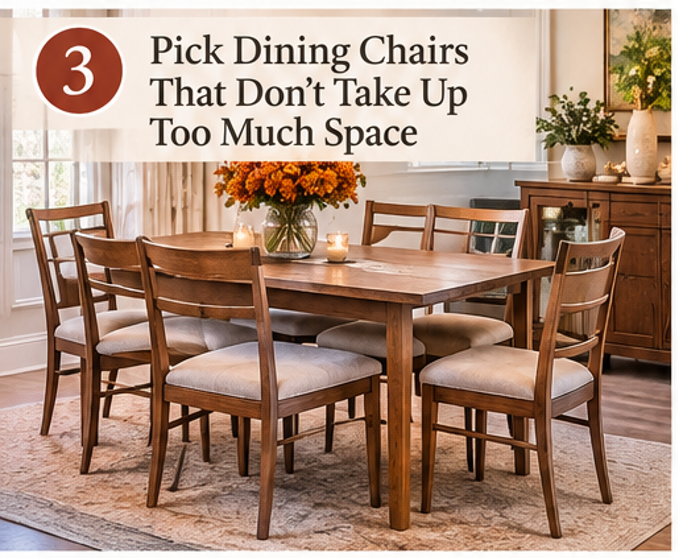
Look for dining chairs with a relatively slim profile, armless designs, and legs that don't take up a lot of visual or physical space.
You can still have beautiful, comfortable seating without going for bulky chairs. Wood dining chairs, upholstered side chairs with narrow frames, and simple vintage chairs are all good choices.
And do you really need matching chairs? Hear me out on this one… A coordinated collection of dining chairs can look just as nice as a perfectly matched set. So, maybe painted side chairs, with similar dimensions, overall scale and style consistent enough can still make a beautiful, coordinated look. This is THE way to go when you’re in a time crunch.
4. spread out when you need to
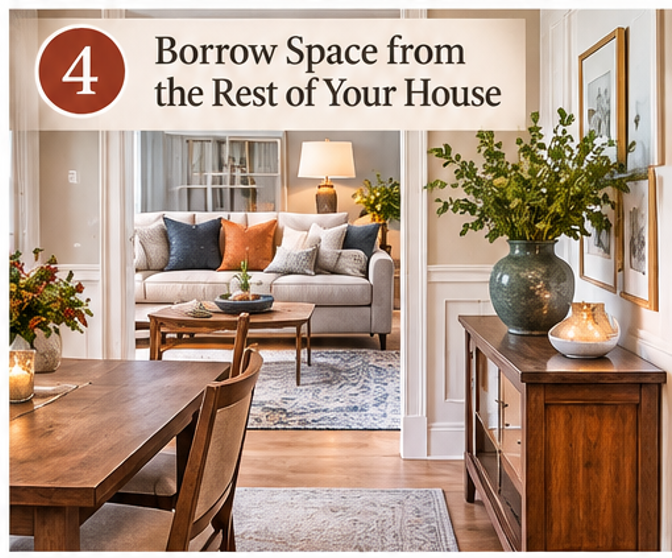
Sometimes the biggest roadblock isn't the dining table. It's everything around it.
That buffet, accent table, extra chair, or decorative cabinet might look great in your everyday dining room, but do you really need it there on Thanksgiving?
Temporarily relocate anything that isn't essential. Move a small sideboard into the living room, put occasional chair in a bedroom, or clear out a corner that's taking up valuable floor space.
If your dining room opens into another room, think about how the two spaces can work together.
You might be able to temporarily move furniture in the adjoining room to create more breathing room around the dining table.
The idea is to borrow a little space from the rest of your home instead of trying to make every inch of the dining room do double duty.
5. don’t overcrowd your table
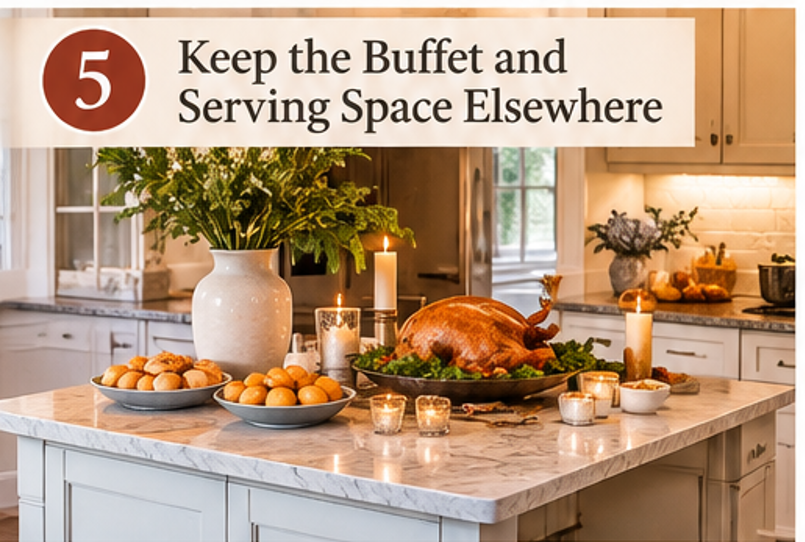
One of the biggest mistakes you can make in a small dining room is trying to fit everything into the same space.
Your dining table needs to accommodate people, plates, glasses, and a little elbow room. It doesn't also need to hold the turkey, mashed potatoes, stuffing, serving dishes, and every side dish you're making, including the ones aunt Dotty brought.
Set up a buffet in the kitchen, on a kitchen island, or on an existing console table in an adjoining room.
This keeps the dining table from getting overcrowded and eliminates people constantly reaching across one another.
It also makes serving dinner much easier when you have a full house. Tip: When I host, I’m typically the “runner,” That means, I sit closest to the kitchen door so I can run for seconds, coffee, deserts. I’m the host, so I do the serving and bussing.
6. Keep your decor simple
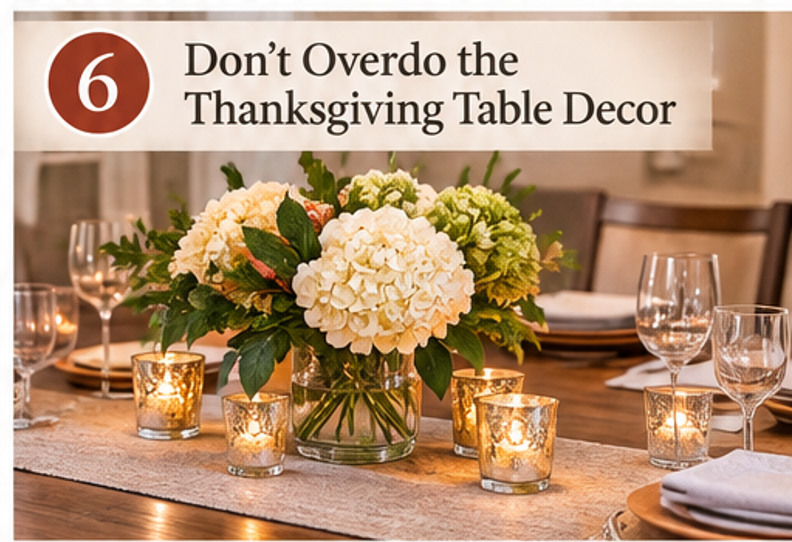
I love a beautiful Thanksgiving table, but when you're hosting 12 people at a small dining table, less really is more.
Skip the oversized centerpiece, elaborate place settings, and decorations that take up half the table.
Instead, think low and simple.
A few small arrangements, a collection of votives, some seasonal greenery, or a simple runner can make the table feel festive without getting in everyone's way.
You want people to be able to see one another, pass the food, and actually enjoy the dinner.
And remember, the food is going to take up plenty of room!
7. Swap your table location?
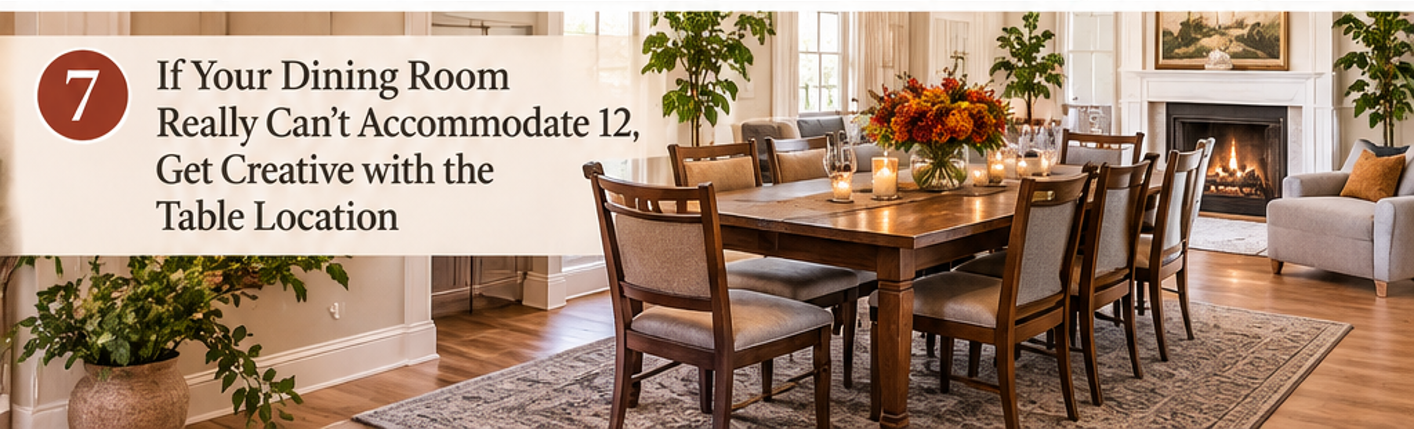
Sometimes you can do everything right and still not have enough room.
If that's your reality, maybe move the dining table into a larger adjoining living area for the occasion.
You can temporarily relocate a sofa or a couple of accent chairs and create a proper dining space for the holiday. If you need a larger table, think about renting a dining or event table and coordinating chairs instead of trying to squeeze everyone around furniture that simply isn't large enough.
There's nothing wrong with changing the layout for one special occasion.
The important thing is that the arrangement feels comfortable, and like a place where people actually want to sit and linger. You know?
A Little Planning Makes a Big Difference
Hosting Thanksgiving in a small dining room doesn't have to mean giving up on a beautiful dinner or making everyone feel squeezed in.
Start with the table, choose seating that makes sense for the room, move unnecessary furniture out of the way, and let the kitchen or adjoining space handle the serving.
And don't forget that the whole point is to enjoy the people around the table.
Your house doesn't have to be big to make room for a wonderful Thanksgiving. Sometimes it just takes a little rearranging and a few smart decisions to make it all work.
How about you? Do you have any yearly Thanksgiving tricks, re-designs, or hacks that make your small dining space work better? Tell me about them below.
Read Next:
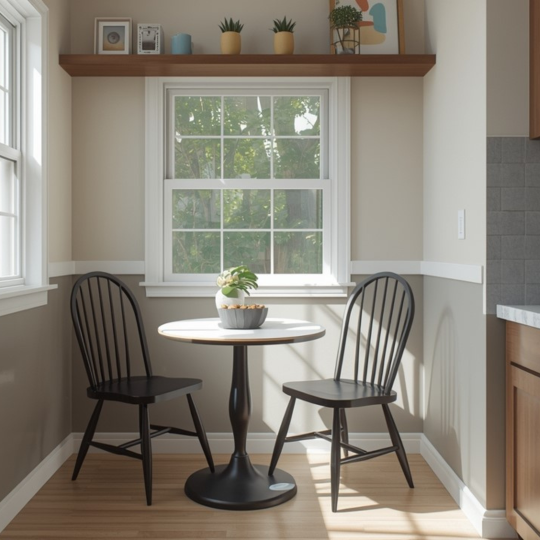
Creating an Intimate Dining Nook in 50 Square Feet
Turn a 7x7 corner into a proper dining space. Round table strategy, pendant lighting, and layer-by-layer design process for tiny dining areas.
Michael is Principal designer and blogger at Michael Helwig Interiors in beautiful Buffalo, New York. Since 2011, he’s a space planning expert, offering online interior e-design services for folks living in small homes, or for those with awkward and tricky layouts. He’s a frequent expert contributor to many National media publications and news outlets on topics related to decorating, interior design, diy projects, and more. Michael happily shares his experience to help folks avoid expensive mistakes and decorating disappointments. You can follow him on Pinterest, Instagram and Facebook @interiorsmh.