Let me tell you what happened at my house about 10 years ago around New Year’s.
I decided to do a massive decluttering session. I filled three trash bags, donated two boxes of stuff, felt incredibly accomplished. The problem? Two weeks later, everything was just as cluttered again.

RDNE Stock project
Why? Because I didn't understand something critical that I now teach every client:
In awkward rooms, clutter isn't a discipline problem—it's a layout problem.
When your room has weird corners, off-center doors or windows, or impossible furniture arrangements, stuff naturally accumulates in the 'dead zones' because you haven't given those spaces a job.
Here’s the thing, I didn’t want this first article of 2026 to be the same as every other 'declutter your home' article you've read, (my own content included.) I’m not just telling you to remove stuff—this is more about solving the spatial problems that created the clutter in the first place…
That brings me the first goal of the new year, I want to go deeper and provide you with my very best advice and guidance for all your tricky, awkward, and small spaces.
So, now that the holidays are behind us, let’s kick those dead zone clutter accumulating spot’s butts so you can have your house back to enjoy, deal?
1. The 'Ghost Furniture' Audit: What Your Empty Room Actually Needs
Here's the reset strategy few designers talk about: Before you declutter a single item, you need to know what furniture actually belongs in your small, tricky, or awkward room.
Why This Matters in Awkward Spaces
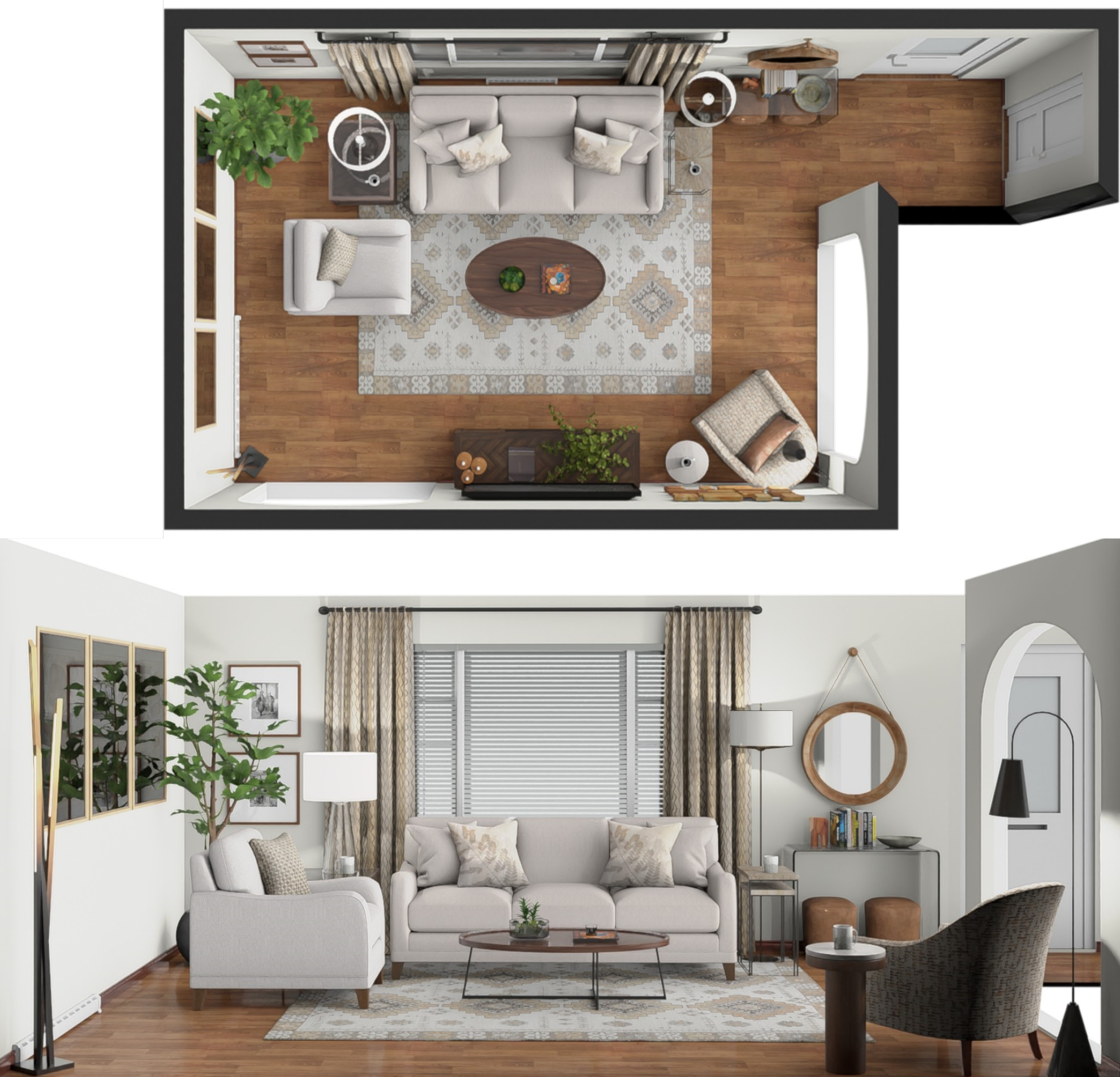
Most decluttering advice assumes you have normal rooms with standard layouts. But when you've got an L-shaped living room or a pass-through living room with three doorways, you're working with different rules. Clutter often piles up in sneaky ways because you're trying to force furniture into spaces that can't handle it. What happens is you inadvertently create the spots that accumulate the clutter.
The Exercise
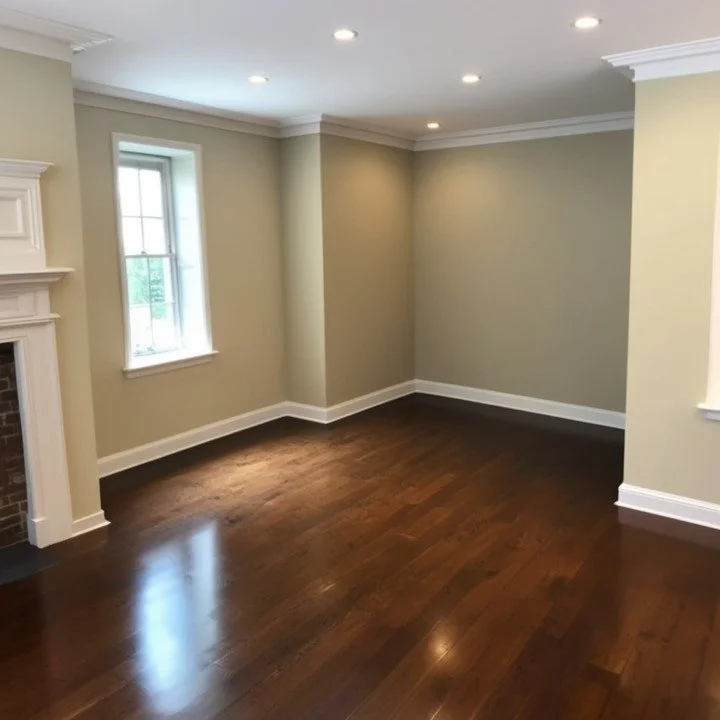
Step 1: Empty one room completely (or photograph it empty if that's not possible)
Stand in the doorway and ask: If I were designing this room from scratch, knowing its quirks, what would I actually put in here?
Step 2: Map your 'must-have' functions
For a living room: Seating for X people, TV viewing, storage for Y items, traffic flow from door A to door B.
For a bedroom: Sleeping space, clothing storage, getting dressed, nighttime reading, etc.
Basically, the goal is to figure out what should take place in each room so that it works the best way possible.
Step 3: Measure your awkward features
That off-center window? Measure its exact position from the corner. That weird alcove? Note its dimensions. These measurements matter because they'll tell you what furniture sizes will actually work.
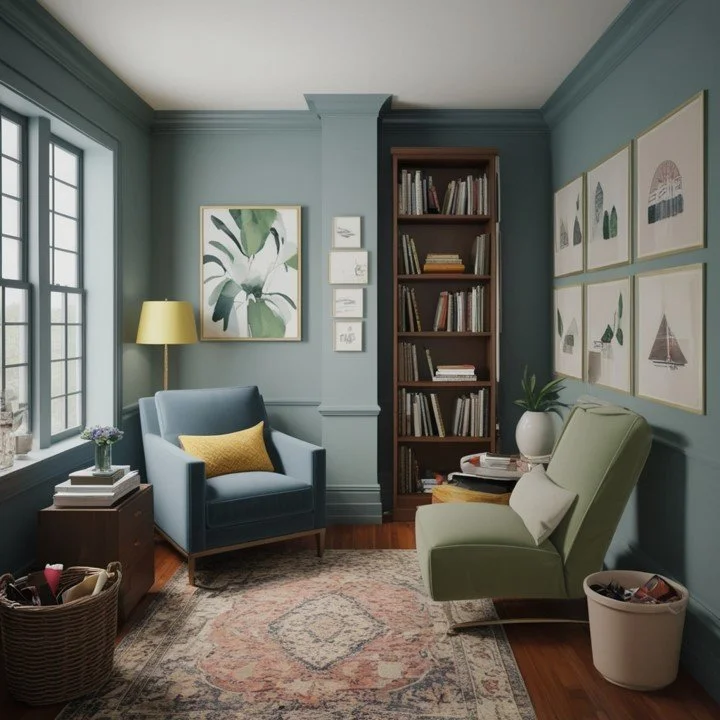
Real Example: My client Sarah had a 'dumping zone' corner in her living room. After measuring, we realized it was exactly 36 inches wide—perfect for a narrow bookshelf, not the oversized chair she'd been trying to fit. The clutter disappeared once the right piece went in.
What You'll Discover
Often, you'll realize you're keeping furniture that doesn't fit your space. That's not clutter to organize—that's furniture to replace or remove entirely.
2. The 'Dead Zone' Transformation: Give Every Awkward Corner a Job
Here's a truth that will change how you see your awkward rooms: Clutter doesn't accumulate in places that have a clear purpose. It accumulates in spaces that don't have a job.
Identify Your Dead Zones
Walk through your awkward room and spot these common dead zones:
The corner behind the door
The space between an off-center window and the wall
That awkward nook that's too small for furniture but too big to ignore
The wall space interrupted by a doorway
Under a sloped ceiling or low window
The Assignment Strategy
For each dead zone, assign ONE specific function. Not storage. Not 'flexible space.' One. Specific. Function.
Here are Some Dead Zone Solutions by Size:
24-30 inches wide: Narrow bookshelf, tall plant stand, coat hooks with small bench
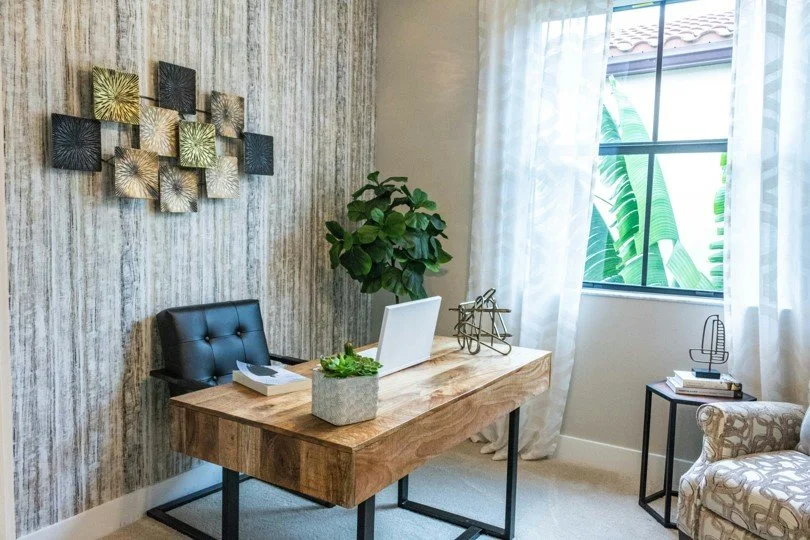
30-40 inches wide: Corner reading chair, small desk, bar cart, storage tower
40+ inches wide: Full reading nook (chair + side table + lamp), small workspace, kids' activity zone
The 'Triangle of Use' Rule: Any functional corner needs three elements to work: a main piece (chair/desk), a surface (table/shelf), and light (lamp/window). Missing any of these, and it becomes a clutter magnet again.
Barion McQueen
Once you assign the function, declutter becomes obvious: Does this item support this corner's job? No? It doesn't belong here.
3. The 'Traffic Flow First' Declutter: Clear the Pathways, Then Organize What's Left
This is where awkward room decluttering gets counterintuitive: You're not organizing by category. You're organizing by movement patterns.
Why Traffic Flow Matters More in Awkward Rooms
In a room with multiple doorways, an off-center fireplace, or weird angles, traffic flow isn't optional—it's survival. When pathways aren't clear, stuff piles up in the 'almost walkable' zones.
The Reset Process
Phase 1: Map Your Natural Paths
Use painter's tape to mark every route people naturally walk in your room:
Entry door to seating
Seating to other doorways
High-traffic shortcuts people take
Paths to windows, closets, or frequently-used features like built-in storage
Hakim Santoso
Phase 2: The 36-Inch Rule
Every primary pathway needs 36 inches of clearance. Secondary paths need 24 inches minimum. Measure. If furniture or clutter encroaches on this, it must go.
Phase 3: Declutter in Order
Don't start with the closet. Start with the pathways. Remove everything blocking traffic flow first. This might mean:
Relocating a bookshelf that's 6 inches too far into a walkway
Removing an accent chair that forces people to walk around it
Clearing the pile of stuff that accumulated in the 'narrow path' zone
What I See Constantly: People keep a piece of furniture because they 'need the storage,' but it's positioned in a way that creates clutter elsewhere. If moving it fixes two clutter problems, the storage loss is worth it.
4. The 'Vertical Real Estate' Audit: Use Your Walls, Not Your Floors
Awkward room people have one huge advantage that ‘normal’ room people don't think about right away: Because the floor plan is difficult, us awkward room folks get creative with vertical space. Let's weaponize that.
Michael Helwig Interiors
The Wall Space Inventory
Look at each wall and identify three zones:
Upper Zone (6-8 feet high): Usually empty. Perfect for floating shelves, high hooks, or decorative storage.
Middle Zone (3-6 feet): Most contested. Should hold active-use items. This could include anything from art that adds to the aesthetic of your space to things like a floating end table or small customized cubie for things that you would need close at hand for daily use.
Lower Zone (floor to 3 feet): Often cluttered. It should mostly stay clear except for furniture.
The Vertical Declutter Strategy
Step 1: Move 'horizontal storage' to 'vertical storage'
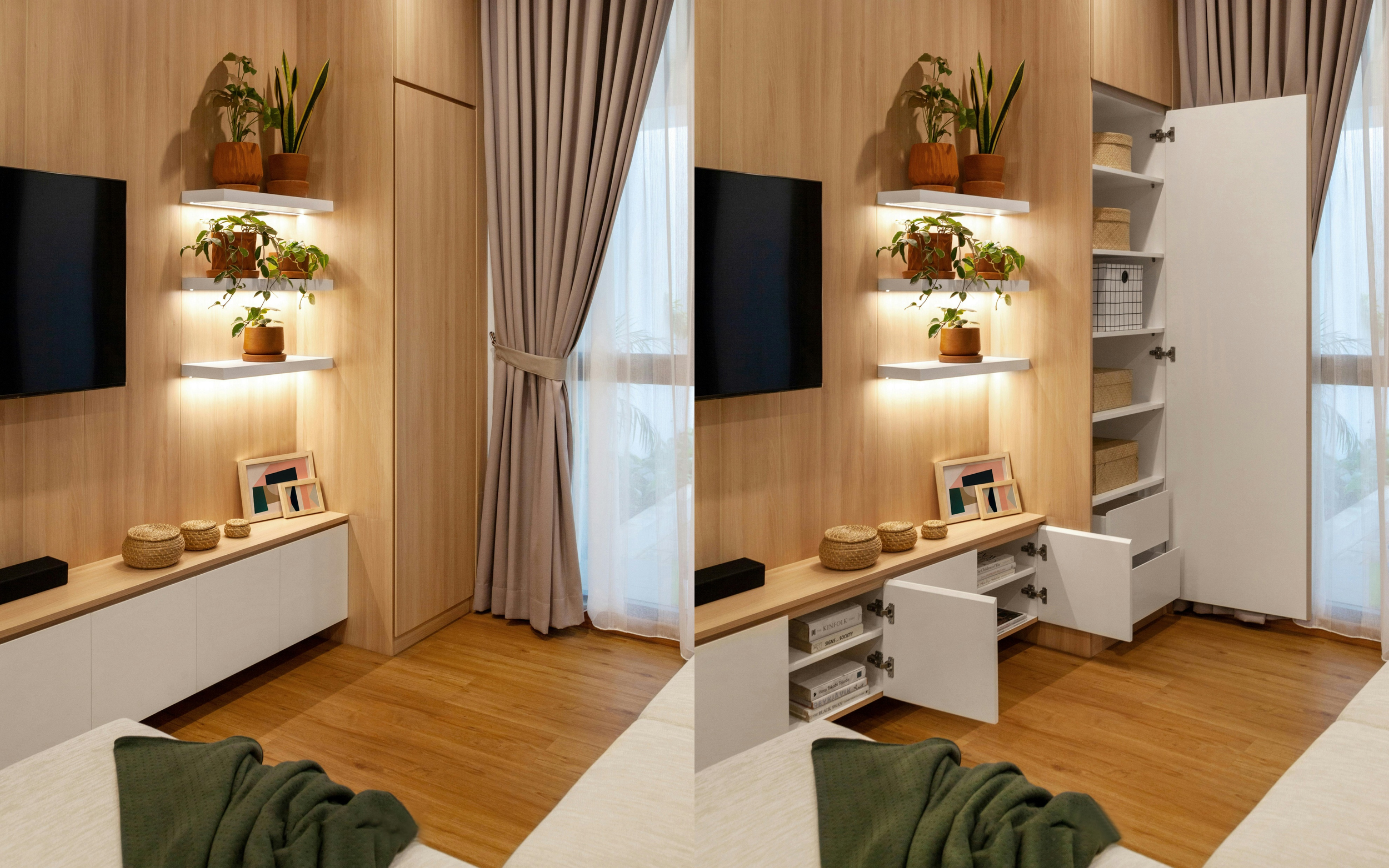
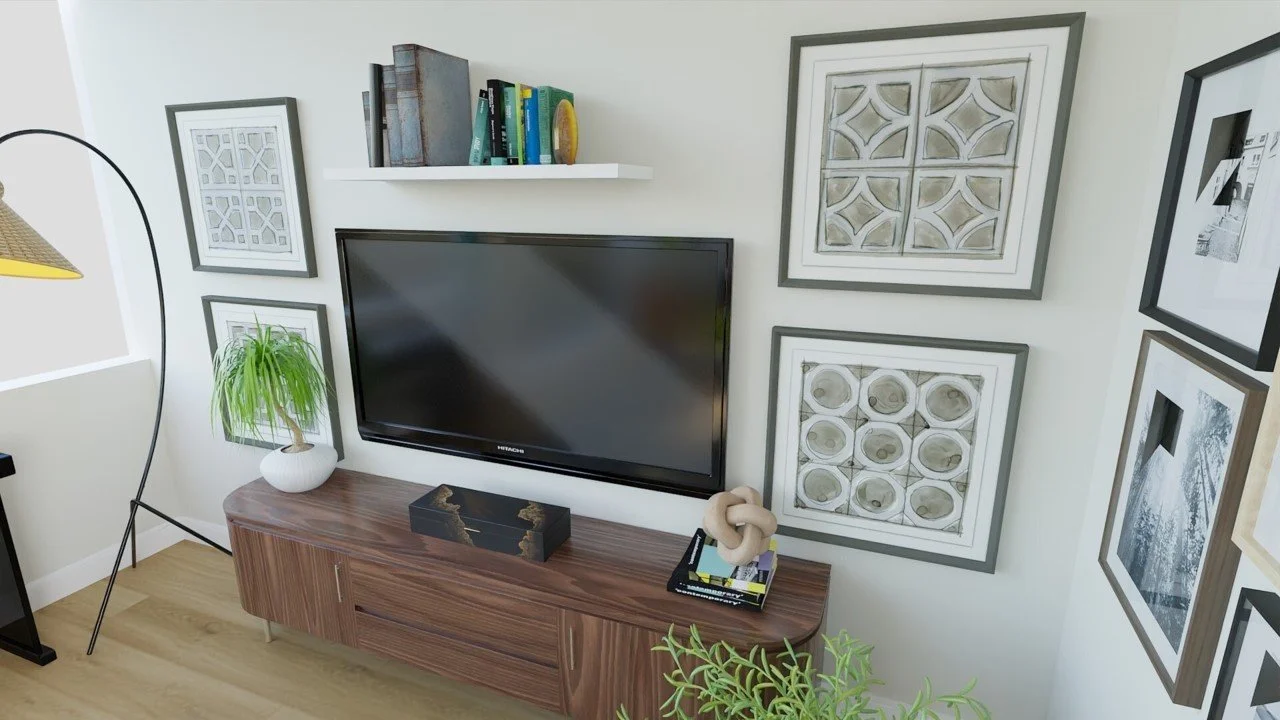
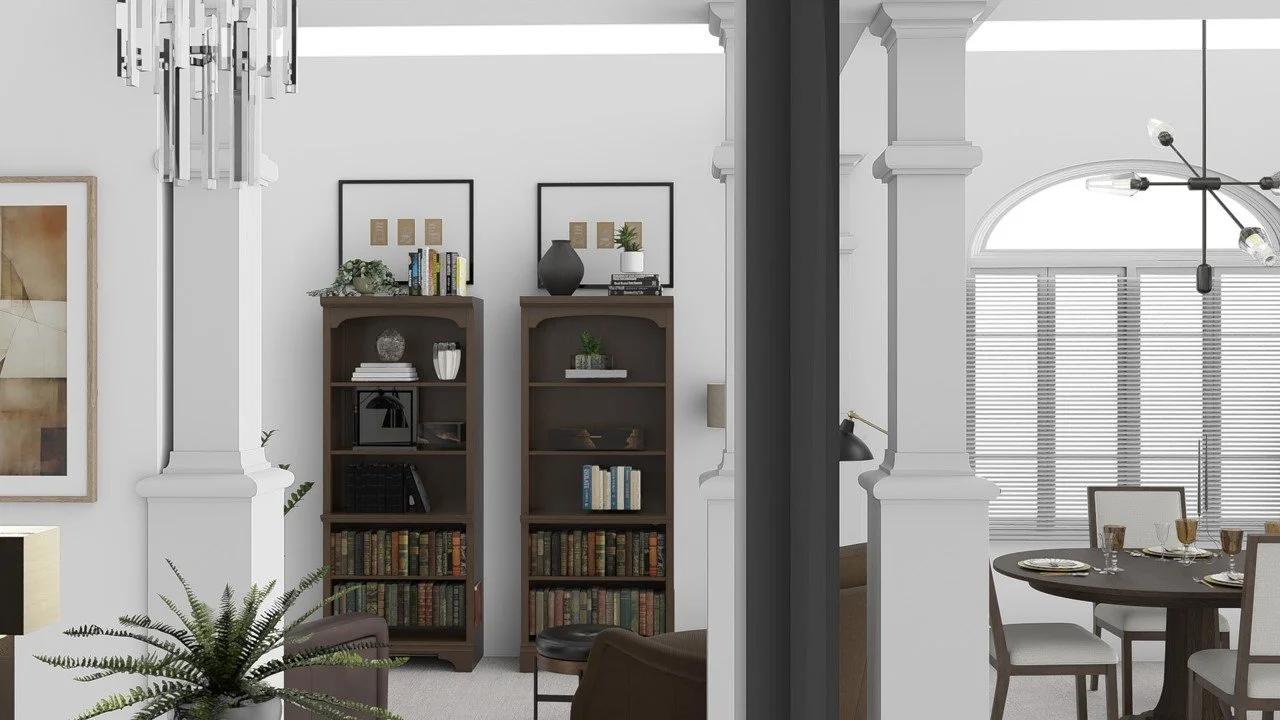
Instead of a wide, low bookshelf (takes up floor space), use a tall, narrow one. Instead of a TV stand, wall-mount your TV. Instead of nightstands, use wall-mounted floating shelves.
Step 2: Add upper-zone storage in awkward spaces
That space above your off-center window? Perfect for a shelf. The wall beside your awkward doorway? Add hooks 6 feet high. The corner with the weird angle? A floor-to-ceiling corner shelf solves it.
Step 3: Declutter everything that COULD go vertical
Coats, bags, jewelry, kitchen utensils, bathroom supplies, cleaning tools—if it can hang or stack vertically, get it off the floor or surfaces.
Michael Helwig Interiors
The 12-Inch Rule: Any item stored within 12 inches of the floor is twice as likely to cause clutter accumulation. Raise it up, and suddenly the area feels clearer.
5. The 'One In, One Out—But for Space' Rule: Declutter by Square Footage, Not Item Count
Everyone knows the 'one in, one out' rule. But in awkward rooms, that's not specific enough. We need to think about spatial footprints, not just quantity.
Why This Matters
You can own 100 small items that fit perfectly in drawers, or 10 large items that make your awkward room unusable. The number doesn't matter—the space they use does.
The Space-Based Declutter Method
Step 1: Calculate your room's 'usable square footage'
Not the total room size—the space NOT occupied by permanent fixtures, traffic paths, or doorways. This is your 'available real estate.'
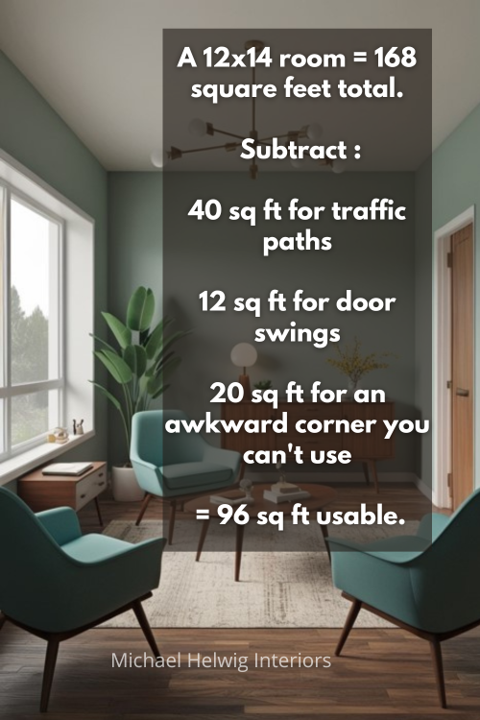
Example: A 12x14 room = 168 square feet total. Subtract 40 sq ft for traffic paths, 12 sq ft for door swings, 20 sq ft for an awkward corner you can't use = 96 sq ft usable.
Step 2: Audit your current furniture footprint
Measure every piece of furniture's base. (That’s the length x width of the furniture at the floor. For example, your sofa is a big rectangle in your living or family room. Measure the length and width of its base.) Add it up. If your furniture footprint exceeds 60% of usable square footage, you're overcrowded.
Step 3: Apply the replacement rule
Want to add a new chair? Its footprint (2x2 feet = 4 sq ft) means you need to remove 4 square feet of something else. This forces real decision-making.
Reality Check: I've had clients realize their 'clutter problem' was actually a 'too much furniture' problem. Removing one oversized piece solved more than any organizing system ever could.
6. The 'Seasonal Rotation' System: What Doesn't Fit in Your Awkward Space Goes into Deep Storage
This strategy acknowledges a hard truth: Your awkward room might never hold everything you own. And that's okay. The solution isn't getting rid of everything—it's strategic rotation.
The Two-Tier Storage Principle
Tier 1: Active Storage (in your awkward room)
Only items you use THIS season, THIS month, or weekly belong in your primary space.
Tier 2: Deep Storage (basement, attic, closet, under bed)
Everything else rotates out. Yes, even if you love it. Yes, even if it's expensive.
The Rotation Schedule
January Reset: Pull out winter items (blankets, boots, heavy coats). Store summer items.
April Reset: Swap to spring/summer (outdoor gear, lighter clothes).
August Reset: Prep for fall (school supplies, back-to-school clothes).
October Reset: Transition to winter mode.
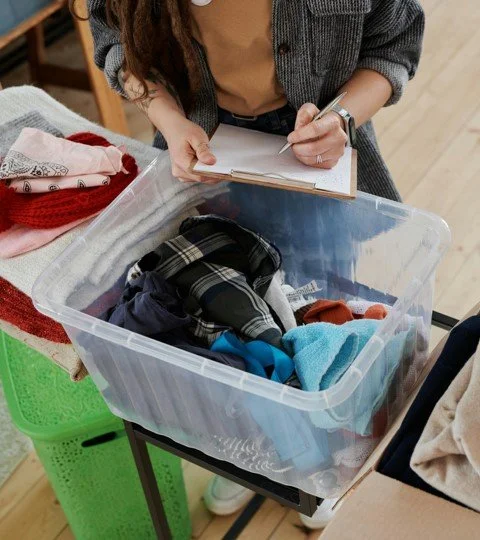
Pro Tip: Use clear bins labeled by season. When you rotate, you're not hunting through random boxes—you're swapping 'Winter Bedroom' for 'Summer Bedroom' in one trip.
Julia M Cameron
For awkward rooms, this is game-changing. You're not cramming four seasons into an impossible space. You're using the space you have for what you need right now.
7. The 'Furniture Blocking Test': Is Your Clutter Actually Just Wrong-Sized Furniture?
Here's the reset strategy that will blow your mind: Sometimes your 'clutter problem' is actually furniture that's blocking your ability to put things away properly.
The Diagnosis
Walk through your awkward room and ask: Where is stuff piling up? Then look at what's nearby. Often, clutter accumulates because:
Your dresser is too wide to fully open the drawers.
Your bookshelf is positioned where you can't reach the upper shelves.
Your nightstand is too small to hold what you need at night.
Your closet door doesn't fully open because furniture blocks it.
Your sofa is so big that there's no room for a side table.
The Test
Step 1: Identify your top 3 clutter accumulation zones
Step 2: For each zone, test if furniture is the blocker
Can you easily access the storage that should hold this stuff? If not, the furniture is wrong.
Step 3: Fix the furniture first, then declutter
This might mean replacing a piece, moving it, or removing it entirely. But until you fix the access problem, decluttering is temporary.
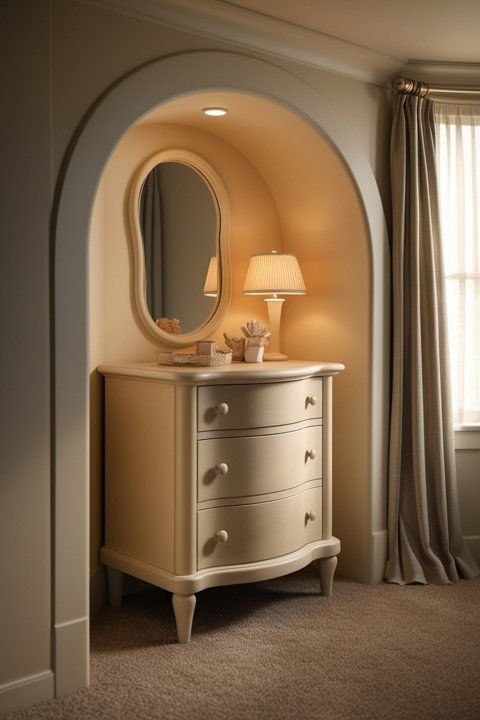
Real Example: A client had clothes piled on a chair. Turns out, her dresser was 3 inches too wide for its alcove, so the drawers only opened halfway. We swapped it for a narrower dresser. Clothes went away. Clutter solved. No 'organizing system' required.
Michael Helwig Interiors
Common Furniture-Blocking Scenarios in Awkward Rooms
Doorways that don't fully open: Remove or relocate furniture within the door's swing path.
Drawers that can't extend: Furniture is too close to walls, other furniture, or walking paths.
Shelves you can't reach: Too tall for the room, blocked by other furniture
No surface near seating: Stuff piles on floor because there's nowhere to set drinks, books, remotes.
Your 2026 Declutter Action Plan
Here's how to implement all seven strategies this month:
Week 1: Ghost Furniture Audit + Dead Zone Assignment
Identify what furniture actually belongs in your awkward room and give every dead zone a specific job.
Week 2: Traffic Flow Declutter + Vertical Real Estate Audit
Clear your pathways first, then move as much as possible to vertical storage.
Week 3: Space-Based Declutter + Furniture Blocking Test
Calculate your furniture footprint and identify any pieces blocking access to storage.
Week 4: Seasonal Rotation Setup
Create your two-tier storage system and rotate out-of-season items.
Michael Helwig Interiors
Your awkward room doesn't need to stay cluttered. The problem was never your stuff—it’s that your room's unique layout is working against you. Now you have seven strategies designed specifically for spaces that don't follow the rules. Start with just one this week. Give that dead corner a job. Clear your traffic pathways. Move one piece of furniture that's blocking access. Small changes in awkward rooms create BIG results because you're finally working WITH your space instead of fighting against it. Here's to a 2026 where your awkward room finally works for you.
Read Next
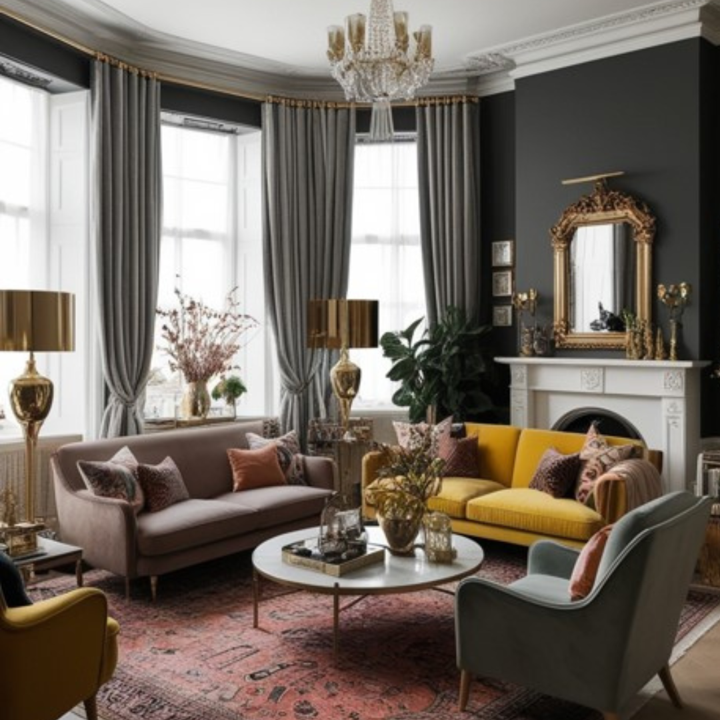
Making Awkward Layouts Work: The Curated Eclectic Approach to Decorating Tricky Spaces
Transform tricky room layouts with curated eclectic decorating. Master the bridge strategy to connect different styles through color, finish, and texture repetition. Measure your space, find your North Star piece, and create cohesive rooms that reflect your personality.

Michael Helwig Interiors
Michael is Principal designer and blogger at Michael Helwig Interiors in beautiful Buffalo, New York. Since 2011, he’s a space planning expert, offering online interior e-design services for folks living in small homes, or for those with awkward and tricky layouts. He’s a frequent expert contributor to many National media publications and news outlets on topics related to decorating, interior design, diy projects, and more. Michael happily shares his experience to help folks avoid expensive mistakes and decorating disappointments. You can follow him on Pinterest, Instagram and Facebook @interiorsmh.